
About This Book
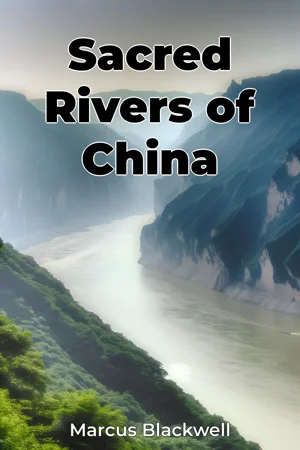
Have you ever considered the profound spiritual significance of a river? *Sacred Rivers of China* delves into the captivating world of China's principal waterways, exploring their spiritual resonance, their deep-seated role in cultural traditions, and their pervasive religious importance throughout the country’s vast history. This book unveils the intricate relationship between Chinese civilization and its rivers, primarily focusing on: the Yellow River (Huang He), the Yangtze River (Chang Jiang), and the Pearl River (Zhujiang). These rivers are not merely geographic features, but act as arteries of Chinese society, influencing everything from agricultural practices and artistic expression to philosophical thought and religious rituals. Understanding this relationship is key to grasping the nuances of Chinese culture itself. To fully appreciate the significance of these rivers, we'll provide historical context, tracing their impact on the rise and fall of dynasties, the development of key technologies like irrigation, and the formation of distinct regional identities. We will also explore the role of these rivers in shaping Chinese cosmology and spiritual beliefs, particularly concerning concepts of harmony, balance, and the interconnectedness of nature. Our central argument posits that China’s rivers are integral to the nation's spiritual and cultural identity, functioning as sacred landscapes imbued with symbolic meaning and religious power. This perspective challenges purely secular interpretations of Chinese history and culture, highlighting the importance of spiritual dimensions often overlooked in mainstream scholarship. The book is arranged into thematic sections. First, we introduce the geographical and hydrological characteristics of each river, establishing their physical importance. Next, we examine the cultural and religious traditions associated with each river, exploring myths, legends, rituals, and artistic representations. We then analyze the role they have played in shaping Chinese philosophy, from Confucianism and Taoism to Buddhism. This will culminate in a discussion of how modernization and environmental changes are impacting these sacred landscapes and the traditions connected to them. The final chapter reflects on the implications these changes have on Chinese cultural heritage and future conservation efforts. The evidence presented is drawn from diverse sources including historical texts, archaeological findings, ethnographic studies, religious scriptures, and contemporary environmental reports. We will also analyze visual and material culture, such as ancient maps, paintings, and ritual objects, to uncover the symbolic meanings associated with these rivers. *Sacred Rivers of China* makes connections to various fields, including religious studies, environmental history, and cultural geography. By examining how religious beliefs shape human interactions with the environment, we offer insights relevant to contemporary environmental ethics and conservation efforts. Furthermore, the book contributes to the broader study of sacred landscapes and the role of nature in shaping human cultures. What sets this book apart is its interdisciplinary approach, combining historical analysis with religious studies and environmental perspectives. It offers a comprehensive and nuanced understanding of the spiritual significance of China's rivers, moving beyond superficial descriptions to explore their deeper cultural meanings. Written in a thought-provoking style, the book aims to engage both academic scholars and general readers interested in Chinese history, religion, and culture. We strive to present complex ideas in an accessible manner, avoiding jargon and providing clear explanations of key concepts. The target audience includes students and scholars of Chinese history, religious studies, Asian studies, and environmental history. It will also appeal to anyone interested in learning more about Chinese culture and the relationship between humans and the natural world. The book adheres to the conventions of non-fiction by providing rigorous research, clear argumentation, and thorough documentation. The scope of the book is limited to the three major rivers of China, focusing primarily on their spiritual and cultural significance. While we acknowledge the importance of other rivers and waterways, we have chosen to concentrate on these three due to their pivotal role in shaping Chinese civilization. The insights presented in *Sacred Rivers of China* offer practical applications for understanding contemporary environmental challenges. By recognizing the spiritual value that many cultures place on natural landscapes, we can promote more sustainable and ethical approaches to environmental management and conservation that respect the traditions of the local people. While the idea of "sacredness" may be viewed differently across various factions in religious studies and history, the book will try to navigate these differences by presenting historical and cultural context. By highlighting the diverse perspectives and interpretations of these rivers, *Sacred Rivers of China* encourages a more informed and nuanced understanding of China's cultural and environmental heritage.
Have you ever considered the profound spiritual significance of a river? *Sacred Rivers of China* delves into the captivating world of China's principal waterways, exploring their spiritual resonance, their deep-seated role in cultural traditions, and their pervasive religious importance throughout the country’s vast history. This book unveils the intricate relationship between Chinese civilization and its rivers, primarily focusing on: the Yellow River (Huang He), the Yangtze River (Chang Jiang), and the Pearl River (Zhujiang). These rivers are not merely geographic features, but act as arteries of Chinese society, influencing everything from agricultural practices and artistic expression to philosophical thought and religious rituals. Understanding this relationship is key to grasping the nuances of Chinese culture itself. To fully appreciate the significance of these rivers, we'll provide historical context, tracing their impact on the rise and fall of dynasties, the development of key technologies like irrigation, and the formation of distinct regional identities. We will also explore the role of these rivers in shaping Chinese cosmology and spiritual beliefs, particularly concerning concepts of harmony, balance, and the interconnectedness of nature. Our central argument posits that China’s rivers are integral to the nation's spiritual and cultural identity, functioning as sacred landscapes imbued with symbolic meaning and religious power. This perspective challenges purely secular interpretations of Chinese history and culture, highlighting the importance of spiritual dimensions often overlooked in mainstream scholarship. The book is arranged into thematic sections. First, we introduce the geographical and hydrological characteristics of each river, establishing their physical importance. Next, we examine the cultural and religious traditions associated with each river, exploring myths, legends, rituals, and artistic representations. We then analyze the role they have played in shaping Chinese philosophy, from Confucianism and Taoism to Buddhism. This will culminate in a discussion of how modernization and environmental changes are impacting these sacred landscapes and the traditions connected to them. The final chapter reflects on the implications these changes have on Chinese cultural heritage and future conservation efforts. The evidence presented is drawn from diverse sources including historical texts, archaeological findings, ethnographic studies, religious scriptures, and contemporary environmental reports. We will also analyze visual and material culture, such as ancient maps, paintings, and ritual objects, to uncover the symbolic meanings associated with these rivers. *Sacred Rivers of China* makes connections to various fields, including religious studies, environmental history, and cultural geography. By examining how religious beliefs shape human interactions with the environment, we offer insights relevant to contemporary environmental ethics and conservation efforts. Furthermore, the book contributes to the broader study of sacred landscapes and the role of nature in shaping human cultures. What sets this book apart is its interdisciplinary approach, combining historical analysis with religious studies and environmental perspectives. It offers a comprehensive and nuanced understanding of the spiritual significance of China's rivers, moving beyond superficial descriptions to explore their deeper cultural meanings. Written in a thought-provoking style, the book aims to engage both academic scholars and general readers interested in Chinese history, religion, and culture. We strive to present complex ideas in an accessible manner, avoiding jargon and providing clear explanations of key concepts. The target audience includes students and scholars of Chinese history, religious studies, Asian studies, and environmental history. It will also appeal to anyone interested in learning more about Chinese culture and the relationship between humans and the natural world. The book adheres to the conventions of non-fiction by providing rigorous research, clear argumentation, and thorough documentation. The scope of the book is limited to the three major rivers of China, focusing primarily on their spiritual and cultural significance. While we acknowledge the importance of other rivers and waterways, we have chosen to concentrate on these three due to their pivotal role in shaping Chinese civilization. The insights presented in *Sacred Rivers of China* offer practical applications for understanding contemporary environmental challenges. By recognizing the spiritual value that many cultures place on natural landscapes, we can promote more sustainable and ethical approaches to environmental management and conservation that respect the traditions of the local people. While the idea of "sacredness" may be viewed differently across various factions in religious studies and history, the book will try to navigate these differences by presenting historical and cultural context. By highlighting the diverse perspectives and interpretations of these rivers, *Sacred Rivers of China* encourages a more informed and nuanced understanding of China's cultural and environmental heritage.
"Sacred Rivers of China" explores the profound spiritual and cultural importance of China's major waterways: the Yellow River (Huang He), the Yangtze River (Chang Jiang), and the Pearl River (Zhujiang). More than mere geographical features, these rivers have shaped Chinese history, culture, and religious beliefs, influencing everything from agriculture to philosophy. The book argues that these rivers are sacred landscapes, integral to China's identity and imbued with symbolic meaning. One intriguing aspect is how these rivers have influenced the rise and fall of dynasties and the development of technologies like irrigation. The book adopts an interdisciplinary approach, weaving together historical analysis, religious studies, and environmental perspectives to offer a comprehensive understanding. It progresses thematically, starting with the geographical characteristics of each river and moving to the cultural and religious traditions associated with them. It further analyzes their role in shaping Chinese philosophy and concludes with a discussion of the impact of modernization and environmental changes on these sacred landscapes. This exploration challenges purely secular interpretations of Chinese history, highlighting the often-overlooked spiritual dimensions and emphasizing the interconnectedness of nature within Chinese cosmology.
Book Details
ISBN
9788233985868
Publisher
Publifye AS
Your Licenses
You don't own any licenses for this book
Purchase a license below to unlock this book and download the EPUB.
Purchase License
Select a tier to unlock this book
Need bulk licensing?
Contact us for enterprise agreements.