
About This Book
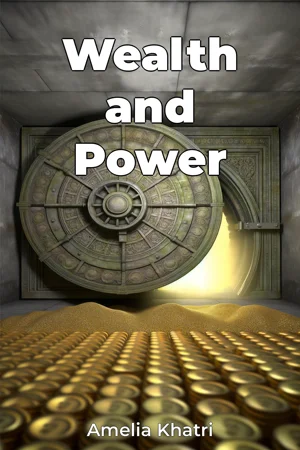
How has money, in its diverse forms, fundamentally shaped the course of human history? "Wealth and Power" examines the profound influence of monetary systems on the evolution of class structures, the dynamics of power, and the trajectory of economic development across various societies. These topics are crucial because understanding the historical interplay between money and society provides critical insights into contemporary economic challenges and power structures. This book delves into how different forms of money – from ancient bartering systems and commodity money to the advent of coinage, paper currency, and modern digital finance – have acted as catalysts for social and political change. Understanding these monetary systems requires exploring the historical context in which they emerged, including the prevailing political ideologies, technological capabilities, and social norms that facilitated their adoption and evolution. The central argument of "Wealth and Power" is that money is not merely a neutral medium of exchange but a social construct that actively shapes power relationships and societal hierarchies. This perspective is vital because it challenges conventional economic theories that often overlook the social and political dimensions of money. The book unfolds in a structured manner, beginning with an introduction to the fundamental concepts of money, wealth, and power. It traces the development of monetary systems from pre-currency societies to the rise of complex financial institutions. The core of the book will explore key epochs in monetary history, examining how certain dynamics repeated themselves. One section explores the role of money in the rise and fall of empires, focusing on how control over monetary systems influenced political stability and military strength. A second part analyzes the impact of money on social stratification, exploring how access to wealth shaped class divisions, social mobility, and inequality. The book culminates in a discussion of the implications of these historical trends for the modern global economy, addressing issues such as financial crises, income inequality, and the future of money. This book draws upon a wide range of historical sources, including archaeological evidence, financial records, legal documents, and economic treatises. It integrates quantitative data with qualitative analysis to provide a nuanced understanding of the complex relationships between money, power, and society. "Wealth and Power" also connects to various other fields of study, including political science, sociology, and anthropology. These interdisciplinary connections enhance the argument by providing a more comprehensive understanding of the multifaceted nature of money and its impact on human societies. The book offers an innovative perspective by focusing on money as a social and political force, rather than solely an economic tool. Written in a clear and accessible style, "Wealth and Power" aims to engage a broad audience, including students, scholars, policymakers, and anyone interested in understanding the historical forces that have shaped the modern world. This book caters to readers seeking a comprehensive and insightful analysis of the historical relationship between money and society. The scope of "Wealth and Power" is broad, covering a wide range of historical periods and geographic regions. However, it is not intended to be an exhaustive history of every monetary system. Instead, it focuses on key historical case studies that illustrate the fundamental principles of the book's argument. The information in this book can be applied to understanding current economic and political trends. For example, the insights into the historical causes of financial crises can inform policies aimed at preventing future economic instability. The book also addresses ongoing debates in the field of economics, such as the role of government regulation in controlling financial markets and the impact of globalization on income inequality.
How has money, in its diverse forms, fundamentally shaped the course of human history? "Wealth and Power" examines the profound influence of monetary systems on the evolution of class structures, the dynamics of power, and the trajectory of economic development across various societies. These topics are crucial because understanding the historical interplay between money and society provides critical insights into contemporary economic challenges and power structures. This book delves into how different forms of money – from ancient bartering systems and commodity money to the advent of coinage, paper currency, and modern digital finance – have acted as catalysts for social and political change. Understanding these monetary systems requires exploring the historical context in which they emerged, including the prevailing political ideologies, technological capabilities, and social norms that facilitated their adoption and evolution. The central argument of "Wealth and Power" is that money is not merely a neutral medium of exchange but a social construct that actively shapes power relationships and societal hierarchies. This perspective is vital because it challenges conventional economic theories that often overlook the social and political dimensions of money. The book unfolds in a structured manner, beginning with an introduction to the fundamental concepts of money, wealth, and power. It traces the development of monetary systems from pre-currency societies to the rise of complex financial institutions. The core of the book will explore key epochs in monetary history, examining how certain dynamics repeated themselves. One section explores the role of money in the rise and fall of empires, focusing on how control over monetary systems influenced political stability and military strength. A second part analyzes the impact of money on social stratification, exploring how access to wealth shaped class divisions, social mobility, and inequality. The book culminates in a discussion of the implications of these historical trends for the modern global economy, addressing issues such as financial crises, income inequality, and the future of money. This book draws upon a wide range of historical sources, including archaeological evidence, financial records, legal documents, and economic treatises. It integrates quantitative data with qualitative analysis to provide a nuanced understanding of the complex relationships between money, power, and society. "Wealth and Power" also connects to various other fields of study, including political science, sociology, and anthropology. These interdisciplinary connections enhance the argument by providing a more comprehensive understanding of the multifaceted nature of money and its impact on human societies. The book offers an innovative perspective by focusing on money as a social and political force, rather than solely an economic tool. Written in a clear and accessible style, "Wealth and Power" aims to engage a broad audience, including students, scholars, policymakers, and anyone interested in understanding the historical forces that have shaped the modern world. This book caters to readers seeking a comprehensive and insightful analysis of the historical relationship between money and society. The scope of "Wealth and Power" is broad, covering a wide range of historical periods and geographic regions. However, it is not intended to be an exhaustive history of every monetary system. Instead, it focuses on key historical case studies that illustrate the fundamental principles of the book's argument. The information in this book can be applied to understanding current economic and political trends. For example, the insights into the historical causes of financial crises can inform policies aimed at preventing future economic instability. The book also addresses ongoing debates in the field of economics, such as the role of government regulation in controlling financial markets and the impact of globalization on income inequality.
"Wealth and Power" explores how money, in its various forms, has shaped human history, influencing class structures, power dynamics, and economic development. It argues that money is not merely a neutral tool but a social construct that actively shapes societal hierarchies. For instance, control over monetary systems historically influenced the stability and strength of empires, while access to wealth has shaped class divisions and social mobility. The book traces monetary systems from ancient barter to modern digital finance, examining their role in social and political change. It reveals how historical contexts, like political ideologies and social norms, facilitated the adoption and evolution of these systems. By integrating historical sources with quantitative and qualitative analysis, "Wealth and Power" provides a nuanced understanding of the relationship between money, power, and society. The book progresses by introducing core concepts related to money, wealth, and power, and then moves to examining key epochs in monetary history. It analyzes money's impact on the rise and fall of empires and its effect on social stratification. The book concludes by discussing implications for the modern global economy, including financial crises and income inequality.
Book Details
ISBN
9788233985776
Publisher
Publifye AS
Your Licenses
You don't own any licenses for this book
Purchase a license below to unlock this book and download the EPUB.
Purchase License
Select a tier to unlock this book
Need bulk licensing?
Contact us for enterprise agreements.