
About This Book
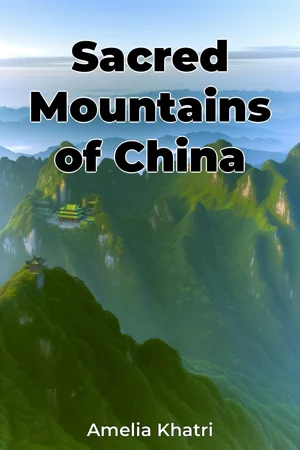
Have you ever wondered how mountains can shape not just landscapes, but also belief systems and cultural identities? "Sacred Mountains of China" delves into the profound influence these natural formations have exerted on Chinese religion, mythology, and history, revealing their enduring significance in the nation's cultural tapestry. This book explores the deep-rooted connections between specific mountains and the development of Chinese spiritual traditions. With a focus on mountains such as Mount Tai, the eastern peak associated with ancestral worship and imperial power; Wudang Mountain, a center of Taoist practice and martial arts; and other significant peaks, the book examines how these sites became focal points for religious pilgrimage, artistic inspiration, and philosophical contemplation. Understanding the role of these mountains is crucial to grasping the holistic worldview that permeates Chinese culture, where the natural and spiritual realms are inextricably linked. The narrative unfolds against a backdrop of dynastic changes, philosophical movements, and popular religious practices. No prior knowledge of Chinese history or religion is needed, as the book provides essential context for understanding the evolving relationship between the Chinese people and their sacred mountains. Key historical periods such as the rise of Taoism, the spread of Buddhism, and the imperial patronage of mountain veneration are explored to reveal the complex interplay of factors that shaped the sacred status of these natural landmarks. The central argument posits that China's sacred mountains are not merely geographical features but are active agents in shaping Chinese cultural identity. They have served as conduits between the human and divine realms, inspiring artistic expression, influencing social hierarchies, and providing a sense of collective identity across generations. The book is structured in three parts. It begins by introducing the concept of sacred space in the Chinese context, examining foundational myths and religious beliefs associated with mountains. The second part explores individual mountains, detailing their unique histories, religious affiliations (Taoist, Buddhist, Confucian), and cultural significance. Finally, it analyzes the contemporary role of these mountains in Chinese society and the challenges they face in an era of rapid modernization and tourism. Evidence is drawn from a variety of sources, including historical texts, religious scriptures, local gazetteers, archaeological findings, and ethnographic studies. The book utilizes translated excerpts from primary sources, offering readers direct access to the voices and perspectives of those who have revered these mountains throughout history. The book’s themes intersect with various disciplines, including religious studies, art history, and environmental studies. The analysis of mountain landscapes as sources of artistic inspiration connects to art history, while the exploration of religious practices relates to religious studies. Furthermore, the discussion of environmental conservation efforts and sustainable tourism links to environmental studies. These interdisciplinary connections enrich the book's argument, demonstrating the multifaceted significance of China's sacred mountains. "Sacred Mountains of China" offers a fresh perspective by examining these geographical features not just as static landmarks, but as dynamic forces that have shaped the course of Chinese history and culture. This approach allows for a nuanced understanding of the complex relationship between people, place, and belief. The writing style is accessible and informative, appealing to a broad audience interested in Chinese culture, religion, and history. While grounded in academic research, the book avoids jargon and presents information in a clear, engaging manner. The target audience includes students, travelers, and anyone interested in learning more about Chinese culture, religion, and history. Readers seeking a deeper understanding of China's cultural heritage will find this book invaluable. In keeping with non-fiction expectations, the arguments are well-supported by evidence, and the presentation is objective and balanced. While acknowledging the diverse perspectives on mountain veneration, the book maintains a scholarly tone and avoids subjective judgments. The scope encompasses the most prominent sacred mountains of China, while acknowledging that numerous other peaks also hold local or regional significance. The book avoids delving into every mountain to maintain focus and depth. The information presented has real-world applications for understanding contemporary Chinese society, including business and political dealings. Grasping the underlying cultural values and beliefs is essential to understanding the modern Chinese worldview. While the reverence of sacred mountains is a widely accepted aspect of Chinese culture, the book acknowledges ongoing debates surrounding environmental protection, sustainable tourism, and the preservation of cultural heritage in the face of rapid economic development. It explores these controversies through the lens of competing interests and values.
Have you ever wondered how mountains can shape not just landscapes, but also belief systems and cultural identities? "Sacred Mountains of China" delves into the profound influence these natural formations have exerted on Chinese religion, mythology, and history, revealing their enduring significance in the nation's cultural tapestry. This book explores the deep-rooted connections between specific mountains and the development of Chinese spiritual traditions. With a focus on mountains such as Mount Tai, the eastern peak associated with ancestral worship and imperial power; Wudang Mountain, a center of Taoist practice and martial arts; and other significant peaks, the book examines how these sites became focal points for religious pilgrimage, artistic inspiration, and philosophical contemplation. Understanding the role of these mountains is crucial to grasping the holistic worldview that permeates Chinese culture, where the natural and spiritual realms are inextricably linked. The narrative unfolds against a backdrop of dynastic changes, philosophical movements, and popular religious practices. No prior knowledge of Chinese history or religion is needed, as the book provides essential context for understanding the evolving relationship between the Chinese people and their sacred mountains. Key historical periods such as the rise of Taoism, the spread of Buddhism, and the imperial patronage of mountain veneration are explored to reveal the complex interplay of factors that shaped the sacred status of these natural landmarks. The central argument posits that China's sacred mountains are not merely geographical features but are active agents in shaping Chinese cultural identity. They have served as conduits between the human and divine realms, inspiring artistic expression, influencing social hierarchies, and providing a sense of collective identity across generations. The book is structured in three parts. It begins by introducing the concept of sacred space in the Chinese context, examining foundational myths and religious beliefs associated with mountains. The second part explores individual mountains, detailing their unique histories, religious affiliations (Taoist, Buddhist, Confucian), and cultural significance. Finally, it analyzes the contemporary role of these mountains in Chinese society and the challenges they face in an era of rapid modernization and tourism. Evidence is drawn from a variety of sources, including historical texts, religious scriptures, local gazetteers, archaeological findings, and ethnographic studies. The book utilizes translated excerpts from primary sources, offering readers direct access to the voices and perspectives of those who have revered these mountains throughout history. The book’s themes intersect with various disciplines, including religious studies, art history, and environmental studies. The analysis of mountain landscapes as sources of artistic inspiration connects to art history, while the exploration of religious practices relates to religious studies. Furthermore, the discussion of environmental conservation efforts and sustainable tourism links to environmental studies. These interdisciplinary connections enrich the book's argument, demonstrating the multifaceted significance of China's sacred mountains. "Sacred Mountains of China" offers a fresh perspective by examining these geographical features not just as static landmarks, but as dynamic forces that have shaped the course of Chinese history and culture. This approach allows for a nuanced understanding of the complex relationship between people, place, and belief. The writing style is accessible and informative, appealing to a broad audience interested in Chinese culture, religion, and history. While grounded in academic research, the book avoids jargon and presents information in a clear, engaging manner. The target audience includes students, travelers, and anyone interested in learning more about Chinese culture, religion, and history. Readers seeking a deeper understanding of China's cultural heritage will find this book invaluable. In keeping with non-fiction expectations, the arguments are well-supported by evidence, and the presentation is objective and balanced. While acknowledging the diverse perspectives on mountain veneration, the book maintains a scholarly tone and avoids subjective judgments. The scope encompasses the most prominent sacred mountains of China, while acknowledging that numerous other peaks also hold local or regional significance. The book avoids delving into every mountain to maintain focus and depth. The information presented has real-world applications for understanding contemporary Chinese society, including business and political dealings. Grasping the underlying cultural values and beliefs is essential to understanding the modern Chinese worldview. While the reverence of sacred mountains is a widely accepted aspect of Chinese culture, the book acknowledges ongoing debates surrounding environmental protection, sustainable tourism, and the preservation of cultural heritage in the face of rapid economic development. It explores these controversies through the lens of competing interests and values.
"Sacred Mountains of China" explores the profound influence of these majestic formations on Chinese culture, religion, and history. It reveals how mountains like Mount Tai and Wudang Mountain became integral to Chinese identity, shaping spiritual traditions such as Taoism and Buddhism. These mountains served as conduits between the human and divine realms, inspiring art, influencing social hierarchies, and fostering a sense of collective identity across generations. The book examines how specific mountains became focal points for religious pilgrimage and philosophical contemplation. For example, Mount Tai, associated with ancestral worship and imperial power, highlights the connection between natural landmarks and dynastic rule. The book progresses through an introduction to sacred spaces, explores individual mountains and their unique histories, and analyzes their contemporary role in Chinese society. This approach offers readers a comprehensive understanding of the evolving relationship between the Chinese people and their sacred mountains. Drawing from historical texts, religious scriptures, and archaeological findings, the book presents a nuanced view of mountain veneration. It emphasizes the mountains not as static features, but as dynamic forces that have shaped Chinese history. This perspective allows for a deeper appreciation of the complex interplay between people, place, and belief, ultimately demonstrating the enduring cultural and spiritual significance of China's sacred mountains within a world history context.
Book Details
ISBN
9788233985714
Publisher
Publifye AS
Your Licenses
You don't own any licenses for this book
Purchase a license below to unlock this book and download the EPUB.
Purchase License
Select a tier to unlock this book
Need bulk licensing?
Contact us for enterprise agreements.