
About This Book
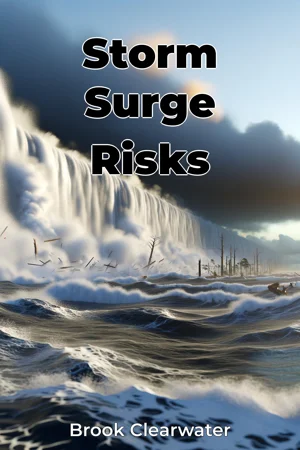
Imagine a wall of water, several meters high, surging inland with relentless force, obliterating everything in its path. Storm surges, often underestimated, represent one of the most destructive natural phenomena on our planet, posing an increasing threat to coastal communities worldwide. In "Storm Surge Risks," we delve into the complex mechanisms that generate these devastating events, analyze their far-reaching consequences, and explore effective strategies for mitigating their impact. This book addresses three key areas: the science behind storm surge formation, the assessment of its impact on coastal regions, and the formulation of effective risk reduction strategies. Understanding these elements is crucial for policymakers, coastal managers, and residents alike, as climate change amplifies the frequency and intensity of coastal storms, exacerbating the risk of storm surges. We begin by establishing a fundamental understanding of atmospheric science, oceanography, and coastal geomorphology. Readers will learn how meteorological factors, such as intense low-pressure systems and strong winds, interact with ocean dynamics, including tides and bathymetry, to create storm surges. We will explore the effects of the Earth’s rotation and coastal landforms on surge propagation and amplification. The central argument of "Storm Surge Risks" is that proactive, integrated, and science-informed strategies are essential for minimizing the catastrophic impacts of storm surges on coastal communities. This argument is vital because reactive measures alone are insufficient to protect vulnerable populations and infrastructure in the face of escalating climate change and sea-level rise. The book is structured into four sections, starting with an introduction to the underlying scientific principles behind storm surge formation. The second section details the impacts of storm surges, examining historical events and case studies from around the globe, with a focus on physical damage, economic losses, and social disruption. The third section focuses on risk assessment and modeling techniques, including statistical analysis, hydrodynamic modeling, and vulnerability mapping. The final section explores mitigation strategies, covering structural defenses, natural infrastructure solutions, early warning systems, and coastal land-use planning. Our analysis will be supported by a robust collection of data, including historical records of storm surge events, real-time monitoring data from coastal buoys and weather stations, and high-resolution numerical models of surge propagation. We will also incorporate firsthand accounts from affected communities and expert opinions from leading scientists and engineers. The topic of storm surge risks connects directly to several other disciplines, including climate science (understanding the influence of climate change on storm intensity), civil engineering (designing resilient coastal infrastructure), and urban planning (developing sustainable coastal communities). Exploring these interdisciplinary connections broadens the analysis and strengthens the proposed mitigation strategies. The unique approach adopted in "Storm Surge Risks" lies in its integration of scientific rigor with practical applications. While providing a solid foundation in the physical processes driving storm surges, the book emphasizes actionable strategies that can be implemented by coastal communities to enhance their resilience. The tone is factual, objective, and analytical, providing readers with a clear and concise understanding of storm surge risks and mitigation strategies. The target audience includes students and researchers in earth sciences, geography, environmental science, and engineering, as well as policy makers, coastal managers, and emergency responders involved in coastal hazard management. The book will be valuable for anyone seeking a comprehensive understanding of storm surge phenomena and effective strategies for mitigating their devastating consequences. The scope of the book is global, examining storm surge events and mitigation strategies from diverse coastal environments around the world. However, we will focus on providing a detailed overview of the underlying science and practical applications, rather than attempting an exhaustive analysis of every coastal region. The knowledge presented in "Storm Surge Risks" can be applied to a wide range of real-world scenarios, from developing improved coastal early warning systems to designing more resilient infrastructure and implementing more effective coastal land-use policies. While the scientific understanding of storm surges continues to advance, there are ongoing debates regarding the relative effectiveness of different mitigation strategies and the optimal approaches to balancing coastal development with environmental protection. This book will acknowledge these debates and present a balanced perspective on the available evidence.
Imagine a wall of water, several meters high, surging inland with relentless force, obliterating everything in its path. Storm surges, often underestimated, represent one of the most destructive natural phenomena on our planet, posing an increasing threat to coastal communities worldwide. In "Storm Surge Risks," we delve into the complex mechanisms that generate these devastating events, analyze their far-reaching consequences, and explore effective strategies for mitigating their impact. This book addresses three key areas: the science behind storm surge formation, the assessment of its impact on coastal regions, and the formulation of effective risk reduction strategies. Understanding these elements is crucial for policymakers, coastal managers, and residents alike, as climate change amplifies the frequency and intensity of coastal storms, exacerbating the risk of storm surges. We begin by establishing a fundamental understanding of atmospheric science, oceanography, and coastal geomorphology. Readers will learn how meteorological factors, such as intense low-pressure systems and strong winds, interact with ocean dynamics, including tides and bathymetry, to create storm surges. We will explore the effects of the Earth’s rotation and coastal landforms on surge propagation and amplification. The central argument of "Storm Surge Risks" is that proactive, integrated, and science-informed strategies are essential for minimizing the catastrophic impacts of storm surges on coastal communities. This argument is vital because reactive measures alone are insufficient to protect vulnerable populations and infrastructure in the face of escalating climate change and sea-level rise. The book is structured into four sections, starting with an introduction to the underlying scientific principles behind storm surge formation. The second section details the impacts of storm surges, examining historical events and case studies from around the globe, with a focus on physical damage, economic losses, and social disruption. The third section focuses on risk assessment and modeling techniques, including statistical analysis, hydrodynamic modeling, and vulnerability mapping. The final section explores mitigation strategies, covering structural defenses, natural infrastructure solutions, early warning systems, and coastal land-use planning. Our analysis will be supported by a robust collection of data, including historical records of storm surge events, real-time monitoring data from coastal buoys and weather stations, and high-resolution numerical models of surge propagation. We will also incorporate firsthand accounts from affected communities and expert opinions from leading scientists and engineers. The topic of storm surge risks connects directly to several other disciplines, including climate science (understanding the influence of climate change on storm intensity), civil engineering (designing resilient coastal infrastructure), and urban planning (developing sustainable coastal communities). Exploring these interdisciplinary connections broadens the analysis and strengthens the proposed mitigation strategies. The unique approach adopted in "Storm Surge Risks" lies in its integration of scientific rigor with practical applications. While providing a solid foundation in the physical processes driving storm surges, the book emphasizes actionable strategies that can be implemented by coastal communities to enhance their resilience. The tone is factual, objective, and analytical, providing readers with a clear and concise understanding of storm surge risks and mitigation strategies. The target audience includes students and researchers in earth sciences, geography, environmental science, and engineering, as well as policy makers, coastal managers, and emergency responders involved in coastal hazard management. The book will be valuable for anyone seeking a comprehensive understanding of storm surge phenomena and effective strategies for mitigating their devastating consequences. The scope of the book is global, examining storm surge events and mitigation strategies from diverse coastal environments around the world. However, we will focus on providing a detailed overview of the underlying science and practical applications, rather than attempting an exhaustive analysis of every coastal region. The knowledge presented in "Storm Surge Risks" can be applied to a wide range of real-world scenarios, from developing improved coastal early warning systems to designing more resilient infrastructure and implementing more effective coastal land-use policies. While the scientific understanding of storm surges continues to advance, there are ongoing debates regarding the relative effectiveness of different mitigation strategies and the optimal approaches to balancing coastal development with environmental protection. This book will acknowledge these debates and present a balanced perspective on the available evidence.
"Storm Surge Risks" tackles the escalating threat of storm surges to coastal communities, a hazard intensified by climate change. The book explores the science behind these destructive events, their far-reaching impacts, and strategies for risk mitigation, emphasizing the need for proactive, science-informed approaches. Readers gain insights into how meteorological factors interact with ocean dynamics, and how coastal landforms influence surge propagation. The book uniquely integrates scientific rigor with practical applications, making it valuable for policymakers, coastal managers, and researchers alike. The book is structured to build understanding progressively. It begins with the scientific principles of storm surge formation, moves to examining historical impacts and case studies, then delves into risk assessment and modeling techniques, including hydrodynamic modeling. The final section explores diverse mitigation strategies, from structural defenses to early warning systems. By connecting storm surge risks to climate science, civil engineering, and urban planning, "Storm Surge Risks" broadens the discussion and strengthens proposed mitigation strategies.
Book Details
ISBN
9788233985707
Publisher
Publifye AS
Your Licenses
You don't own any licenses for this book
Purchase a license below to unlock this book and download the EPUB.
Purchase License
Select a tier to unlock this book
Need bulk licensing?
Contact us for enterprise agreements.