
About This Book
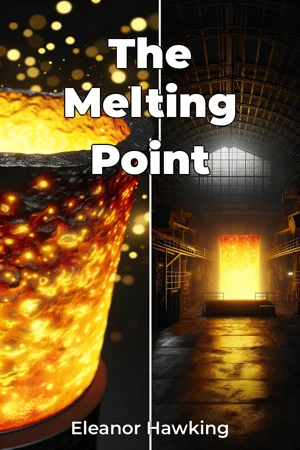
Why does ice melt at 0°C, while iron only succumbs to liquid form at a scorching 1538°C? The answer lies within the intricate dance of atoms and their bonds, a phenomenon explored in detail throughout *The Melting Point*. This book delves into the fundamental physics of melting, explaining the diverse melting points of different substances and, crucially, how this property is leveraged across various industries. We begin by establishing the core principles of thermodynamics and kinetics to explain melting as a phase transition. Understanding the energy required to disrupt the atomic lattice structure of a solid is paramount. We will thoroughly discuss the role of intermolecular forces, from weak Van der Waals interactions to strong covalent and metallic bonds, in determining a substance's melting point. These topics are vital to understanding how materials behave under varying conditions. This book presents the historical context of melting point research, tracing its roots from early alchemical experiments to modern computational simulations. We will discuss significant milestones, such as the development of calorimetry and X-ray diffraction techniques, which have revolutionized our ability to probe the solid state. No prior knowledge of advanced physics is required; the book builds upon basic principles, making it accessible to a wide audience. The central argument of this book is that the melting point, far from being a mere physical constant, is a critical parameter that dictates the behavior and application of materials across diverse fields. Incorrectly estimating or manipulating a material’s melting point can lead to catastrophic failures in engineering, manufacturing, and other endeavors. The book is organized into three parts. The first part introduces the fundamental concepts, providing a detailed overview of the thermodynamic and kinetic principles governing melting, including discussions of enthalpy, entropy, and Gibbs free energy. The second part investigates specific classes of materials, from elemental metals and semiconductors to complex organic compounds and polymers, analyzing the features that influence their melting behaviours. The third part explores industrial applications. These include metallurgy, where controlling melting points is crucial for alloy design; polymer processing, where the melt flow properties determine the final product characteristics; and pharmaceutical manufacturing, where melting point analysis is used for compound identification and purity assessment. The evidence presented in this book is based upon a comprehensive review of published research in materials science, physics, and chemistry. We will draw extensively on experimental data, including melting point determinations, thermal analysis measurements, and structural characterization studies. We will also incorporate results from computational modelling, such as molecular dynamics simulations, which provide valuable insights into the melting process at the atomic level. *The Melting Point* exists at the intersection of physics, chemistry, and materials science. It connects to thermodynamics, solid-state physics, organic chemistry, and chemical engineering, demonstrating how a deep understanding of melting phenomena can inform and advance research in these related fields. The unique aspect of this book is its integrated approach, bridging the gap between theoretical concepts and real-world applications. It also highlights the critical role of materials informatics and artificial intelligence in predicting and optimizing melting points. The tone is informative and authoritative but remains accessible to non-specialists through the clear use of language and illustrative examples. The writing style is factual and analytical. The target audience includes students and researchers in materials science, engineering, and physics, as well as professionals working in industries where materials processing and characterization are essential. This book appeals to anyone seeking a deep understanding of melting phenomena and its implications. As a work of scientific non-fiction, this book adheres to the conventions of accuracy, objectivity, and evidence-based reasoning. All claims are supported by credible sources and presented in a clear and unbiased manner. The scope of the book is limited to the fundamental principles and applications of melting point science. It does not delve into related phase transitions or the effects of pressure on melting behaviour. The information in this book can be used to design new materials with desired properties, optimize manufacturing processes, and develop more efficient energy technologies. Understanding melting points is crucial for predicting the behaviour of materials under extreme conditions, such as in aerospace applications or geological processes. While the fundamental physics of melting is well-established, ongoing debates exist regarding the precise mechanisms involved in superheating and undercooling. This book addresses these controversies by presenting different theoretical perspectives and comparing them with available experimental evidence.
Why does ice melt at 0°C, while iron only succumbs to liquid form at a scorching 1538°C? The answer lies within the intricate dance of atoms and their bonds, a phenomenon explored in detail throughout *The Melting Point*. This book delves into the fundamental physics of melting, explaining the diverse melting points of different substances and, crucially, how this property is leveraged across various industries. We begin by establishing the core principles of thermodynamics and kinetics to explain melting as a phase transition. Understanding the energy required to disrupt the atomic lattice structure of a solid is paramount. We will thoroughly discuss the role of intermolecular forces, from weak Van der Waals interactions to strong covalent and metallic bonds, in determining a substance's melting point. These topics are vital to understanding how materials behave under varying conditions. This book presents the historical context of melting point research, tracing its roots from early alchemical experiments to modern computational simulations. We will discuss significant milestones, such as the development of calorimetry and X-ray diffraction techniques, which have revolutionized our ability to probe the solid state. No prior knowledge of advanced physics is required; the book builds upon basic principles, making it accessible to a wide audience. The central argument of this book is that the melting point, far from being a mere physical constant, is a critical parameter that dictates the behavior and application of materials across diverse fields. Incorrectly estimating or manipulating a material’s melting point can lead to catastrophic failures in engineering, manufacturing, and other endeavors. The book is organized into three parts. The first part introduces the fundamental concepts, providing a detailed overview of the thermodynamic and kinetic principles governing melting, including discussions of enthalpy, entropy, and Gibbs free energy. The second part investigates specific classes of materials, from elemental metals and semiconductors to complex organic compounds and polymers, analyzing the features that influence their melting behaviours. The third part explores industrial applications. These include metallurgy, where controlling melting points is crucial for alloy design; polymer processing, where the melt flow properties determine the final product characteristics; and pharmaceutical manufacturing, where melting point analysis is used for compound identification and purity assessment. The evidence presented in this book is based upon a comprehensive review of published research in materials science, physics, and chemistry. We will draw extensively on experimental data, including melting point determinations, thermal analysis measurements, and structural characterization studies. We will also incorporate results from computational modelling, such as molecular dynamics simulations, which provide valuable insights into the melting process at the atomic level. *The Melting Point* exists at the intersection of physics, chemistry, and materials science. It connects to thermodynamics, solid-state physics, organic chemistry, and chemical engineering, demonstrating how a deep understanding of melting phenomena can inform and advance research in these related fields. The unique aspect of this book is its integrated approach, bridging the gap between theoretical concepts and real-world applications. It also highlights the critical role of materials informatics and artificial intelligence in predicting and optimizing melting points. The tone is informative and authoritative but remains accessible to non-specialists through the clear use of language and illustrative examples. The writing style is factual and analytical. The target audience includes students and researchers in materials science, engineering, and physics, as well as professionals working in industries where materials processing and characterization are essential. This book appeals to anyone seeking a deep understanding of melting phenomena and its implications. As a work of scientific non-fiction, this book adheres to the conventions of accuracy, objectivity, and evidence-based reasoning. All claims are supported by credible sources and presented in a clear and unbiased manner. The scope of the book is limited to the fundamental principles and applications of melting point science. It does not delve into related phase transitions or the effects of pressure on melting behaviour. The information in this book can be used to design new materials with desired properties, optimize manufacturing processes, and develop more efficient energy technologies. Understanding melting points is crucial for predicting the behaviour of materials under extreme conditions, such as in aerospace applications or geological processes. While the fundamental physics of melting is well-established, ongoing debates exist regarding the precise mechanisms involved in superheating and undercooling. This book addresses these controversies by presenting different theoretical perspectives and comparing them with available experimental evidence.
"The Melting Point" explores the physics of melting, elucidating why different substances transition from solid to liquid at vastly different temperatures. It begins by establishing the thermodynamic and kinetic principles governing melting as a phase transition, highlighting the energy required to disrupt a solid's atomic lattice structure. The book emphasizes the crucial role of intermolecular forces, from weak Van der Waals interactions to strong covalent and metallic bonds, in determining a substance's melting point. Understanding these principles is vital, as the melting point dictates the behavior and application of materials across diverse fields. The book progresses by investigating specific classes of materials, analyzing the features that influence their melting behaviors. It also delves into industrial applications, such as metallurgy, polymer processing, and pharmaceutical manufacturing, where controlling melting points is critical. The book uniquely bridges theoretical concepts with real-world applications, demonstrating that melting point, far from being a mere constant, is a critical parameter. The book traces the historical context of melting point research, connecting early experiments to modern computational simulations, and presents experimental data, thermal analysis measurements, structural characterization studies, and computational modeling.
Book Details
ISBN
9788233985691
Publisher
Publifye AS
Your Licenses
You don't own any licenses for this book
Purchase a license below to unlock this book and download the EPUB.
Purchase License
Select a tier to unlock this book
Need bulk licensing?
Contact us for enterprise agreements.