
About This Book
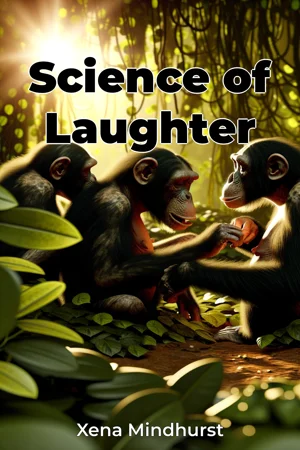
Have you ever paused to consider why humans laugh? This book, "Science of Laughter," delves into the multifaceted world of humor, exploring its biological underpinnings, psychological effects, and social significance. Understanding laughter is not just about appreciating jokes; it’s about unlocking fundamental truths about human connection, brain function, and even our evolutionary past. We embark on a journey through the science of laughter, examining key areas such as the neurobiology of mirth, the evolutionary origins of humor, and the vital role laughter plays in social bonding. These topics are crucial because they bridge the gap between subjective human experience and objective scientific analysis, offering a richer understanding of what makes us human. We will start by exploring the historical attempts to define laughter, providing the context for our current scientific understanding and acknowledging the various philosophical viewpoints that have shaped our perception of humor. The central argument of this book is that laughter is a complex, adaptive behavior deeply rooted in our biology and essential for our social well-being. It's more than just a reaction to jokes; it's a sophisticated signaling system that promotes cooperation, reduces stress, and strengthens relationships. Accepting this argument is vital because it challenges simplistic views of laughter as merely a frivolous activity and highlights its profound impact on individual and collective health. The book is structured to provide a comprehensive understanding of laughter, starting with an introduction that defines key concepts and establishes the groundwork for our scientific exploration. We will then delve into separate sections. First, we will dissect the neurobiological mechanisms of laughter, mapping the brain regions involved and examining the roles of neurotransmitters like dopamine and serotonin. This utilizes data gathered from fMRI scans, lesion studies, and pharmacological interventions. Second, we will investigate the evolutionary origins of laughter, tracing its roots in primate behavior and exploring its adaptive functions in early human societies. We will also present comparative data to illustrate the continuities and discontinuities between human and animal expressions of mirth. Finally, we will detail the social dimensions of laughter, analyzing its role in group cohesion, conflict resolution, and emotional regulation. This section draws upon sociological studies, ethnographic observations, and experimental paradigms of social interaction. The book will present data gathered from diverse sources, including neuroimaging studies, behavioral experiments, cross-cultural comparisons, and analyses of primate vocalizations. We will also incorporate findings from clinical studies examining the effects of laughter therapy on mental and physical health. This project connects to disciplines beyond biology and psychology, including sociology (the study of group dynamics), anthropology (the study of cultural manifestations of humor), and even medicine (the application of laughter in therapeutic settings). These interdisciplinary links enrich our understanding of laughter by providing multiple perspectives on its causes, functions, and consequences. What sets this book apart is its holistic approach, integrating neurobiological, evolutionary, and social perspectives to provide a complete picture of laughter. We aim to move beyond simple cause-and-effect explanations, embracing the complexity and nuance of human behavior. The style is accessible without sacrificing scientific rigor. We aim to present complex information in a way that is clear, engaging, and informative. The target audience includes students in psychology, biology, and related fields, as well as anyone interested in understanding the science behind everyday human experiences. This book will be valuable to readers seeking a comprehensive, evidence-based understanding of laughter. In line with expectations for scientific non-fiction, the book emphasizes empirical evidence, rigorous analysis, and clear communication. While the book covers a broad range of topics related to laughter, it focuses primarily on the scientific understanding of the phenomenon, rather than offering a self-help guide to becoming more humorous. The applications of understanding laughter are extensive, from improving communication and teamwork in the workplace to enhancing therapeutic interventions for individuals suffering from depression or anxiety. There are many ways to benefit from the science of laughter and we intend to demonstrate this throughout the book. The book will acknowledge existing debates about the evolutionary origins of laughter and the cultural variability of humor. We aim to fairly present these conflicting views.
Have you ever paused to consider why humans laugh? This book, "Science of Laughter," delves into the multifaceted world of humor, exploring its biological underpinnings, psychological effects, and social significance. Understanding laughter is not just about appreciating jokes; it’s about unlocking fundamental truths about human connection, brain function, and even our evolutionary past. We embark on a journey through the science of laughter, examining key areas such as the neurobiology of mirth, the evolutionary origins of humor, and the vital role laughter plays in social bonding. These topics are crucial because they bridge the gap between subjective human experience and objective scientific analysis, offering a richer understanding of what makes us human. We will start by exploring the historical attempts to define laughter, providing the context for our current scientific understanding and acknowledging the various philosophical viewpoints that have shaped our perception of humor. The central argument of this book is that laughter is a complex, adaptive behavior deeply rooted in our biology and essential for our social well-being. It's more than just a reaction to jokes; it's a sophisticated signaling system that promotes cooperation, reduces stress, and strengthens relationships. Accepting this argument is vital because it challenges simplistic views of laughter as merely a frivolous activity and highlights its profound impact on individual and collective health. The book is structured to provide a comprehensive understanding of laughter, starting with an introduction that defines key concepts and establishes the groundwork for our scientific exploration. We will then delve into separate sections. First, we will dissect the neurobiological mechanisms of laughter, mapping the brain regions involved and examining the roles of neurotransmitters like dopamine and serotonin. This utilizes data gathered from fMRI scans, lesion studies, and pharmacological interventions. Second, we will investigate the evolutionary origins of laughter, tracing its roots in primate behavior and exploring its adaptive functions in early human societies. We will also present comparative data to illustrate the continuities and discontinuities between human and animal expressions of mirth. Finally, we will detail the social dimensions of laughter, analyzing its role in group cohesion, conflict resolution, and emotional regulation. This section draws upon sociological studies, ethnographic observations, and experimental paradigms of social interaction. The book will present data gathered from diverse sources, including neuroimaging studies, behavioral experiments, cross-cultural comparisons, and analyses of primate vocalizations. We will also incorporate findings from clinical studies examining the effects of laughter therapy on mental and physical health. This project connects to disciplines beyond biology and psychology, including sociology (the study of group dynamics), anthropology (the study of cultural manifestations of humor), and even medicine (the application of laughter in therapeutic settings). These interdisciplinary links enrich our understanding of laughter by providing multiple perspectives on its causes, functions, and consequences. What sets this book apart is its holistic approach, integrating neurobiological, evolutionary, and social perspectives to provide a complete picture of laughter. We aim to move beyond simple cause-and-effect explanations, embracing the complexity and nuance of human behavior. The style is accessible without sacrificing scientific rigor. We aim to present complex information in a way that is clear, engaging, and informative. The target audience includes students in psychology, biology, and related fields, as well as anyone interested in understanding the science behind everyday human experiences. This book will be valuable to readers seeking a comprehensive, evidence-based understanding of laughter. In line with expectations for scientific non-fiction, the book emphasizes empirical evidence, rigorous analysis, and clear communication. While the book covers a broad range of topics related to laughter, it focuses primarily on the scientific understanding of the phenomenon, rather than offering a self-help guide to becoming more humorous. The applications of understanding laughter are extensive, from improving communication and teamwork in the workplace to enhancing therapeutic interventions for individuals suffering from depression or anxiety. There are many ways to benefit from the science of laughter and we intend to demonstrate this throughout the book. The book will acknowledge existing debates about the evolutionary origins of laughter and the cultural variability of humor. We aim to fairly present these conflicting views.
"Science of Laughter" explores the multifaceted nature of laughter, bridging subjective human experiences with objective scientific analysis. It investigates laughter's biological underpinnings, psychological impact, and social significance. Delving into the neurobiology of mirth, the book examines which brain regions are activated during laughter and the roles of neurotransmitters like dopamine and serotonin. It explains how laughter serves as a sophisticated signaling system that fosters cooperation, reduces stress, and strengthens relationships. The book uniquely integrates neurobiological, evolutionary, and social perspectives to provide a comprehensive understanding of laughter. Starting with historical attempts to define laughter, it progresses through the neurobiological mechanisms, evolutionary origins, and social dimensions of mirth, drawing on diverse data sources like neuroimaging studies and behavioral experiments. By understanding laughter, one can unlock fundamental truths about human connection and brain function.
Book Details
ISBN
9788233985653
Publisher
Publifye AS
Your Licenses
You don't own any licenses for this book
Purchase a license below to unlock this book and download the EPUB.
Purchase License
Select a tier to unlock this book
Need bulk licensing?
Contact us for enterprise agreements.