
About This Book
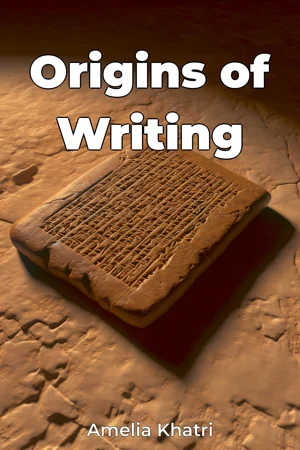
Have you ever considered how profoundly the ability to record thoughts has shaped our civilization? "Origins of Writing" explores this very question, tracing the development of written communication from its earliest beginnings to the widespread adoption of alphabetic systems. This book delves into the processes by which humans transitioned from spoken language to durable forms of inscription, fundamentally altering how knowledge is preserved and transmitted across generations. This book examines three intertwined concepts: the socio-economic drivers that spurred the initial need for writing, the evolution of various writing systems (including cuneiform, hieroglyphics, and early alphabets), and the impact of writing on social structures, governance, and the advancement of intellectual thought. These topics are vital for understanding the foundations of human organization and the development of complex societies. The story of writing is not merely a chronicle of technical advancements; it is the story of human ingenuity itself. To fully grasp the significance of these developments, this book provides historical context, examining the early civilizations of Mesopotamia, Egypt, and the Levant. A basic understanding of ancient history and archaeology will enhance the reading experience, though all necessary background information will be provided. The central argument of "Origins of Writing" posits that the invention and adoption of writing was not a singular event but a series of innovations driven by the necessity to manage increasingly complex administrative and economic systems. Furthermore, it argues that the transition to alphabetic systems significantly democratized access to knowledge, enabling broader participation in intellectual and political life. This argument emphasizes the close relationship between technological progress and societal change. The book's structure begins by introducing the pre-writing communication methods prevalent in early societies. It then explores the emergence of cuneiform in Mesopotamia as a key early writing system, detailing its evolution from pictographic representations to more abstract forms. The book then shifts to ancient Egypt, examining the development and use of hieroglyphics, revealing the cultural and religious contexts surrounding its use. Following this, the book analyzes the Phoenician alphabet and its subsequent adaptation by the Greeks and Romans, leading to the alphabets used today. Finally, the book discusses the long-term implications of writing on various aspects of human civilization, including law, literature, and scientific inquiry. The analysis presented draws upon archaeological evidence, including inscribed tablets, monumental inscriptions, and early papyri. It also incorporates insights from linguistic analysis and historical accounts to reconstruct the contexts in which these writing systems were developed and used. "Origins of Writing" connects to several other fields, including archaeology, linguistics, and sociology. Connecting these fields provides a broader understanding of how writing influences societal structures and communication patterns. What sets this book apart is its focus on the socio-cultural contexts that drove the development and spread of writing. Rather than focusing solely on the technical aspects, it emphasizes the human element, exploring how writing shaped the lives of individuals and communities. The book employs a balanced and accessible writing style, aiming to appeal to a broad audience while maintaining scholarly rigor. The target audience includes students of history, archaeology, and linguistics, as well as general readers with an interest in the origins of civilization. The book’s value lies in its comprehensive and nuanced account of a pivotal moment in human history. Adhering to the conventions of historical and world history genres, the book presents a fact-based narrative supported by evidence and analysis. While the book covers a wide range of early writing systems, it primarily focuses on developments in the Near East and the Mediterranean world, reflecting the areas where the earliest forms of writing emerged. Readers will gain a deeper appreciation for the importance of written communication and its impact on their own lives. Understanding the origins of writing provides insights into the processes of cultural transmission, technological innovation, and societal development. The book touches upon debates surrounding the precise dating of early writing systems, the interpretation of certain inscriptions, and the influence of writing on cognitive development. "Origins of Writing" navigates these debates, presenting a well-reasoned and evidence-based account of the evolution of writing.
Have you ever considered how profoundly the ability to record thoughts has shaped our civilization? "Origins of Writing" explores this very question, tracing the development of written communication from its earliest beginnings to the widespread adoption of alphabetic systems. This book delves into the processes by which humans transitioned from spoken language to durable forms of inscription, fundamentally altering how knowledge is preserved and transmitted across generations. This book examines three intertwined concepts: the socio-economic drivers that spurred the initial need for writing, the evolution of various writing systems (including cuneiform, hieroglyphics, and early alphabets), and the impact of writing on social structures, governance, and the advancement of intellectual thought. These topics are vital for understanding the foundations of human organization and the development of complex societies. The story of writing is not merely a chronicle of technical advancements; it is the story of human ingenuity itself. To fully grasp the significance of these developments, this book provides historical context, examining the early civilizations of Mesopotamia, Egypt, and the Levant. A basic understanding of ancient history and archaeology will enhance the reading experience, though all necessary background information will be provided. The central argument of "Origins of Writing" posits that the invention and adoption of writing was not a singular event but a series of innovations driven by the necessity to manage increasingly complex administrative and economic systems. Furthermore, it argues that the transition to alphabetic systems significantly democratized access to knowledge, enabling broader participation in intellectual and political life. This argument emphasizes the close relationship between technological progress and societal change. The book's structure begins by introducing the pre-writing communication methods prevalent in early societies. It then explores the emergence of cuneiform in Mesopotamia as a key early writing system, detailing its evolution from pictographic representations to more abstract forms. The book then shifts to ancient Egypt, examining the development and use of hieroglyphics, revealing the cultural and religious contexts surrounding its use. Following this, the book analyzes the Phoenician alphabet and its subsequent adaptation by the Greeks and Romans, leading to the alphabets used today. Finally, the book discusses the long-term implications of writing on various aspects of human civilization, including law, literature, and scientific inquiry. The analysis presented draws upon archaeological evidence, including inscribed tablets, monumental inscriptions, and early papyri. It also incorporates insights from linguistic analysis and historical accounts to reconstruct the contexts in which these writing systems were developed and used. "Origins of Writing" connects to several other fields, including archaeology, linguistics, and sociology. Connecting these fields provides a broader understanding of how writing influences societal structures and communication patterns. What sets this book apart is its focus on the socio-cultural contexts that drove the development and spread of writing. Rather than focusing solely on the technical aspects, it emphasizes the human element, exploring how writing shaped the lives of individuals and communities. The book employs a balanced and accessible writing style, aiming to appeal to a broad audience while maintaining scholarly rigor. The target audience includes students of history, archaeology, and linguistics, as well as general readers with an interest in the origins of civilization. The book’s value lies in its comprehensive and nuanced account of a pivotal moment in human history. Adhering to the conventions of historical and world history genres, the book presents a fact-based narrative supported by evidence and analysis. While the book covers a wide range of early writing systems, it primarily focuses on developments in the Near East and the Mediterranean world, reflecting the areas where the earliest forms of writing emerged. Readers will gain a deeper appreciation for the importance of written communication and its impact on their own lives. Understanding the origins of writing provides insights into the processes of cultural transmission, technological innovation, and societal development. The book touches upon debates surrounding the precise dating of early writing systems, the interpretation of certain inscriptions, and the influence of writing on cognitive development. "Origins of Writing" navigates these debates, presenting a well-reasoned and evidence-based account of the evolution of writing.
"Origins of Writing" explores the fascinating journey of written communication, from its early roots to the widespread use of alphabets. It delves into how humans transitioned from spoken language to lasting inscriptions, forever changing knowledge preservation and transmission. The book highlights that socio-economic needs drove the initial development of writing. For example, the earliest forms of cuneiform in Mesopotamia emerged to manage complex administrative tasks. This book uniquely emphasizes the human element, exploring how writing shaped societies, not just the technical aspects. The book begins by examining pre-writing methods of communication. It then explores the emergence of cuneiform in Mesopotamia, followed by Egyptian hieroglyphics and their cultural significance. The evolution of the Phoenician alphabet and its impact on the Greeks and Romans is also analyzed. Finally, the book discusses the long-term consequences of writing on law, literature, and science, illustrating how writing democratized knowledge and reshaped civilization.
Book Details
ISBN
9788233985646
Publisher
Publifye AS
Your Licenses
You don't own any licenses for this book
Purchase a license below to unlock this book and download the EPUB.
Purchase License
Select a tier to unlock this book
Need bulk licensing?
Contact us for enterprise agreements.