
About This Book
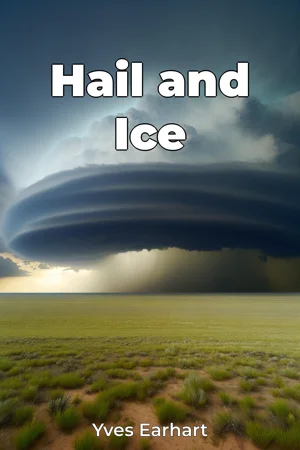
Have you ever witnessed the raw power of nature unleashed in the form of a hailstorm, leaving behind a trail of destruction in its wake? This book, "Hail and Ice," delves into the fascinating yet often devastating world of hailstones, exploring their formation, characteristics, and impact on our planet. We aim to provide a comprehensive understanding of these icy projectiles, distinguishing them from other forms of frozen precipitation like sleet and snow. The book's central argument is that understanding the science behind hail formation, coupled with analyzing its often-overlooked impact on agriculture and infrastructure, is crucial for developing effective mitigation strategies and building more resilient communities. This understanding is vital in an era of increasingly volatile weather patterns, where accurate prediction and proactive preparation are paramount. "Hail and Ice" begins by establishing a foundation in atmospheric science, outlining the conditions necessary for hail formation. It examines the role of supercell thunderstorms, updrafts, and freezing levels in the creation of these layered ice spheres. We delve into the microphysics within storm clouds, explaining how water droplets collide with ice crystals and accrete layers of ice during repeated trips through the cloud's different temperature zones. This section will clarify the differences between hail, sleet, and snow, highlighting variations in their formation processes and resulting structures. The next section explores the devastating consequences of hailstorms, focusing particularly on their impact on agriculture. We analyze specific case studies from around the world, examining crop damage, economic losses, and the long-term effects on food security. This analysis incorporates data from agricultural reports, insurance claims, and scientific research to quantify the extent of the problem. Beyond agriculture, we investigate the impact of hailstorms on infrastructure such as buildings, vehicles, and power grids, discussing best practices in construction and maintenance to minimize damage. Subsequent chapters consider the prediction and detection of hailstorms, examining the tools and techniques used by meteorologists to forecast these events. We explore the capabilities and limitations of radar technology, satellite imagery, and numerical weather models in predicting hail size, intensity, and trajectory. Furthermore, the book delves into methods employed to mitigate the effects of hailstorms, including cloud seeding, protective netting, and insurance strategies. "Hail and Ice" draws upon a wide range of scientific literature, meteorological data, and case studies from around the world. We present findings from peer-reviewed research, government reports, and industry analyses to provide a well-supported and objective account. The book connects to various fields including meteorology, agriculture, economics, and engineering. The integration of scientific principles with real-world economic and societal consequences enhances the argument for the importance of understanding and mitigating hail damage. Our approach combines scientific rigor with accessible language, making complex concepts understandable to a broad audience. While maintaining a professional and informative tone, we incorporate real-life examples and compelling visuals to engage the reader. The intended audience includes students, researchers, meteorologists, agricultural professionals, insurance providers, and anyone interested in understanding severe weather phenomena. This book offers valuable insights into the science, impact, and mitigation of hailstorms. The scope of the book is limited to the study of hailstones and directly related atmospheric phenomena. While broader discussions of climate change are relevant, the book primarily focuses on the specific mechanisms of hail formation and its immediate impacts. The information presented can be applied practically by farmers seeking to protect their crops, insurance companies assessing risk, engineers designing resilient infrastructure, and individuals preparing for severe weather events. This book aims to empower readers with the knowledge they need to understand and mitigate the risks associated with hailstorms.
Have you ever witnessed the raw power of nature unleashed in the form of a hailstorm, leaving behind a trail of destruction in its wake? This book, "Hail and Ice," delves into the fascinating yet often devastating world of hailstones, exploring their formation, characteristics, and impact on our planet. We aim to provide a comprehensive understanding of these icy projectiles, distinguishing them from other forms of frozen precipitation like sleet and snow. The book's central argument is that understanding the science behind hail formation, coupled with analyzing its often-overlooked impact on agriculture and infrastructure, is crucial for developing effective mitigation strategies and building more resilient communities. This understanding is vital in an era of increasingly volatile weather patterns, where accurate prediction and proactive preparation are paramount. "Hail and Ice" begins by establishing a foundation in atmospheric science, outlining the conditions necessary for hail formation. It examines the role of supercell thunderstorms, updrafts, and freezing levels in the creation of these layered ice spheres. We delve into the microphysics within storm clouds, explaining how water droplets collide with ice crystals and accrete layers of ice during repeated trips through the cloud's different temperature zones. This section will clarify the differences between hail, sleet, and snow, highlighting variations in their formation processes and resulting structures. The next section explores the devastating consequences of hailstorms, focusing particularly on their impact on agriculture. We analyze specific case studies from around the world, examining crop damage, economic losses, and the long-term effects on food security. This analysis incorporates data from agricultural reports, insurance claims, and scientific research to quantify the extent of the problem. Beyond agriculture, we investigate the impact of hailstorms on infrastructure such as buildings, vehicles, and power grids, discussing best practices in construction and maintenance to minimize damage. Subsequent chapters consider the prediction and detection of hailstorms, examining the tools and techniques used by meteorologists to forecast these events. We explore the capabilities and limitations of radar technology, satellite imagery, and numerical weather models in predicting hail size, intensity, and trajectory. Furthermore, the book delves into methods employed to mitigate the effects of hailstorms, including cloud seeding, protective netting, and insurance strategies. "Hail and Ice" draws upon a wide range of scientific literature, meteorological data, and case studies from around the world. We present findings from peer-reviewed research, government reports, and industry analyses to provide a well-supported and objective account. The book connects to various fields including meteorology, agriculture, economics, and engineering. The integration of scientific principles with real-world economic and societal consequences enhances the argument for the importance of understanding and mitigating hail damage. Our approach combines scientific rigor with accessible language, making complex concepts understandable to a broad audience. While maintaining a professional and informative tone, we incorporate real-life examples and compelling visuals to engage the reader. The intended audience includes students, researchers, meteorologists, agricultural professionals, insurance providers, and anyone interested in understanding severe weather phenomena. This book offers valuable insights into the science, impact, and mitigation of hailstorms. The scope of the book is limited to the study of hailstones and directly related atmospheric phenomena. While broader discussions of climate change are relevant, the book primarily focuses on the specific mechanisms of hail formation and its immediate impacts. The information presented can be applied practically by farmers seeking to protect their crops, insurance companies assessing risk, engineers designing resilient infrastructure, and individuals preparing for severe weather events. This book aims to empower readers with the knowledge they need to understand and mitigate the risks associated with hailstorms.
"Hail and Ice" offers a deep dive into the world of hailstorms, unpacking their formation, characteristics, and significant impact on our planet. It highlights how understanding the science behind hail, a form of severe weather, is crucial for developing effective mitigation strategies, particularly as volatile weather patterns become more common. The book emphasizes the distinction between hail and other frozen precipitation, such as sleet and snow, clarifying the unique atmospheric processes that lead to the creation of these icy projectiles. The text explores the devastating consequences of hailstorms, with a sharp focus on agriculture and infrastructure. It examines the economic losses associated with crop damage and the impact on buildings and power grids, using case studies and scientific data to quantify the problem. Furthermore, "Hail and Ice" discusses the prediction and detection of hailstorms, detailing the tools and techniques used by meteorologists, such as radar technology and satellite imagery. The book progresses logically from atmospheric science basics to practical mitigation strategies, making complex concepts accessible to a broad audience interested in earth sciences, geography, and nature.
Book Details
ISBN
9788233985639
Publisher
Publifye AS
Your Licenses
You don't own any licenses for this book
Purchase a license below to unlock this book and download the EPUB.
Purchase License
Select a tier to unlock this book
Need bulk licensing?
Contact us for enterprise agreements.