
About This Book
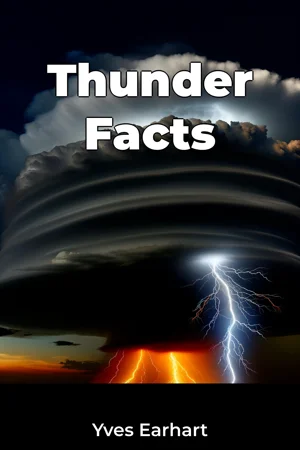
Have you ever wondered what causes the deafening roar of thunder, or why some rumbles are faint whispers while others shake the very ground beneath your feet? "Thunder Facts" delves into the intricate world of thunder, exploring its origins, its variable nature, and its crucial role in the broader context of atmospheric science. This book aims to demystify this powerful natural phenomenon, providing a comprehensive understanding suitable for weather enthusiasts, students, and anyone curious about the forces shaping our environment. We begin by unraveling the fundamental question of thunder's creation: What exactly happens inside a thunderstorm to produce such a dramatic acoustic event? We explore the rapid heating of air by lightning, the subsequent supersonic expansion, and the resulting shockwave that manifests as thunder. The importance of grasping these mechanisms extends beyond mere curiosity; understanding thunder provides vital clues about the intensity and structure of thunderstorms, offering predictive capabilities for severe weather events. A significant portion of "Thunder Facts" is dedicated to explaining why thunder varies so dramatically in intensity. We examine the factors influencing thunder's loudness, including the distance from the lightning strike, atmospheric conditions, and even the topography of the surrounding landscape. The book presents detailed analysis of how temperature gradients, wind shear, and ground features can either amplify or dampen the sound of thunder. This analysis draws upon research in atmospheric acoustics, meteorology, and signal propagation. The book also highlights thunder's significance in meteorology. We explore how thunder, in conjunction with observations of lightning, is used to track and analyze thunderstorms. The book details modern techniques, such as lightning detection networks and acoustic monitoring systems, which contribute to more accurate weather forecasting and early warning systems. This section provides a context for the history of thunderstorm observations, from ancient folklore to advanced scientific tools. "Thunder Facts" is structured to build upon foundational knowledge. It begins with an introduction to the basic physics of sound and electricity before delving into the specifics of thunderstorm dynamics. Subsequent chapters explore the factors affecting thunder audibility, the relationship between lightning and thunder, and the practical applications of thunder data. The book culminates with a discussion of ongoing research and future directions in thunderstorm study. The evidence presented in the book is drawn from a wide range of scientific sources, including peer-reviewed research papers, meteorological datasets, and acoustic measurements. We also incorporate case studies of specific thunderstorms to illustrate key concepts. The book connects to other fields, such as climatology through its discussion of thunderstorm frequency and distribution, signal processing through describing how thunder is recorded and analyzed, and geography through detailing environmental influences on thunder propagation. This book stands out by combining theoretical explanations with practical applications, offering a narrative that emphasizes both the science and the relevance of thunder. The tone is informative and accessible. "Thunder Facts" is meant for a broad audience including weather enthusiasts, students of earth sciences, and anyone with a general interest in the natural world. It provides a solid foundation for understanding thunderstorms and their associated phenomena. The scope of this book is limited to the science of thunder itself, and excludes topics like lightning protection or the social impacts of thunderstorms beyond their basic predictability. However, it provides a foundation for exploring those areas. The information presented can be directly applied to understanding weather forecasts, interpreting meteorological data, and appreciating the complexities of our atmosphere. While controversies surrounding specific lightning initiation mechanisms exist, they are not a primary focus, allowing concentration on consensus knowledge regarding thunder generation.
Have you ever wondered what causes the deafening roar of thunder, or why some rumbles are faint whispers while others shake the very ground beneath your feet? "Thunder Facts" delves into the intricate world of thunder, exploring its origins, its variable nature, and its crucial role in the broader context of atmospheric science. This book aims to demystify this powerful natural phenomenon, providing a comprehensive understanding suitable for weather enthusiasts, students, and anyone curious about the forces shaping our environment. We begin by unraveling the fundamental question of thunder's creation: What exactly happens inside a thunderstorm to produce such a dramatic acoustic event? We explore the rapid heating of air by lightning, the subsequent supersonic expansion, and the resulting shockwave that manifests as thunder. The importance of grasping these mechanisms extends beyond mere curiosity; understanding thunder provides vital clues about the intensity and structure of thunderstorms, offering predictive capabilities for severe weather events. A significant portion of "Thunder Facts" is dedicated to explaining why thunder varies so dramatically in intensity. We examine the factors influencing thunder's loudness, including the distance from the lightning strike, atmospheric conditions, and even the topography of the surrounding landscape. The book presents detailed analysis of how temperature gradients, wind shear, and ground features can either amplify or dampen the sound of thunder. This analysis draws upon research in atmospheric acoustics, meteorology, and signal propagation. The book also highlights thunder's significance in meteorology. We explore how thunder, in conjunction with observations of lightning, is used to track and analyze thunderstorms. The book details modern techniques, such as lightning detection networks and acoustic monitoring systems, which contribute to more accurate weather forecasting and early warning systems. This section provides a context for the history of thunderstorm observations, from ancient folklore to advanced scientific tools. "Thunder Facts" is structured to build upon foundational knowledge. It begins with an introduction to the basic physics of sound and electricity before delving into the specifics of thunderstorm dynamics. Subsequent chapters explore the factors affecting thunder audibility, the relationship between lightning and thunder, and the practical applications of thunder data. The book culminates with a discussion of ongoing research and future directions in thunderstorm study. The evidence presented in the book is drawn from a wide range of scientific sources, including peer-reviewed research papers, meteorological datasets, and acoustic measurements. We also incorporate case studies of specific thunderstorms to illustrate key concepts. The book connects to other fields, such as climatology through its discussion of thunderstorm frequency and distribution, signal processing through describing how thunder is recorded and analyzed, and geography through detailing environmental influences on thunder propagation. This book stands out by combining theoretical explanations with practical applications, offering a narrative that emphasizes both the science and the relevance of thunder. The tone is informative and accessible. "Thunder Facts" is meant for a broad audience including weather enthusiasts, students of earth sciences, and anyone with a general interest in the natural world. It provides a solid foundation for understanding thunderstorms and their associated phenomena. The scope of this book is limited to the science of thunder itself, and excludes topics like lightning protection or the social impacts of thunderstorms beyond their basic predictability. However, it provides a foundation for exploring those areas. The information presented can be directly applied to understanding weather forecasts, interpreting meteorological data, and appreciating the complexities of our atmosphere. While controversies surrounding specific lightning initiation mechanisms exist, they are not a primary focus, allowing concentration on consensus knowledge regarding thunder generation.
"Thunder Facts" explores the science behind thunder, from its origins in lightning strikes to its role in weather forecasting. It examines how the rapid heating of air by lightning creates a shockwave, resulting in the rumble we hear. The book investigates why thunder varies in intensity, explaining how distance, atmospheric conditions, and even landscape topography can affect its loudness, drawing on research in atmospheric acoustics and meteorology. The book explains how thunder, combined with lightning data, assists in tracking thunderstorms and improving weather predictions. "Thunder Facts" details the use of lightning detection networks and acoustic monitoring, which enhance the accuracy of early warning systems. Progressing from basic physics to thunderstorm dynamics, the book explores factors influencing audibility and applications of thunder data, ending with current research and future study directions.
Book Details
ISBN
9788233985509
Publisher
Publifye AS
Your Licenses
You don't own any licenses for this book
Purchase a license below to unlock this book and download the EPUB.
Purchase License
Select a tier to unlock this book
Need bulk licensing?
Contact us for enterprise agreements.