
About This Book
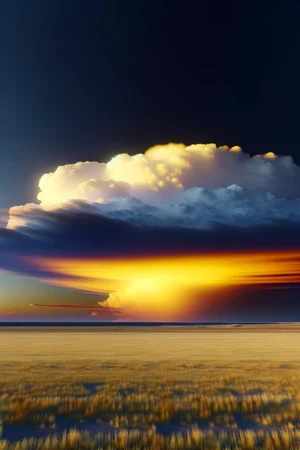
Have you ever stopped to consider the silent, ever-present architects of our weather? This book, *Clouds and Rain*, delves into the intricate world of cloud formation, explores the diverse families of clouds that populate our skies, and reveals their pivotal role in producing rainfall and regulating our planet's climate. Understanding these atmospheric processes is not merely an academic exercise; it's crucial for grasping the complexities of Earth's systems, predicting weather patterns, and addressing the challenges of climate change. This exploration begins by establishing a foundational understanding of atmospheric science, including the principles of thermodynamics and atmospheric circulation. Readers will learn about the fundamental ingredients necessary for cloud formation: water vapor, condensation nuclei, and atmospheric cooling. Building upon this base, the book meticulously classifies clouds according to their altitude, shape, and formation mechanisms. From the low-lying stratus clouds that blanket the sky to the towering cumulonimbus associated with thunderstorms, each cloud type is examined in detail, including its unique characteristics and the weather it foretells. The central argument presented in *Clouds and Rain* is that clouds are far more than just aesthetically pleasing features of the sky; they are dynamic agents of climate regulation. The book meticulously analyzes the complex interaction between clouds, solar radiation, and the Earth's energy balance. It demonstrates how different types of clouds have varying effects on global temperatures, with some reflecting sunlight back into space and others trapping heat. Furthermore, the book investigates the critical role of clouds in the hydrological cycle, elucidating the processes by which clouds form precipitation, replenishing our water resources. The book unfolds in a structured manner, beginning with an introduction to atmospheric processes and the science of meteorology. This foundation supports subsequent chapters that delve into cloud classification and formation, including detailed examinations of cloud microphysics and the diverse types of precipitation. The book then explores the role of clouds in regional and global climate systems, investigating their impact on weather patterns and climate change. Finally, it culminates in a discussion of the practical applications of cloud research, including weather forecasting and climate modeling. The arguments presented are supported by a wealth of scientific evidence, including meteorological data, satellite imagery, and climate model simulations. The book draws upon both historical observations and cutting-edge research to provide a comprehensive and nuanced understanding of clouds and their behavior. Unique data sources, such as long-term cloud observation records and specialized atmospheric research projects, are incorporated to provide a robust analysis. *Clouds and Rain* also connects to other fields of study, such as geography, environmental science, and even art. Geographically, the book explores how cloud patterns vary across different regions of the world, highlighting the influence of topography and climate on cloud formation. From an environmental science perspective, it examines the impact of pollution on cloud properties and precipitation patterns. Artistically, the book discusses the aesthetic beauty of clouds and their inspiration for artists throughout history, demonstrating the interdisciplinary relevance of cloud studies. A unique aspect of this book is its integration of cloud observation techniques that the reader can use. This allows readers to engage with the subject matter directly. The writing style is professional and accessible, making complex scientific concepts understandable to a broad audience. The book is targeted towards students, weather enthusiasts, environmental scientists, and anyone curious about the science behind the sky. It is particularly valuable for those seeking a deeper understanding of climate change and its impact on the environment. As a work of Earth Sciences and Geography, *Clouds and Rain* adheres to the conventions of non-fiction, presenting factual information, empirical evidence, and rigorous analysis. The scope of the book is limited to the study of clouds and their direct effects on weather and climate, without delving into other atmospheric phenomena in detail. The information presented in *Clouds and Rain* has numerous real-world applications. It can be used to improve weather forecasting accuracy, enhance climate models, and inform policy decisions related to climate change mitigation and adaptation. The book also addresses controversies surrounding the role of clouds in climate change.
Have you ever stopped to consider the silent, ever-present architects of our weather? This book, *Clouds and Rain*, delves into the intricate world of cloud formation, explores the diverse families of clouds that populate our skies, and reveals their pivotal role in producing rainfall and regulating our planet's climate. Understanding these atmospheric processes is not merely an academic exercise; it's crucial for grasping the complexities of Earth's systems, predicting weather patterns, and addressing the challenges of climate change. This exploration begins by establishing a foundational understanding of atmospheric science, including the principles of thermodynamics and atmospheric circulation. Readers will learn about the fundamental ingredients necessary for cloud formation: water vapor, condensation nuclei, and atmospheric cooling. Building upon this base, the book meticulously classifies clouds according to their altitude, shape, and formation mechanisms. From the low-lying stratus clouds that blanket the sky to the towering cumulonimbus associated with thunderstorms, each cloud type is examined in detail, including its unique characteristics and the weather it foretells. The central argument presented in *Clouds and Rain* is that clouds are far more than just aesthetically pleasing features of the sky; they are dynamic agents of climate regulation. The book meticulously analyzes the complex interaction between clouds, solar radiation, and the Earth's energy balance. It demonstrates how different types of clouds have varying effects on global temperatures, with some reflecting sunlight back into space and others trapping heat. Furthermore, the book investigates the critical role of clouds in the hydrological cycle, elucidating the processes by which clouds form precipitation, replenishing our water resources. The book unfolds in a structured manner, beginning with an introduction to atmospheric processes and the science of meteorology. This foundation supports subsequent chapters that delve into cloud classification and formation, including detailed examinations of cloud microphysics and the diverse types of precipitation. The book then explores the role of clouds in regional and global climate systems, investigating their impact on weather patterns and climate change. Finally, it culminates in a discussion of the practical applications of cloud research, including weather forecasting and climate modeling. The arguments presented are supported by a wealth of scientific evidence, including meteorological data, satellite imagery, and climate model simulations. The book draws upon both historical observations and cutting-edge research to provide a comprehensive and nuanced understanding of clouds and their behavior. Unique data sources, such as long-term cloud observation records and specialized atmospheric research projects, are incorporated to provide a robust analysis. *Clouds and Rain* also connects to other fields of study, such as geography, environmental science, and even art. Geographically, the book explores how cloud patterns vary across different regions of the world, highlighting the influence of topography and climate on cloud formation. From an environmental science perspective, it examines the impact of pollution on cloud properties and precipitation patterns. Artistically, the book discusses the aesthetic beauty of clouds and their inspiration for artists throughout history, demonstrating the interdisciplinary relevance of cloud studies. A unique aspect of this book is its integration of cloud observation techniques that the reader can use. This allows readers to engage with the subject matter directly. The writing style is professional and accessible, making complex scientific concepts understandable to a broad audience. The book is targeted towards students, weather enthusiasts, environmental scientists, and anyone curious about the science behind the sky. It is particularly valuable for those seeking a deeper understanding of climate change and its impact on the environment. As a work of Earth Sciences and Geography, *Clouds and Rain* adheres to the conventions of non-fiction, presenting factual information, empirical evidence, and rigorous analysis. The scope of the book is limited to the study of clouds and their direct effects on weather and climate, without delving into other atmospheric phenomena in detail. The information presented in *Clouds and Rain* has numerous real-world applications. It can be used to improve weather forecasting accuracy, enhance climate models, and inform policy decisions related to climate change mitigation and adaptation. The book also addresses controversies surrounding the role of clouds in climate change.
*Clouds and Rain* explores the fascinating world of clouds, revealing their crucial role in weather patterns and climate regulation. It investigates cloud formation, classification, and their impact on global temperatures, emphasizing that clouds are dynamic agents influencing Earth's energy balance. Readers gain insights into how different cloud types affect solar radiation and the hydrological cycle, impacting water resources worldwide. The book progresses logically, beginning with atmospheric science fundamentals before delving into cloud classification and formation. It then explores clouds' roles in regional and global climate systems, culminating in practical applications like weather forecasting and climate modeling. A unique aspect is the inclusion of cloud observation techniques, encouraging readers to engage directly with meteorology. This Earth Sciences and Geography focused book highlights the interplay between clouds, global temperatures, and the hydrological cycle.
Book Details
ISBN
9788233985493
Publisher
Publifye AS
Your Licenses
You don't own any licenses for this book
Purchase a license below to unlock this book and download the EPUB.
Purchase License
Select a tier to unlock this book
Need bulk licensing?
Contact us for enterprise agreements.