
About This Book
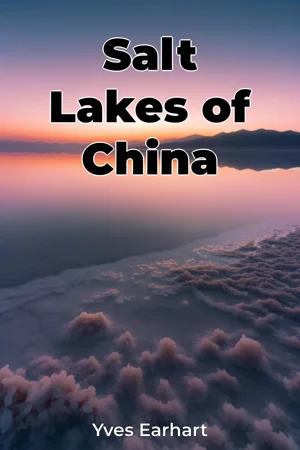
Have you ever wondered about the vast, shimmering landscapes of China that aren't oceans but hold just as much salt? This book, "Salt Lakes of China," delves into the fascinating world of these unique geological formations, exploring their origins, characteristics, and the significant role they play in China's economy and environment. This exploration is important because salt lakes are not only geological wonders, but also vital sources of minerals and key indicators of environmental change. This book investigates the geological processes behind the formation of China's salt lakes, from the arid climates and tectonic activity that create the necessary conditions, to the specific chemical reactions that lead to the precipitation of various salts. A landmark of these geological wonders is Chaka Salt Lake, a major focus, illustrating common formation patterns and specific characteristics of China's salt lake compositions. Understanding these processes is key to interpreting the history of these landscapes and predicting their future evolution. Their economic importance is significant, as they represent substantial reserves of valuable minerals like lithium, potassium, and boron, all crucial components in modern industries ranging from agriculture to battery production. The book offers a comprehensive survey of China's major salt lake regions, detailing their individual geological histories, hydrological cycles, and mineral compositions. It begins by introducing the fundamental concepts of saline lake formation, including the roles of evaporation, inflow, and geological structures. The discussion develops into a detailed examination of specific salt lake districts, showcasing the diversity of these environments. Each district is analyzed in terms of its unique geological setting, its dominant salt minerals, and its economic significance. The book culminates in an assessment of the environmental challenges facing China's salt lakes, such as pollution, water scarcity, and the impacts of climate change, and then proposes strategies for sustainable management and conservation. The data presented is a diverse range of sources, including geological surveys, geochemical analyses of lake brines and sediments, and economic reports on mineral extraction. Original fieldwork and analysis conducted by the authors supplement existing research, offering new insights into the formation and evolution of these lakes. "Salt Lakes of China" connects to several other fields of study, including climatology, hydrology, and environmental science. By examining the relationships between climate patterns, water flow, and salt lake chemistry, the book provides a truly interdisciplinary perspective. The book stands out for its holistic approach, combining geological, economic, and environmental perspectives to provide a complete picture of China's salt lakes. It's written in a clear and accessible style, suitable for students, researchers, and anyone with an interest in geology, geography, or environmental science. The target audience includes students and researchers in earth sciences, environmental science, and economic geology, as well as policymakers and industry professionals involved in resource management and environmental conservation. The exploration of salt lakes is confined within China's geographical boundaries, though the processes and implications may be relevant to other regions worldwide. The insights of this book can inform strategies for responsible resource extraction, sustainable water management, and the mitigation of environmental degradation. The book addresses debates surrounding the environmental impacts of lithium extraction and the competing demands for water resources in arid regions.
Have you ever wondered about the vast, shimmering landscapes of China that aren't oceans but hold just as much salt? This book, "Salt Lakes of China," delves into the fascinating world of these unique geological formations, exploring their origins, characteristics, and the significant role they play in China's economy and environment. This exploration is important because salt lakes are not only geological wonders, but also vital sources of minerals and key indicators of environmental change. This book investigates the geological processes behind the formation of China's salt lakes, from the arid climates and tectonic activity that create the necessary conditions, to the specific chemical reactions that lead to the precipitation of various salts. A landmark of these geological wonders is Chaka Salt Lake, a major focus, illustrating common formation patterns and specific characteristics of China's salt lake compositions. Understanding these processes is key to interpreting the history of these landscapes and predicting their future evolution. Their economic importance is significant, as they represent substantial reserves of valuable minerals like lithium, potassium, and boron, all crucial components in modern industries ranging from agriculture to battery production. The book offers a comprehensive survey of China's major salt lake regions, detailing their individual geological histories, hydrological cycles, and mineral compositions. It begins by introducing the fundamental concepts of saline lake formation, including the roles of evaporation, inflow, and geological structures. The discussion develops into a detailed examination of specific salt lake districts, showcasing the diversity of these environments. Each district is analyzed in terms of its unique geological setting, its dominant salt minerals, and its economic significance. The book culminates in an assessment of the environmental challenges facing China's salt lakes, such as pollution, water scarcity, and the impacts of climate change, and then proposes strategies for sustainable management and conservation. The data presented is a diverse range of sources, including geological surveys, geochemical analyses of lake brines and sediments, and economic reports on mineral extraction. Original fieldwork and analysis conducted by the authors supplement existing research, offering new insights into the formation and evolution of these lakes. "Salt Lakes of China" connects to several other fields of study, including climatology, hydrology, and environmental science. By examining the relationships between climate patterns, water flow, and salt lake chemistry, the book provides a truly interdisciplinary perspective. The book stands out for its holistic approach, combining geological, economic, and environmental perspectives to provide a complete picture of China's salt lakes. It's written in a clear and accessible style, suitable for students, researchers, and anyone with an interest in geology, geography, or environmental science. The target audience includes students and researchers in earth sciences, environmental science, and economic geology, as well as policymakers and industry professionals involved in resource management and environmental conservation. The exploration of salt lakes is confined within China's geographical boundaries, though the processes and implications may be relevant to other regions worldwide. The insights of this book can inform strategies for responsible resource extraction, sustainable water management, and the mitigation of environmental degradation. The book addresses debates surrounding the environmental impacts of lithium extraction and the competing demands for water resources in arid regions.
"Salt Lakes of China" explores the geological origins, economic significance, and environmental challenges surrounding these unique landscapes. These salt lakes are not only geological wonders formed by specific climatic and tectonic conditions but also vital sources of minerals like lithium, crucial for modern industries. The book details the chemical reactions leading to salt precipitation, offering insights into the history and future evolution of these environments. The book provides a comprehensive survey of China's major salt lake regions, detailing their geological histories, hydrological cycles, and mineral compositions. One intriguing aspect is the focus on Chaka Salt Lake, illustrating common formation patterns in China. Through geological surveys and geochemical analyses, the book connects climatology, hydrology, and environmental science to provide an interdisciplinary perspective. The book begins with the fundamental concepts of saline lake formation, then progresses into detailed examinations of specific salt lake districts and their unique geological settings. It culminates in an assessment of environmental challenges like pollution and climate change, proposing strategies for sustainable management. This holistic approach, combining geological, economic, and environmental perspectives, makes the book valuable for students, researchers, and policymakers.
Book Details
ISBN
9788233985417
Publisher
Publifye AS
Your Licenses
You don't own any licenses for this book
Purchase a license below to unlock this book and download the EPUB.
Purchase License
Select a tier to unlock this book
Need bulk licensing?
Contact us for enterprise agreements.