
About This Book
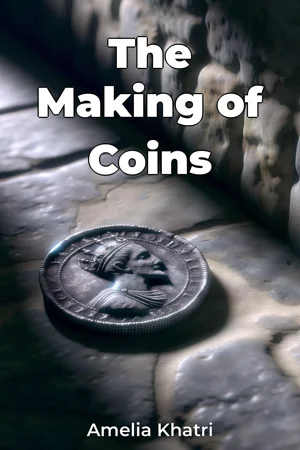
Have you ever paused to consider the ingenuity and economic forces behind the simple coin in your pocket? "The Making of Coins" delves into the fascinating history of coinage, revealing the complex interplay of metallurgy, economics, and political power that underpinned its creation and evolution in ancient civilizations. This book explores three central themes: the technologies employed in ancient coin minting, the strategies used to control the precious metal content of coins, and the innovative, often desperate, techniques developed to combat counterfeiting. Understanding these elements provides critical insight into the economic stability, technological capabilities, and social structures of past societies. This book provides detailed historical context, examining the genesis of coinage in Lydia during the 7th century BCE and its subsequent spread throughout the Mediterranean world and beyond. We explore pre-coinage forms of currency, such as bartering and the use of precious metals by weight, to illustrate the revolutionary nature of standardized coinage. While some familiarity with ancient history will be helpful, the book is written to be accessible to a broad audience with an interest in economics and material culture. The central argument of "The Making of Coins" is that the history of coinage is not merely a chronicle of technological advancement, but a reflection of the constant tension between centralized control and individual agency, trust and deception, value and perception. By analyzing the methods used to produce, regulate, and safeguard coins, we gain a deeper understanding of the economic and social dynamics that shaped the ancient world. The book is structured in three major parts. First, we introduce the fundamental techniques of ancient coin production, detailing the processes of metal extraction, alloy creation, die engraving, and striking. Second, we examine the various methods used by rulers and governments to control the metal content of coins, including weight standards, alloy composition, and marking systems. This section analyzes the economic implications of debasement and revaluation. Third, we investigate the history of counterfeiting, exploring the techniques used by forgers, the methods employed by authorities to detect fake coins, and the evolving legal frameworks designed to punish counterfeiters. The book's arguments are supported by a wide range of evidence, including archaeological finds of ancient minting equipment, numismatic analysis of coin compositions, and historical texts documenting monetary policies. We also draw upon recent advances in archaeometallurgy, using techniques such as X-ray fluorescence and inductively coupled plasma mass spectrometry to analyze the elemental composition of ancient coins with unprecedented precision. "The Making of Coins" connects to various fields of study, including archaeology, history, economics, and materials science. It demonstrates how economic policies can influence technological development, how archaeological findings can illuminate historical narratives, and how material science can inform our understanding of ancient economies. This book offers a unique perspective by combining traditional numismatic analysis with cutting-edge scientific techniques. This interdisciplinary approach provides a more complete and nuanced understanding of the economic significance of ancient coinage. The writing style is factual and analytical, presenting information in a clear and engaging manner. The intended audience includes students of history and economics, coin collectors, and anyone interested in the material culture of the ancient world. This book provides valuable insights into the economic foundations of ancient civilizations and the enduring challenges of maintaining monetary integrity. The scope of the book is limited to the ancient world, primarily focusing on the period from the 7th century BCE to the 5th century CE. While later developments in coinage are acknowledged, they are not the primary focus. The information in this book can be applied to understanding modern monetary systems and the ongoing challenge of preventing financial fraud. The book also addresses ongoing debates surrounding the interpretation of ancient monetary policies and the identification of counterfeit coins.
Have you ever paused to consider the ingenuity and economic forces behind the simple coin in your pocket? "The Making of Coins" delves into the fascinating history of coinage, revealing the complex interplay of metallurgy, economics, and political power that underpinned its creation and evolution in ancient civilizations. This book explores three central themes: the technologies employed in ancient coin minting, the strategies used to control the precious metal content of coins, and the innovative, often desperate, techniques developed to combat counterfeiting. Understanding these elements provides critical insight into the economic stability, technological capabilities, and social structures of past societies. This book provides detailed historical context, examining the genesis of coinage in Lydia during the 7th century BCE and its subsequent spread throughout the Mediterranean world and beyond. We explore pre-coinage forms of currency, such as bartering and the use of precious metals by weight, to illustrate the revolutionary nature of standardized coinage. While some familiarity with ancient history will be helpful, the book is written to be accessible to a broad audience with an interest in economics and material culture. The central argument of "The Making of Coins" is that the history of coinage is not merely a chronicle of technological advancement, but a reflection of the constant tension between centralized control and individual agency, trust and deception, value and perception. By analyzing the methods used to produce, regulate, and safeguard coins, we gain a deeper understanding of the economic and social dynamics that shaped the ancient world. The book is structured in three major parts. First, we introduce the fundamental techniques of ancient coin production, detailing the processes of metal extraction, alloy creation, die engraving, and striking. Second, we examine the various methods used by rulers and governments to control the metal content of coins, including weight standards, alloy composition, and marking systems. This section analyzes the economic implications of debasement and revaluation. Third, we investigate the history of counterfeiting, exploring the techniques used by forgers, the methods employed by authorities to detect fake coins, and the evolving legal frameworks designed to punish counterfeiters. The book's arguments are supported by a wide range of evidence, including archaeological finds of ancient minting equipment, numismatic analysis of coin compositions, and historical texts documenting monetary policies. We also draw upon recent advances in archaeometallurgy, using techniques such as X-ray fluorescence and inductively coupled plasma mass spectrometry to analyze the elemental composition of ancient coins with unprecedented precision. "The Making of Coins" connects to various fields of study, including archaeology, history, economics, and materials science. It demonstrates how economic policies can influence technological development, how archaeological findings can illuminate historical narratives, and how material science can inform our understanding of ancient economies. This book offers a unique perspective by combining traditional numismatic analysis with cutting-edge scientific techniques. This interdisciplinary approach provides a more complete and nuanced understanding of the economic significance of ancient coinage. The writing style is factual and analytical, presenting information in a clear and engaging manner. The intended audience includes students of history and economics, coin collectors, and anyone interested in the material culture of the ancient world. This book provides valuable insights into the economic foundations of ancient civilizations and the enduring challenges of maintaining monetary integrity. The scope of the book is limited to the ancient world, primarily focusing on the period from the 7th century BCE to the 5th century CE. While later developments in coinage are acknowledged, they are not the primary focus. The information in this book can be applied to understanding modern monetary systems and the ongoing challenge of preventing financial fraud. The book also addresses ongoing debates surrounding the interpretation of ancient monetary policies and the identification of counterfeit coins.
"The Making of Coins" explores the economic and technological history of ancient coinage, revealing how these small objects reflect the broader economic, political, and social structures of ancient civilizations. The book highlights the ingenuity involved in ancient coin minting, from metal extraction to die engraving, and examines the constant struggle to maintain the value of coins, a struggle still relevant today. Intriguingly, the book uncovers the techniques used to detect counterfeiting, illustrating the ongoing battle between trust and deception in monetary systems. The book uniquely combines numismatic analysis with cutting-edge archaeometallurgy, using techniques like X-ray fluorescence to analyze the elemental composition of ancient coins. Structured in three parts, it first details coin production techniques, then examines methods used to control metal content and value, and finally investigates the history of counterfeiting. This approach offers a comprehensive understanding of how ancient economies functioned and the challenges they faced.
Book Details
ISBN
9788233985370
Publisher
Publifye AS
Your Licenses
You don't own any licenses for this book
Purchase a license below to unlock this book and download the EPUB.
Purchase License
Select a tier to unlock this book
Need bulk licensing?
Contact us for enterprise agreements.