
About This Book
Have you ever considered the hidden underwater rainforests thriving off the coast of China? This book, "Coral Reefs of China," unveils the complex ecosystem of these vital habitats, exploring their extraordinary biodiversity and the increasing threats they face. Understanding these reefs is crucial, not only for marine biologists and environmental scientists but for anyone concerned about the future of our planet and the intricate web of life it supports. The book delves into three primary areas: first, a comprehensive overview of China's coral reef ecosystems, detailing their geographical distribution, species composition, and ecological roles. These reefs, though less widely known than those in the Indo-Pacific, are biodiversity hotspots, teeming with unique species of corals, fish, and invertebrates. Second, the book examines the escalating challenges confronting these reefs, with a particular focus on climate change, pollution, and unsustainable fishing practices. Rising sea temperatures, ocean acidification, and nutrient runoff are causing unprecedented coral bleaching and habitat degradation. Third, it explores current and potential conservation strategies, highlighting both the successes and limitations of existing management approaches. Understanding these interconnected issues is essential for developing effective solutions to protect these fragile ecosystems. "Coral Reefs of China" contextualizes these issues within the broader framework of global reef decline. It draws upon historical data, scientific surveys, and cutting-edge research to provide a detailed assessment of the current state of China's reefs. The book argues that effective conservation requires a multifaceted approach, integrating scientific research, policy interventions, and community engagement. This argument is supported by a wealth of empirical data, including long-term monitoring studies, experimental manipulations, and socioeconomic analyses. The book is structured to systematically guide the reader through the complexities of the subject. It begins with an introduction to coral reef ecology and a historical overview of reef research in China. Subsequent chapters explore the diversity of reef organisms, the ecological processes that sustain reef ecosystems, and the threats they face. Later chapters delve into specific case studies, showcasing both successful conservation initiatives and areas where further action is needed. The book concludes with a discussion of future research directions and policy recommendations, emphasizing the need for collaborative efforts to ensure the long-term survival of China's coral reefs. Original data collected through field research expeditions, laboratory experiments, and remote sensing techniques are presented to support the book’s arguments. This book integrates knowledge from several interdisciplinary fields, including marine biology, environmental science, oceanography, and environmental policy. By connecting these diverse perspectives, "Coral Reefs of China" offers a more holistic understanding of the challenges and opportunities facing coral reef conservation. This book offers a comprehensive examination of the interplay between ecological processes, environmental stressors, and human activities. This book serves as a valuable resource for students, researchers, policymakers, and anyone interested in marine conservation and environmental sustainability. Its accessible language and clear explanations make complex scientific concepts understandable to a broad audience, while its rigorous research and detailed analysis will be of interest to experts in the field. The book adopts a balanced and objective tone, presenting scientific findings in a clear and concise manner. While acknowledging the severity of the threats facing coral reefs, it also highlights the potential for positive change through effective conservation strategies. The scope of "Coral Reefs of China" is limited to the coral reef ecosystems found within China's territorial waters. While the book acknowledges the global context of reef decline, its primary focus is on the specific challenges and opportunities facing these reefs. The book has real-world applications for marine protected area management, fisheries management, and coastal development planning. It provides practical guidance for policymakers and conservation practitioners seeking to protect and restore coral reef ecosystems. Furthermore, the book may touch upon debates surrounding competing conservation strategies and the role of international cooperation in addressing global environmental challenges.
Have you ever considered the hidden underwater rainforests thriving off the coast of China? This book, "Coral Reefs of China," unveils the complex ecosystem of these vital habitats, exploring their extraordinary biodiversity and the increasing threats they face. Understanding these reefs is crucial, not only for marine biologists and environmental scientists but for anyone concerned about the future of our planet and the intricate web of life it supports. The book delves into three primary areas: first, a comprehensive overview of China's coral reef ecosystems, detailing their geographical distribution, species composition, and ecological roles. These reefs, though less widely known than those in the Indo-Pacific, are biodiversity hotspots, teeming with unique species of corals, fish, and invertebrates. Second, the book examines the escalating challenges confronting these reefs, with a particular focus on climate change, pollution, and unsustainable fishing practices. Rising sea temperatures, ocean acidification, and nutrient runoff are causing unprecedented coral bleaching and habitat degradation. Third, it explores current and potential conservation strategies, highlighting both the successes and limitations of existing management approaches. Understanding these interconnected issues is essential for developing effective solutions to protect these fragile ecosystems. "Coral Reefs of China" contextualizes these issues within the broader framework of global reef decline. It draws upon historical data, scientific surveys, and cutting-edge research to provide a detailed assessment of the current state of China's reefs. The book argues that effective conservation requires a multifaceted approach, integrating scientific research, policy interventions, and community engagement. This argument is supported by a wealth of empirical data, including long-term monitoring studies, experimental manipulations, and socioeconomic analyses. The book is structured to systematically guide the reader through the complexities of the subject. It begins with an introduction to coral reef ecology and a historical overview of reef research in China. Subsequent chapters explore the diversity of reef organisms, the ecological processes that sustain reef ecosystems, and the threats they face. Later chapters delve into specific case studies, showcasing both successful conservation initiatives and areas where further action is needed. The book concludes with a discussion of future research directions and policy recommendations, emphasizing the need for collaborative efforts to ensure the long-term survival of China's coral reefs. Original data collected through field research expeditions, laboratory experiments, and remote sensing techniques are presented to support the book’s arguments. This book integrates knowledge from several interdisciplinary fields, including marine biology, environmental science, oceanography, and environmental policy. By connecting these diverse perspectives, "Coral Reefs of China" offers a more holistic understanding of the challenges and opportunities facing coral reef conservation. This book offers a comprehensive examination of the interplay between ecological processes, environmental stressors, and human activities. This book serves as a valuable resource for students, researchers, policymakers, and anyone interested in marine conservation and environmental sustainability. Its accessible language and clear explanations make complex scientific concepts understandable to a broad audience, while its rigorous research and detailed analysis will be of interest to experts in the field. The book adopts a balanced and objective tone, presenting scientific findings in a clear and concise manner. While acknowledging the severity of the threats facing coral reefs, it also highlights the potential for positive change through effective conservation strategies. The scope of "Coral Reefs of China" is limited to the coral reef ecosystems found within China's territorial waters. While the book acknowledges the global context of reef decline, its primary focus is on the specific challenges and opportunities facing these reefs. The book has real-world applications for marine protected area management, fisheries management, and coastal development planning. It provides practical guidance for policymakers and conservation practitioners seeking to protect and restore coral reef ecosystems. Furthermore, the book may touch upon debates surrounding competing conservation strategies and the role of international cooperation in addressing global environmental challenges.
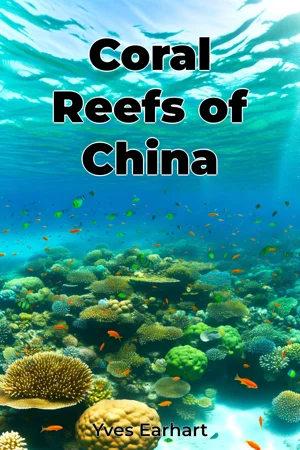
"Coral Reefs of China" explores the vibrant yet threatened coral reef ecosystems along China's coast, offering insights into their biodiversity and ecological significance. These underwater habitats, while less famous than others, are hotspots of marine life, supporting unique species of corals, fish, and invertebrates. The book highlights the escalating challenges these reefs face, particularly from climate change, pollution, and unsustainable practices, leading to coral bleaching and habitat degradation. The book examines these intricate ecosystems, detailing their geographical distribution and ecological roles, while also discussing the successes and limitations of current reef conservation strategies. It contextualizes these issues within the broader framework of global reef decline, utilizing historical data and scientific surveys to provide a detailed assessment. For example, rising sea temperatures and ocean acidification are causing unprecedented damage, underscoring the urgent need for effective conservation. Structured to systematically guide the reader, the book progresses from an introduction to coral reef ecology to specific case studies and policy recommendations. It emphasizes the need for collaborative efforts integrating scientific research, policy interventions, and community engagement to ensure the long-term survival of China's coral reefs, making it valuable for researchers, policymakers, and anyone interested in marine conservation.
Book Details
ISBN
9788233985363
Publisher
Publifye AS
Your Licenses
You don't own any licenses for this book
Purchase a license below to unlock this book and download the EPUB.
Purchase License
Select a tier to unlock this book
Need bulk licensing?
Contact us for enterprise agreements.