
About This Book
Imagine a world without coins, banknotes, or digital transactions. A world where your skills and possessions are the currency. "The History of Bartering" explores this foundational economic system, revealing its intricate mechanisms, its profound influence on the development of trade, and the reasons behind its eventual replacement by monetary systems. This book is essential for understanding the roots of modern economics and the enduring human drive to exchange value. We delve into two primary topics: the operational mechanics of early barter systems and the socio-economic pressures that propelled the transition to monetary economies. Understanding how early societies facilitated trade through direct exchange illuminates the ingenuity and resourcefulness of our ancestors. Furthermore, examining the limitations of barter, such as indivisibility of goods and the challenges of matching needs, is critical to understanding the necessity of money as a universal medium of exchange. To fully appreciate the complexities of bartering, we examine its historical context, spanning from pre-agricultural societies to early civilizations. The book assumes a basic understanding of historical periods and economic principles, but provides clear explanations of specialized terminology. The central argument of "The History of Bartering" posits that while barter served as an indispensable precursor to sophisticated trade networks, its inherent inefficiencies ultimately spurred the invention and adoption of money, leading to increased economic specialization and growth. This argument is important because it reveals that money is not an arbitrary invention; it is a logical solution to the inherent constraints of a barter economy. The book is structured to guide the reader through a logical progression of understanding. We begin by defining bartering and exploring its prevalence in various cultures throughout history. The book then examines the principal challenges of barter systems, such as the "double coincidence of wants," the difficulty in valuing goods, and the lack of standardization. This is followed by an analysis of how these challenges prompted inventive solutions and transitional forms of exchange, such as commodity money. Finally, we discuss the rise of fiat money and the modern financial system, highlighting the lasting legacy of bartering in contemporary practices like trade credits and skill-sharing networks. The book draws upon a wide range of historical sources, including archaeological findings, ancient texts, and anthropological studies. Quantitative data on trade volumes and price fluctuations, where available, will be analyzed to support our arguments. "The History of Bartering" connects to several other fields, including anthropology, sociology, and political science. By examining bartering through an anthropological lens, we gain insights into the social structures and power dynamics that shaped early trade relationships. Similarly, sociological analysis helps us understand how bartering fostered community bonds and social norms. The book’s exploration of early economic systems also lays the groundwork for understanding modern political structures. The book adopts a balanced perspective, acknowledging both the benefits and limitations of bartering. The writing style is accessible and engaging, aiming to make complex economic concepts understandable to a broad audience without sacrificing academic rigor. This book is aimed at students, history enthusiasts, economics aficionados, and anyone curious about the origins of commerce. Readers will gain a new appreciation for the evolution of economic systems and the fundamental role that bartering played in shaping human civilization. The scope of the book is comprehensive, covering bartering practices across diverse cultures and historical periods. However, it focuses primarily on the economic aspects of bartering, with less emphasis on the cultural or social nuances of specific barter communities. The principles of bartering remain relevant today. Understanding the inherent challenges of direct exchange can help us appreciate the value of money and the importance of efficient markets. While the historical record provides ample evidence of bartering practices, debates continue among historians and economists regarding the precise extent to which various societies relied on bartering versus other forms of exchange. "The History of Bartering" addresses these debates, presenting a balanced view of the available evidence.
Imagine a world without coins, banknotes, or digital transactions. A world where your skills and possessions are the currency. "The History of Bartering" explores this foundational economic system, revealing its intricate mechanisms, its profound influence on the development of trade, and the reasons behind its eventual replacement by monetary systems. This book is essential for understanding the roots of modern economics and the enduring human drive to exchange value. We delve into two primary topics: the operational mechanics of early barter systems and the socio-economic pressures that propelled the transition to monetary economies. Understanding how early societies facilitated trade through direct exchange illuminates the ingenuity and resourcefulness of our ancestors. Furthermore, examining the limitations of barter, such as indivisibility of goods and the challenges of matching needs, is critical to understanding the necessity of money as a universal medium of exchange. To fully appreciate the complexities of bartering, we examine its historical context, spanning from pre-agricultural societies to early civilizations. The book assumes a basic understanding of historical periods and economic principles, but provides clear explanations of specialized terminology. The central argument of "The History of Bartering" posits that while barter served as an indispensable precursor to sophisticated trade networks, its inherent inefficiencies ultimately spurred the invention and adoption of money, leading to increased economic specialization and growth. This argument is important because it reveals that money is not an arbitrary invention; it is a logical solution to the inherent constraints of a barter economy. The book is structured to guide the reader through a logical progression of understanding. We begin by defining bartering and exploring its prevalence in various cultures throughout history. The book then examines the principal challenges of barter systems, such as the "double coincidence of wants," the difficulty in valuing goods, and the lack of standardization. This is followed by an analysis of how these challenges prompted inventive solutions and transitional forms of exchange, such as commodity money. Finally, we discuss the rise of fiat money and the modern financial system, highlighting the lasting legacy of bartering in contemporary practices like trade credits and skill-sharing networks. The book draws upon a wide range of historical sources, including archaeological findings, ancient texts, and anthropological studies. Quantitative data on trade volumes and price fluctuations, where available, will be analyzed to support our arguments. "The History of Bartering" connects to several other fields, including anthropology, sociology, and political science. By examining bartering through an anthropological lens, we gain insights into the social structures and power dynamics that shaped early trade relationships. Similarly, sociological analysis helps us understand how bartering fostered community bonds and social norms. The book’s exploration of early economic systems also lays the groundwork for understanding modern political structures. The book adopts a balanced perspective, acknowledging both the benefits and limitations of bartering. The writing style is accessible and engaging, aiming to make complex economic concepts understandable to a broad audience without sacrificing academic rigor. This book is aimed at students, history enthusiasts, economics aficionados, and anyone curious about the origins of commerce. Readers will gain a new appreciation for the evolution of economic systems and the fundamental role that bartering played in shaping human civilization. The scope of the book is comprehensive, covering bartering practices across diverse cultures and historical periods. However, it focuses primarily on the economic aspects of bartering, with less emphasis on the cultural or social nuances of specific barter communities. The principles of bartering remain relevant today. Understanding the inherent challenges of direct exchange can help us appreciate the value of money and the importance of efficient markets. While the historical record provides ample evidence of bartering practices, debates continue among historians and economists regarding the precise extent to which various societies relied on bartering versus other forms of exchange. "The History of Bartering" addresses these debates, presenting a balanced view of the available evidence.
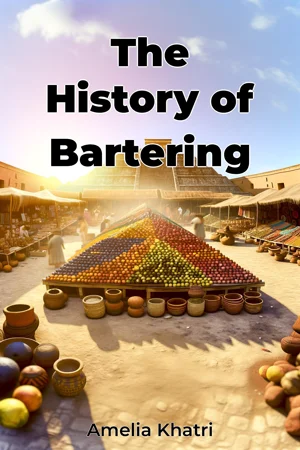
"The History of Bartering" explores the origins of commerce by examining bartering, a foundational economic system where goods and services are directly exchanged without money. The book delves into how early societies facilitated trade, highlighting the human ingenuity required to overcome challenges like the "double coincidence of wants," where both parties must simultaneously desire what the other possesses. Understanding bartering offers insights into early economies and the evolution of economic principles. The book progresses chronologically, starting with pre-agricultural societies and moving through early civilizations to illustrate the prevalence and adaptations of bartering. It investigates the limitations of barter, such as the difficulty in valuing goods, which ultimately propelled the transition to monetary systems. By drawing on archaeological findings and ancient texts, the book reveals how bartering served as a crucial precursor to modern financial systems, influencing contemporary practices like trade credits. Recognizing these early economic systems demonstrates that money is not arbitrary, but a logical solution to the constraints inherent in a barter economy.
Book Details
ISBN
9788233985325
Publisher
Publifye AS
Your Licenses
You don't own any licenses for this book
Purchase a license below to unlock this book and download the EPUB.
Purchase License
Select a tier to unlock this book
Need bulk licensing?
Contact us for enterprise agreements.