
About This Book
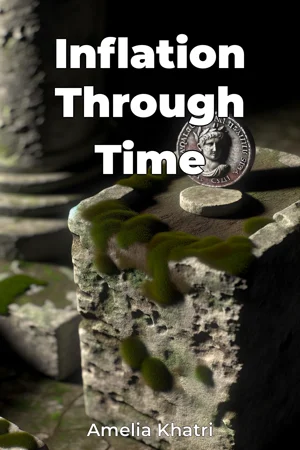
Could unchecked inflation be a silent architect of societal collapse? This book, "Inflation Through Time," delves into the multifaceted history of inflation, exploring its profound impact on economies and societies from antiquity to the modern era. We examine not only the economic mechanisms of inflation, but also its social, political, and even cultural consequences throughout history. Inflation, broadly defined as a sustained increase in the general price level of goods and services in an economy, is a recurring phenomenon across history, yet its causes, effects, and management remain subjects of fervent debate. Understanding inflation is crucial, for it directly affects purchasing power, investment decisions, and overall economic stability. Ignoring its lessons is a recipe for repeating past mistakes. To provide context, the book presents a foundational overview of different monetary systems, economic theories surrounding value and exchange, and the evolution of financial institutions. The central argument posits that inflationary episodes are not merely economic anomalies, but rather critical junctures that expose underlying structural weaknesses and power dynamics within societies. By analyzing diverse historical case studies, the book demonstrates how inflation acts as a catalyst, accelerating existing trends and exacerbating inequalities, often leading to social unrest and political instability. The book unfolds chronologically, starting with examples from ancient Rome and its debasement of currency, and then moving to the inflation experienced during the age of exploration, spurred by an influx of New World silver into Europe. Through detailed analysis, we address the hyperinflation crises of the Weimar Republic, exploring its causes and devastating effects. Finally, it addresses more recent inflationary periods in Latin America and beyond, providing an understanding of modern inflationary pressures and policy responses. Evidence presented relies on primary source materials like government records, contemporary accounts, and financial documents, alongside secondary analyses from leading economic historians. Quantitative data on price levels, wages, and exchange rates is also incorporated to provide a comprehensive empirical basis for the arguments. Comparative analysis is used to highlight common threads and divergent paths across different inflationary episodes, using econometric methods to confirm certain correlations. The book connects to political science, exploring how inflation can erode trust in government and fuel social movements. It also touches on sociology, examining the impact of inflation on social stratification and the distribution of wealth. Moreover, the book has connections with psychology, delving into the behavioral aspects of inflation, such as how individuals react to changing prices and the formation of inflationary expectations. A unique aspect of this book is its interdisciplinary approach, which provides contextual understanding by looking past traditionally separate fields of study. It connects diverse inflationary events across time and borders, moving beyond national narratives to provide a global view of the economic phenomenon. Written in an accessible style, the book balances rigorous scholarship with engaging storytelling. Complex economic concepts are explained in clear, concise language, making the material accessible to a wide audience. This book is intended for students of history and economics, policymakers, investors, and anyone interested in gaining a deeper understanding of the forces that shape our economic world. It offers valuable insights for making informed decisions in an era marked by increasing economic uncertainty. While the book covers a broad sweep of history, it acknowledges limitations in the depth of analysis for specific regions and time periods. The decision to focus on major inflationary episodes allows for a more detailed examination of key turning points, and the book does not claim to be an exhaustive history of every instance of price increases. The information here presented can be used to forecast market trends, inform investment strategies, and develop policies aimed at mitigating the negative consequences of inflation. Furthermore, it provides a historical perspective on current debates about monetary policy and fiscal responsibility. The book engages with ongoing debates about the causes of inflation, particularly the relative importance of monetary factors versus supply-side shocks. It also addresses controversies surrounding the appropriate policy responses to inflation, such as the use of interest rate hikes or fiscal austerity measures.
Could unchecked inflation be a silent architect of societal collapse? This book, "Inflation Through Time," delves into the multifaceted history of inflation, exploring its profound impact on economies and societies from antiquity to the modern era. We examine not only the economic mechanisms of inflation, but also its social, political, and even cultural consequences throughout history. Inflation, broadly defined as a sustained increase in the general price level of goods and services in an economy, is a recurring phenomenon across history, yet its causes, effects, and management remain subjects of fervent debate. Understanding inflation is crucial, for it directly affects purchasing power, investment decisions, and overall economic stability. Ignoring its lessons is a recipe for repeating past mistakes. To provide context, the book presents a foundational overview of different monetary systems, economic theories surrounding value and exchange, and the evolution of financial institutions. The central argument posits that inflationary episodes are not merely economic anomalies, but rather critical junctures that expose underlying structural weaknesses and power dynamics within societies. By analyzing diverse historical case studies, the book demonstrates how inflation acts as a catalyst, accelerating existing trends and exacerbating inequalities, often leading to social unrest and political instability. The book unfolds chronologically, starting with examples from ancient Rome and its debasement of currency, and then moving to the inflation experienced during the age of exploration, spurred by an influx of New World silver into Europe. Through detailed analysis, we address the hyperinflation crises of the Weimar Republic, exploring its causes and devastating effects. Finally, it addresses more recent inflationary periods in Latin America and beyond, providing an understanding of modern inflationary pressures and policy responses. Evidence presented relies on primary source materials like government records, contemporary accounts, and financial documents, alongside secondary analyses from leading economic historians. Quantitative data on price levels, wages, and exchange rates is also incorporated to provide a comprehensive empirical basis for the arguments. Comparative analysis is used to highlight common threads and divergent paths across different inflationary episodes, using econometric methods to confirm certain correlations. The book connects to political science, exploring how inflation can erode trust in government and fuel social movements. It also touches on sociology, examining the impact of inflation on social stratification and the distribution of wealth. Moreover, the book has connections with psychology, delving into the behavioral aspects of inflation, such as how individuals react to changing prices and the formation of inflationary expectations. A unique aspect of this book is its interdisciplinary approach, which provides contextual understanding by looking past traditionally separate fields of study. It connects diverse inflationary events across time and borders, moving beyond national narratives to provide a global view of the economic phenomenon. Written in an accessible style, the book balances rigorous scholarship with engaging storytelling. Complex economic concepts are explained in clear, concise language, making the material accessible to a wide audience. This book is intended for students of history and economics, policymakers, investors, and anyone interested in gaining a deeper understanding of the forces that shape our economic world. It offers valuable insights for making informed decisions in an era marked by increasing economic uncertainty. While the book covers a broad sweep of history, it acknowledges limitations in the depth of analysis for specific regions and time periods. The decision to focus on major inflationary episodes allows for a more detailed examination of key turning points, and the book does not claim to be an exhaustive history of every instance of price increases. The information here presented can be used to forecast market trends, inform investment strategies, and develop policies aimed at mitigating the negative consequences of inflation. Furthermore, it provides a historical perspective on current debates about monetary policy and fiscal responsibility. The book engages with ongoing debates about the causes of inflation, particularly the relative importance of monetary factors versus supply-side shocks. It also addresses controversies surrounding the appropriate policy responses to inflation, such as the use of interest rate hikes or fiscal austerity measures.
"Inflation Through Time" explores the pervasive influence of inflation throughout history, arguing it's not merely an economic anomaly but a critical juncture revealing societal weaknesses. The book examines how rising price levels impact economies, societies, and political landscapes, emphasizing its effects on purchasing power, investment decisions, and overall economic stability. By understanding past inflationary episodes, readers can gain insights into current economic challenges and potential future trends. One intriguing aspect explored is how inflation can exacerbate existing inequalities, potentially leading to social unrest and political instability, as seen historically. The book unfolds chronologically, starting with ancient Rome and progressing through significant inflationary periods such as the influx of New World silver and the hyperinflation of the Weimar Republic. Analyzing diverse historical case studies with supporting evidence from primary source documents, the book connects seemingly disparate inflationary events across time and borders. It offers a global perspective on the economic phenomenon of inflation, emphasizing the interdisciplinary nature of the topic, including connections to political science, sociology, and psychology. This approach allows it to stand out by providing a contextual understanding that goes beyond traditional economic analyses.
Book Details
ISBN
9788233985288
Publisher
Publifye AS
Your Licenses
You don't own any licenses for this book
Purchase a license below to unlock this book and download the EPUB.
Purchase License
Select a tier to unlock this book
Need bulk licensing?
Contact us for enterprise agreements.