
About This Book
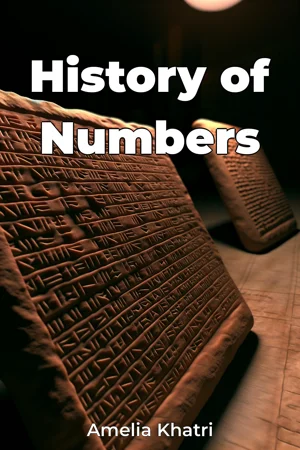
Have you ever stopped to consider the epic journey of numbers, from simple scratches on cave walls to the complex algorithms that power our digital world? This book, "History of Numbers," embarks on a comprehensive exploration of this very evolution, revealing how humanity's understanding and utilization of numbers has shaped civilization itself. We will trace the development of numerical systems across diverse cultures and millennia, highlighting key milestones and paradigm shifts that have revolutionized science, technology, and daily life. This book delves into three core themes: the origins of counting and numeral systems, the mathematical breakthroughs that propelled scientific advancement, and the profound impact of numbers on modern technology and society. Understanding these themes is crucial because numbers are not merely abstract symbols; they are the language through which we quantify, analyze, and ultimately comprehend the universe around us. A grasp of their historical development provides invaluable insight into the foundations of modern thought and innovation. To fully appreciate the story of numbers, it is essential to consider the historical and social contexts in which numerical systems arose. Early civilizations developed counting methods in response to practical needs like tracking resources, measuring land, and predicting seasonal changes. The book explores these initial motivations, examining how different cultures devised unique approaches to representing quantity and performing basic calculations. No specific prerequisite knowledge is needed; this book is crafted to be accessible to anyone with a curious mind. Central to our narrative is the argument that the history of numbers is, in essence, the history of human ingenuity. Each advancement in numerical understanding represents a significant intellectual achievement, driving progress in fields ranging from astronomy and physics to engineering and economics. Understanding this intricate interplay between numbers and human progress is crucial for appreciating the true extent of their influence. The book unfolds in a structured and engaging way. We begin by examining the earliest forms of counting, from tally marks to the development of base systems in ancient Mesopotamia and Egypt. We then transition to the contributions of Greek mathematicians like Pythagoras and Euclid, whose work laid the groundwork for formal mathematical reasoning. The subsequent chapters explore the revolutionary impact of the Hindu-Arabic numeral system, including the concept of zero, and its spread across the globe. Finally, we analyze the role of numbers in the digital age, focusing on the development of computer science, coding, and data analysis. The narrative is supported by a wealth of historical evidence, drawing from archaeological findings, ancient texts, and scholarly research. We present original data from historical sources whenever possible, offering readers a direct connection to the past. The book also incorporates recent research in the history of mathematics and science. "History of Numbers" naturally intersects with several other disciplines. It aligns with history by contextualizing the development of numerical systems within broader cultural and political narratives. It connects with anthropology by examining how different societies conceptualized and utilized numbers. Furthermore, the book enhances the understanding of computer science, providing historical context to the numerical foundations of modern computing. This book takes a unique approach by emphasizing the interconnectedness of mathematical concepts and their practical applications throughout history. Rather than presenting a purely abstract account of numbers, we highlight how they have been used to solve real-world problems and drive innovation across diverse fields. The writing style is clear, engaging, and accessible to a broad audience. While maintaining scholarly rigor, we avoid technical jargon and strive to present complex ideas in a way that is both informative and enjoyable to read. The target audience includes anyone with an interest in history, science, mathematics, or technology. The book will also appeal to students, educators, and professionals who seek a deeper understanding of the numerical foundations of their respective fields. It is valuable because it connects abstract mathematical concepts to tangible historical events and societal developments. As a work in the genre of history and science, this book adheres to the conventions of historical accuracy, factual rigor, and clear exposition. It presents a coherent narrative supported by evidence-based arguments. The scope of "History of Numbers" is broad, encompassing the development of numbers from their earliest origins to the present day. However, we focus primarily on the major milestones and turning points in this evolution, rather than attempting to provide an exhaustive account of every numerical system ever devised. The knowledge acquired from this book has several real-world applications. It can enhance problem-solving skills, improve analytical thinking, and provide a deeper appreciation for the role of numbers in everyday life. It promotes a more well-rounded understanding of culture and technology. While the impact of numbers is overwhelmingly positive, we also acknowledge the controversies surrounding their use, such as the potential for misinterpretation of data and the ethical implications of algorithms. The book critically addresses these issues, encouraging readers to engage with the complex challenges and opportunities that numbers present.
Have you ever stopped to consider the epic journey of numbers, from simple scratches on cave walls to the complex algorithms that power our digital world? This book, "History of Numbers," embarks on a comprehensive exploration of this very evolution, revealing how humanity's understanding and utilization of numbers has shaped civilization itself. We will trace the development of numerical systems across diverse cultures and millennia, highlighting key milestones and paradigm shifts that have revolutionized science, technology, and daily life. This book delves into three core themes: the origins of counting and numeral systems, the mathematical breakthroughs that propelled scientific advancement, and the profound impact of numbers on modern technology and society. Understanding these themes is crucial because numbers are not merely abstract symbols; they are the language through which we quantify, analyze, and ultimately comprehend the universe around us. A grasp of their historical development provides invaluable insight into the foundations of modern thought and innovation. To fully appreciate the story of numbers, it is essential to consider the historical and social contexts in which numerical systems arose. Early civilizations developed counting methods in response to practical needs like tracking resources, measuring land, and predicting seasonal changes. The book explores these initial motivations, examining how different cultures devised unique approaches to representing quantity and performing basic calculations. No specific prerequisite knowledge is needed; this book is crafted to be accessible to anyone with a curious mind. Central to our narrative is the argument that the history of numbers is, in essence, the history of human ingenuity. Each advancement in numerical understanding represents a significant intellectual achievement, driving progress in fields ranging from astronomy and physics to engineering and economics. Understanding this intricate interplay between numbers and human progress is crucial for appreciating the true extent of their influence. The book unfolds in a structured and engaging way. We begin by examining the earliest forms of counting, from tally marks to the development of base systems in ancient Mesopotamia and Egypt. We then transition to the contributions of Greek mathematicians like Pythagoras and Euclid, whose work laid the groundwork for formal mathematical reasoning. The subsequent chapters explore the revolutionary impact of the Hindu-Arabic numeral system, including the concept of zero, and its spread across the globe. Finally, we analyze the role of numbers in the digital age, focusing on the development of computer science, coding, and data analysis. The narrative is supported by a wealth of historical evidence, drawing from archaeological findings, ancient texts, and scholarly research. We present original data from historical sources whenever possible, offering readers a direct connection to the past. The book also incorporates recent research in the history of mathematics and science. "History of Numbers" naturally intersects with several other disciplines. It aligns with history by contextualizing the development of numerical systems within broader cultural and political narratives. It connects with anthropology by examining how different societies conceptualized and utilized numbers. Furthermore, the book enhances the understanding of computer science, providing historical context to the numerical foundations of modern computing. This book takes a unique approach by emphasizing the interconnectedness of mathematical concepts and their practical applications throughout history. Rather than presenting a purely abstract account of numbers, we highlight how they have been used to solve real-world problems and drive innovation across diverse fields. The writing style is clear, engaging, and accessible to a broad audience. While maintaining scholarly rigor, we avoid technical jargon and strive to present complex ideas in a way that is both informative and enjoyable to read. The target audience includes anyone with an interest in history, science, mathematics, or technology. The book will also appeal to students, educators, and professionals who seek a deeper understanding of the numerical foundations of their respective fields. It is valuable because it connects abstract mathematical concepts to tangible historical events and societal developments. As a work in the genre of history and science, this book adheres to the conventions of historical accuracy, factual rigor, and clear exposition. It presents a coherent narrative supported by evidence-based arguments. The scope of "History of Numbers" is broad, encompassing the development of numbers from their earliest origins to the present day. However, we focus primarily on the major milestones and turning points in this evolution, rather than attempting to provide an exhaustive account of every numerical system ever devised. The knowledge acquired from this book has several real-world applications. It can enhance problem-solving skills, improve analytical thinking, and provide a deeper appreciation for the role of numbers in everyday life. It promotes a more well-rounded understanding of culture and technology. While the impact of numbers is overwhelmingly positive, we also acknowledge the controversies surrounding their use, such as the potential for misinterpretation of data and the ethical implications of algorithms. The book critically addresses these issues, encouraging readers to engage with the complex challenges and opportunities that numbers present.
"History of Numbers" explores the fascinating evolution of numerical systems, revealing how they've shaped civilizations, science, and technology. The book traces the journey from ancient tally marks to the complex algorithms of today, highlighting crucial milestones and paradigm shifts. Early counting methods arose from practical needs like resource tracking and land measurement, showcasing human ingenuity in diverse cultures. Discover how numbers aren't just abstract symbols but a fundamental language for understanding the universe. The book emphasizes the interconnectedness of mathematical concepts and their real-world applications. It examines the contributions of Greek mathematicians and the revolutionary impact of the Hindu-Arabic numeral system, including the concept of zero. Progressing through chapters, the narrative analyzes numbers in the digital age, including computer science and data analysis. This approach offers a unique perspective, emphasizing how numbers have solved problems and driven innovation across various fields, making it valuable for anyone interested in science, history, or mathematics.
Book Details
ISBN
9788233985158
Publisher
Publifye AS
Your Licenses
You don't own any licenses for this book
Purchase a license below to unlock this book and download the EPUB.
Purchase License
Select a tier to unlock this book
Need bulk licensing?
Contact us for enterprise agreements.