
About This Book
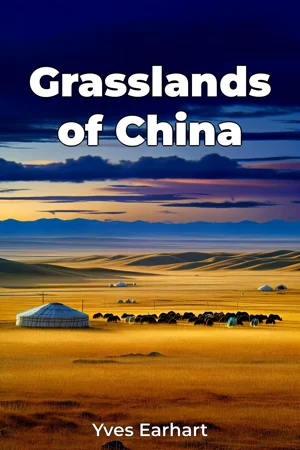
What if the future of sustainable grazing and nomadic cultures hinges on understanding the intricate ecosystems of a single region? "Grasslands of China" delves into the vast and ecologically significant grasslands of China, exploring their multifaceted role in the nation's environmental health, cultural heritage, and economic stability. This book examines the biophysical characteristics of these grasslands, the unique ways of life of the nomadic communities who call them home, and the growing challenges posed by climate change and modernization. The book focuses on three central themes. First, the ecological diversity of China's grasslands is explored, detailing the various plant and animal species that thrive in these environments and the delicate balance that sustains them. This includes an analysis of soil composition, water cycles, and the impact of grazing on biodiversity. Second, we examine the cultural significance of these grasslands to the nomadic populations who have historically managed and depended on them. This investigation includes their traditional grazing practices, social structures, and the challenges they face in a rapidly changing world. Third, the book analyzes the impact of government policies, economic development, and climate change on these grasslands and the communities that depend on them, including desertification, overgrazing, and the displacement of nomadic peoples. These three themes are important because the grasslands represent a complex interplay of environmental factors, human activity, and policy decisions that have far-reaching consequences for China and the world. Historical context is provided through an overview of the evolution of nomadic cultures in China and the historical interactions between these cultures and settled agricultural societies. Scientific context is established by reviewing the relevant literature on grassland ecology, climate science, and sustainable development. Understanding these contexts is vital for appreciating the present-day challenges and opportunities facing China's grasslands. The central argument of "Grasslands of China" is that the long-term sustainability of these vital ecosystems requires an integrated approach that balances ecological conservation, cultural preservation, and economic development. The book demonstrates through interdisciplinary research and on-the-ground observations, that ignoring any one of these elements will undermine efforts to protect these grasslands for future generations. The book begins by introducing the geographical distribution of China's grasslands, alongside a discussion on their ecological significance. The subsequent sections delve into the traditional practices of nomadic communities, highlighting their deep understanding of the land and their sustainable grazing techniques. We then critically assess the impact of recent policies and development projects, evaluating their effectiveness in addressing environmental degradation and supporting local communities. The book culminates by offering practical recommendations for a more sustainable future, advocating for community-based conservation initiatives, policy reforms that support nomadic livelihoods, and strategies to mitigate the impacts of climate change. The analysis is based on data from ecological surveys, anthropological fieldwork, government reports, and climate models. Unique data sources include interviews with nomadic herders, historical records of grassland management practices, and remote sensing data that tracks changes in vegetation cover and land use. This book connects to other fields such as climate science, anthropology, and economics, demonstrating how climate change impacts grassland ecosystems and nomadic livelihoods, how traditional knowledge can inform sustainable development strategies, and how economic policies can promote or undermine conservation efforts. "Grasslands of China" offers a unique perspective by combining scientific analysis with a deep appreciation for the cultural heritage of nomadic communities. It goes beyond simply describing the problems and instead provides concrete solutions informed by both scientific and traditional knowledge. The book is written in a professional yet accessible style, making it suitable for a broad audience interested in environmental issues, cultural studies, and sustainable development. It is aimed at students, researchers, policymakers, and anyone interested in learning more about the complex challenges facing China's grasslands. It adheres to the conventions of non-fiction nature, incorporating vivid descriptions, data analysis, and compelling narratives to engage the reader. While the book focuses primarily on the grasslands within China's borders, it acknowledges that these ecosystems are part of a larger global network and that the challenges they face are relevant to grassland regions around the world. It does not offer an exhaustive analysis of every grassland region within China but instead focuses on representative ecosystems to illustrate key themes and challenges. The information presented in this book can be applied to a variety of real-world settings, from informing conservation efforts to shaping government policies and promoting sustainable tourism. It provides the background, data, and analysis necessary for readers to understand and address the challenges facing China's grasslands. The book addresses the controversies surrounding grassland management in China, including debates over the role of nomadic grazing, the effectiveness of government policies, and the impacts of climate change. It presents different perspectives and offers a balanced assessment of the available evidence.
What if the future of sustainable grazing and nomadic cultures hinges on understanding the intricate ecosystems of a single region? "Grasslands of China" delves into the vast and ecologically significant grasslands of China, exploring their multifaceted role in the nation's environmental health, cultural heritage, and economic stability. This book examines the biophysical characteristics of these grasslands, the unique ways of life of the nomadic communities who call them home, and the growing challenges posed by climate change and modernization. The book focuses on three central themes. First, the ecological diversity of China's grasslands is explored, detailing the various plant and animal species that thrive in these environments and the delicate balance that sustains them. This includes an analysis of soil composition, water cycles, and the impact of grazing on biodiversity. Second, we examine the cultural significance of these grasslands to the nomadic populations who have historically managed and depended on them. This investigation includes their traditional grazing practices, social structures, and the challenges they face in a rapidly changing world. Third, the book analyzes the impact of government policies, economic development, and climate change on these grasslands and the communities that depend on them, including desertification, overgrazing, and the displacement of nomadic peoples. These three themes are important because the grasslands represent a complex interplay of environmental factors, human activity, and policy decisions that have far-reaching consequences for China and the world. Historical context is provided through an overview of the evolution of nomadic cultures in China and the historical interactions between these cultures and settled agricultural societies. Scientific context is established by reviewing the relevant literature on grassland ecology, climate science, and sustainable development. Understanding these contexts is vital for appreciating the present-day challenges and opportunities facing China's grasslands. The central argument of "Grasslands of China" is that the long-term sustainability of these vital ecosystems requires an integrated approach that balances ecological conservation, cultural preservation, and economic development. The book demonstrates through interdisciplinary research and on-the-ground observations, that ignoring any one of these elements will undermine efforts to protect these grasslands for future generations. The book begins by introducing the geographical distribution of China's grasslands, alongside a discussion on their ecological significance. The subsequent sections delve into the traditional practices of nomadic communities, highlighting their deep understanding of the land and their sustainable grazing techniques. We then critically assess the impact of recent policies and development projects, evaluating their effectiveness in addressing environmental degradation and supporting local communities. The book culminates by offering practical recommendations for a more sustainable future, advocating for community-based conservation initiatives, policy reforms that support nomadic livelihoods, and strategies to mitigate the impacts of climate change. The analysis is based on data from ecological surveys, anthropological fieldwork, government reports, and climate models. Unique data sources include interviews with nomadic herders, historical records of grassland management practices, and remote sensing data that tracks changes in vegetation cover and land use. This book connects to other fields such as climate science, anthropology, and economics, demonstrating how climate change impacts grassland ecosystems and nomadic livelihoods, how traditional knowledge can inform sustainable development strategies, and how economic policies can promote or undermine conservation efforts. "Grasslands of China" offers a unique perspective by combining scientific analysis with a deep appreciation for the cultural heritage of nomadic communities. It goes beyond simply describing the problems and instead provides concrete solutions informed by both scientific and traditional knowledge. The book is written in a professional yet accessible style, making it suitable for a broad audience interested in environmental issues, cultural studies, and sustainable development. It is aimed at students, researchers, policymakers, and anyone interested in learning more about the complex challenges facing China's grasslands. It adheres to the conventions of non-fiction nature, incorporating vivid descriptions, data analysis, and compelling narratives to engage the reader. While the book focuses primarily on the grasslands within China's borders, it acknowledges that these ecosystems are part of a larger global network and that the challenges they face are relevant to grassland regions around the world. It does not offer an exhaustive analysis of every grassland region within China but instead focuses on representative ecosystems to illustrate key themes and challenges. The information presented in this book can be applied to a variety of real-world settings, from informing conservation efforts to shaping government policies and promoting sustainable tourism. It provides the background, data, and analysis necessary for readers to understand and address the challenges facing China's grasslands. The book addresses the controversies surrounding grassland management in China, including debates over the role of nomadic grazing, the effectiveness of government policies, and the impacts of climate change. It presents different perspectives and offers a balanced assessment of the available evidence.
"Grasslands of China" explores the ecological, cultural, and economic significance of China's vast grasslands, focusing on the delicate balance between environmental health, nomadic cultures, and sustainable development. It unveils how these grasslands, vital ecosystems, are facing unprecedented challenges from climate change, modernization, and policy impacts. The book highlights the ecological diversity, showcasing the unique plant and animal species that thrive there. Intriguingly, sustainable grazing practices, traditionally employed by nomadic communities, offer valuable insights for modern conservation efforts. The book examines the intricate relationship between nomadic communities and the grasslands, detailing their sustainable practices and the threats they face. It delves into government policies and their effects on these ecosystems and nomadic livelihoods, including instances of desertification and displacement. The book emphasizes the necessity of an integrated approach that harmonizes ecological conservation, cultural preservation, and economic advancement to ensure the long-term sustainability of these vital ecosystems. Beginning with a geographical introduction, the book progresses through nomadic traditions and policy assessments, ultimately proposing practical recommendations for a sustainable future.
Book Details
ISBN
9788233985141
Publisher
Publifye AS
Your Licenses
You don't own any licenses for this book
Purchase a license below to unlock this book and download the EPUB.
Purchase License
Select a tier to unlock this book
Need bulk licensing?
Contact us for enterprise agreements.