
About This Book
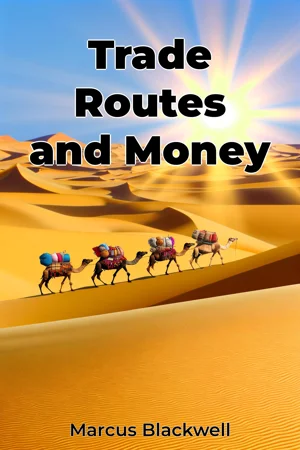
How did the exchange of silk, spices, and ideas along ancient trade routes reshape the very concept of money and fuel unprecedented economic expansion? "Trade Routes and Money" delves into the intricate relationship between international commerce and the evolution of currency, exploring how iconic pathways like the Silk Road, the maritime spice routes, and the Trans-Saharan trade network served not only as conduits for goods, but also as catalysts for monetary innovation and economic development. This book examines currency exchange mechanisms, the impact of trade on economic growth, and the broader implications for international commerce throughout history. Understanding this relationship is crucial for comprehending the foundations of modern global economics and appreciating the long-term consequences of trade on societal structures. This book argues that trade routes were not simply pathways for goods; they were also incubators for financial systems and engines of economic transformation. We will explore how the necessities of long-distance trade prompted the development of sophisticated currency exchange methods, banking systems, and monetary policies. The book will provide a historical context by examining the social, political, and technological conditions that fostered the growth of these trade networks. The reader will gain an understanding of pre-modern economies and how they adapted to the challenges and opportunities presented by increased international exchange. The book is structured in three main parts. First, it introduces the fundamental concepts of currency, trade, and economic growth, establishing a theoretical foundation for understanding their interconnectedness. Second, it presents detailed case studies of major historical trade routes, analyzing their specific impacts on currency systems and economic development in the regions they connected. This section includes chapters dedicated to the Silk Road and its influence on the development of paper money in China, the maritime spice routes and their role in the rise of merchant banking in Europe, and the Trans-Saharan trade network and its impact on gold-based currencies in West Africa. Third, the concluding section synthesizes the findings from the case studies, drawing broader conclusions about the relationship between trade routes and money and considering the implications for contemporary economic policy. The evidence presented in this book draws from a variety of sources, including archaeological findings, numismatic collections, historical texts, and economic data. The analyses incorporate interdisciplinary perspectives from economics, history, and anthropology to provide a comprehensive understanding of the topic. This book connects to several other fields, including political science by examining how trade shapes international relations, sociology by exploring the social impacts of economic change, and geography by analyzing the spatial dimensions of trade networks. This interdisciplinary approach enriches the analysis and offers a more nuanced understanding of the complex interplay between trade, money, and society. One unique aspect of this book is its comparative focus. By examining multiple trade routes across different time periods and geographical locations, it identifies common patterns and unique characteristics in the relationship between trade and monetary systems. Written in an accessible yet academically rigorous style, "Trade Routes and Money" aims to engage a broad audience, including students of economics and history, policymakers, and anyone interested in understanding the historical roots of the global economy. The book provides valuable insights into the forces that have shaped the world we live in and offers a framework for analyzing contemporary economic challenges. It aligns with the conventions of non-fiction history and economics genres, providing well-researched and clearly articulated analyses supported by empirical evidence. The book will be limited to pre-industrial trade routes, thus excluding modern global supply chains to provide a more focused analysis. The information in this book can be applied to contemporary issues such as understanding the impact of new trade routes like the Belt and Road Initiative on currency stability and economic development. One of the ongoing debates addressed is the extent to which trade is a primary driver of economic growth versus a result of other underlying factors. The book engages with this debate by providing evidence that supports the significant, but not sole, role of trade routes in shaping monetary systems and fostering economic advancement.
How did the exchange of silk, spices, and ideas along ancient trade routes reshape the very concept of money and fuel unprecedented economic expansion? "Trade Routes and Money" delves into the intricate relationship between international commerce and the evolution of currency, exploring how iconic pathways like the Silk Road, the maritime spice routes, and the Trans-Saharan trade network served not only as conduits for goods, but also as catalysts for monetary innovation and economic development. This book examines currency exchange mechanisms, the impact of trade on economic growth, and the broader implications for international commerce throughout history. Understanding this relationship is crucial for comprehending the foundations of modern global economics and appreciating the long-term consequences of trade on societal structures. This book argues that trade routes were not simply pathways for goods; they were also incubators for financial systems and engines of economic transformation. We will explore how the necessities of long-distance trade prompted the development of sophisticated currency exchange methods, banking systems, and monetary policies. The book will provide a historical context by examining the social, political, and technological conditions that fostered the growth of these trade networks. The reader will gain an understanding of pre-modern economies and how they adapted to the challenges and opportunities presented by increased international exchange. The book is structured in three main parts. First, it introduces the fundamental concepts of currency, trade, and economic growth, establishing a theoretical foundation for understanding their interconnectedness. Second, it presents detailed case studies of major historical trade routes, analyzing their specific impacts on currency systems and economic development in the regions they connected. This section includes chapters dedicated to the Silk Road and its influence on the development of paper money in China, the maritime spice routes and their role in the rise of merchant banking in Europe, and the Trans-Saharan trade network and its impact on gold-based currencies in West Africa. Third, the concluding section synthesizes the findings from the case studies, drawing broader conclusions about the relationship between trade routes and money and considering the implications for contemporary economic policy. The evidence presented in this book draws from a variety of sources, including archaeological findings, numismatic collections, historical texts, and economic data. The analyses incorporate interdisciplinary perspectives from economics, history, and anthropology to provide a comprehensive understanding of the topic. This book connects to several other fields, including political science by examining how trade shapes international relations, sociology by exploring the social impacts of economic change, and geography by analyzing the spatial dimensions of trade networks. This interdisciplinary approach enriches the analysis and offers a more nuanced understanding of the complex interplay between trade, money, and society. One unique aspect of this book is its comparative focus. By examining multiple trade routes across different time periods and geographical locations, it identifies common patterns and unique characteristics in the relationship between trade and monetary systems. Written in an accessible yet academically rigorous style, "Trade Routes and Money" aims to engage a broad audience, including students of economics and history, policymakers, and anyone interested in understanding the historical roots of the global economy. The book provides valuable insights into the forces that have shaped the world we live in and offers a framework for analyzing contemporary economic challenges. It aligns with the conventions of non-fiction history and economics genres, providing well-researched and clearly articulated analyses supported by empirical evidence. The book will be limited to pre-industrial trade routes, thus excluding modern global supply chains to provide a more focused analysis. The information in this book can be applied to contemporary issues such as understanding the impact of new trade routes like the Belt and Road Initiative on currency stability and economic development. One of the ongoing debates addressed is the extent to which trade is a primary driver of economic growth versus a result of other underlying factors. The book engages with this debate by providing evidence that supports the significant, but not sole, role of trade routes in shaping monetary systems and fostering economic advancement.
"Trade Routes and Money" explores the profound connection between international commerce and the evolution of currency, particularly focusing on pre-industrial economies. It argues that historic trade routes, like the Silk Road and Spice Routes, were not just conduits for goods but also vital incubators for financial innovation and economic development. These routes spurred the creation of sophisticated currency exchange methods and banking systems, fundamentally reshaping societies and economies. For instance, the book highlights how the Silk Road influenced the development of paper money in China, showcasing the transformative power of trade on monetary systems. The book uniquely adopts a comparative approach, examining various trade routes across different eras and regions to identify common patterns and unique characteristics in the relationship between trade and monetary systems. Structured in three parts, it first establishes the theoretical groundwork, then delves into detailed case studies of major historical trade routes like the Trans-Saharan trade network and its impact on gold-based currencies in West Africa. Finally, it synthesizes findings to draw broader conclusions about the lasting impact of trade routes on money and its implications for contemporary economic policy, offering readers a valuable perspective on the origins of our global economy.
Book Details
ISBN
9788233985134
Publisher
Publifye AS
Your Licenses
You don't own any licenses for this book
Purchase a license below to unlock this book and download the EPUB.
Purchase License
Select a tier to unlock this book
Need bulk licensing?
Contact us for enterprise agreements.