
About This Book
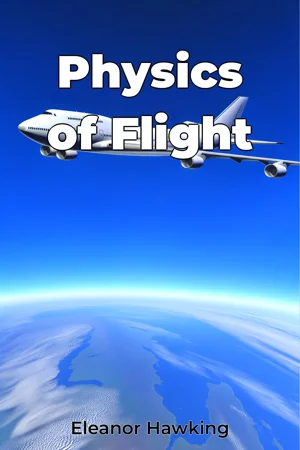
Have you ever wondered what a bird and a Boeing 747 have in common? Both defy gravity through the elegant application of physics, a phenomenon explored in detail in "Physics of Flight." This book delves into the scientific principles that govern flight, from the natural world to the cutting edge of aerospace engineering. It reveals the core concepts of aerodynamics, propulsion systems, and the challenges of space travel, essential knowledge for anyone seeking to understand how humans and nature alike have conquered the skies. This book’s exploration of flight hinges on understanding three fundamental pillars: aerodynamics, the study of how air interacts with moving objects; propulsion, the generation of thrust that overcomes drag; and the specific challenges presented by the vacuum of space, where traditional aerodynamic principles are inapplicable. These topics are important because they underpin not only our ability to fly but also have implications for engineering design, environmental science, and our understanding of the universe. Throughout history, understanding flight has been a driving force behind scientific advancement. From early observations of birds to the Wright brothers' experiments, and onward to modern supersonic aircraft and spacecraft, each leap forward has been built upon a growing body of physical knowledge. A basic understanding of Newtonian mechanics, fluid dynamics, and thermodynamics provides a foundation for grasping the more advanced concepts discussed. The central argument of "Physics of Flight" is that flight, in all its forms, is a testament to the power and elegance of physical laws. By demystifying the complex interplay of forces and energies at work, the book aims to empower readers with a deeper appreciation for the technology that shapes our world and enables exploration beyond our planet. The book is structured to provide a comprehensive understanding of flight. It begins with an introduction to the core concepts of aerodynamics, explaining lift, drag, thrust, and weight. The book then explores the diverse methods of propulsion, from the simple flapping wings of insects to the complex jet engines of modern aircraft and the rocket propulsion necessary for space travel. This second part builds toward an examination of the physics of space flight, including orbital mechanics, spacecraft design, and the challenges of operating in a vacuum. Concluding chapters discuss practical applications of flight principles, such as aircraft design and the ongoing development of new aerospace technologies. The evidence presented will include detailed explanations of physical principles, supported by mathematical equations, diagrams, and real-world examples. Data from wind tunnel experiments, flight tests, and NASA missions will illustrate the concepts, showcasing the interplay between theory and practical application. "Physics of Flight" is inherently interdisciplinary, connecting physics with engineering, environmental science, and even biology. For instance, the study of bird flight informs aircraft design, while understanding atmospheric conditions is crucial for predicting flight performance. Furthermore, the environmental impact of aviation, including fuel efficiency and emissions, is addressed, linking flight with broader ecological concerns. This book distinguishes itself by offering a balanced and accessible approach to a complex subject. It avoids being overly technical, making it suitable for a broad audience, while still providing sufficient depth for readers with a stronger scientific background. It emphasizes conceptual understanding over rote memorization of formulas. Written in a clear and engaging style, "Physics of Flight" aims to make complex topics understandable and interesting. The book is targeted towards students, aviation enthusiasts, and anyone curious about the science behind flight. It will be valuable to those seeking a solid foundation in the physics of flight without being overwhelmed by technical jargon. As a non-fiction science book, "Physics of Flight" adheres to the genre's conventions by prioritizing accuracy, clarity, and evidence-based explanations. It acknowledges the limitations of its scope, focusing primarily on the physical principles of flight rather than delving into the history of aviation or detailed engineering design. The principles explained in "Physics of Flight" have numerous real-world applications. Readers will gain insights into aircraft design and flight control. They can also apply these concepts to understand weather patterns and predict the performance of various flying machines. While the basic principles of flight are well-established, there are ongoing debates within the aerospace community regarding the optimization of aircraft design and the future of propulsion systems. "Physics of Flight" will touch on these discussions, highlighting the dynamic nature of scientific inquiry.
Have you ever wondered what a bird and a Boeing 747 have in common? Both defy gravity through the elegant application of physics, a phenomenon explored in detail in "Physics of Flight." This book delves into the scientific principles that govern flight, from the natural world to the cutting edge of aerospace engineering. It reveals the core concepts of aerodynamics, propulsion systems, and the challenges of space travel, essential knowledge for anyone seeking to understand how humans and nature alike have conquered the skies. This book’s exploration of flight hinges on understanding three fundamental pillars: aerodynamics, the study of how air interacts with moving objects; propulsion, the generation of thrust that overcomes drag; and the specific challenges presented by the vacuum of space, where traditional aerodynamic principles are inapplicable. These topics are important because they underpin not only our ability to fly but also have implications for engineering design, environmental science, and our understanding of the universe. Throughout history, understanding flight has been a driving force behind scientific advancement. From early observations of birds to the Wright brothers' experiments, and onward to modern supersonic aircraft and spacecraft, each leap forward has been built upon a growing body of physical knowledge. A basic understanding of Newtonian mechanics, fluid dynamics, and thermodynamics provides a foundation for grasping the more advanced concepts discussed. The central argument of "Physics of Flight" is that flight, in all its forms, is a testament to the power and elegance of physical laws. By demystifying the complex interplay of forces and energies at work, the book aims to empower readers with a deeper appreciation for the technology that shapes our world and enables exploration beyond our planet. The book is structured to provide a comprehensive understanding of flight. It begins with an introduction to the core concepts of aerodynamics, explaining lift, drag, thrust, and weight. The book then explores the diverse methods of propulsion, from the simple flapping wings of insects to the complex jet engines of modern aircraft and the rocket propulsion necessary for space travel. This second part builds toward an examination of the physics of space flight, including orbital mechanics, spacecraft design, and the challenges of operating in a vacuum. Concluding chapters discuss practical applications of flight principles, such as aircraft design and the ongoing development of new aerospace technologies. The evidence presented will include detailed explanations of physical principles, supported by mathematical equations, diagrams, and real-world examples. Data from wind tunnel experiments, flight tests, and NASA missions will illustrate the concepts, showcasing the interplay between theory and practical application. "Physics of Flight" is inherently interdisciplinary, connecting physics with engineering, environmental science, and even biology. For instance, the study of bird flight informs aircraft design, while understanding atmospheric conditions is crucial for predicting flight performance. Furthermore, the environmental impact of aviation, including fuel efficiency and emissions, is addressed, linking flight with broader ecological concerns. This book distinguishes itself by offering a balanced and accessible approach to a complex subject. It avoids being overly technical, making it suitable for a broad audience, while still providing sufficient depth for readers with a stronger scientific background. It emphasizes conceptual understanding over rote memorization of formulas. Written in a clear and engaging style, "Physics of Flight" aims to make complex topics understandable and interesting. The book is targeted towards students, aviation enthusiasts, and anyone curious about the science behind flight. It will be valuable to those seeking a solid foundation in the physics of flight without being overwhelmed by technical jargon. As a non-fiction science book, "Physics of Flight" adheres to the genre's conventions by prioritizing accuracy, clarity, and evidence-based explanations. It acknowledges the limitations of its scope, focusing primarily on the physical principles of flight rather than delving into the history of aviation or detailed engineering design. The principles explained in "Physics of Flight" have numerous real-world applications. Readers will gain insights into aircraft design and flight control. They can also apply these concepts to understand weather patterns and predict the performance of various flying machines. While the basic principles of flight are well-established, there are ongoing debates within the aerospace community regarding the optimization of aircraft design and the future of propulsion systems. "Physics of Flight" will touch on these discussions, highlighting the dynamic nature of scientific inquiry.
"Physics of Flight" explores the physics governing how things fly, from birds to Boeing 747s, covering aerodynamics and propulsion, and even the challenges of space travel. It emphasizes core concepts like lift, drag, thrust, and weight, illustrating how these principles apply across different forms of flight. The book uniquely connects physics with engineering and environmental science, highlighting how insights from bird flight inform aircraft design. The book begins with aerodynamics, then transitions to propulsion methods, including jet engines and rocket technology for space travel. It emphasizes Newtonian mechanics, fluid dynamics, and thermodynamics. "Physics of Flight" aims to demystify forces and energies, giving readers a deeper appreciation for the technology that shapes our world and allows us to explore beyond Earth. The book differentiates itself by offering a balanced and accessible approach, avoiding overly technical language while providing sufficient depth for a broad audience. It uses equations, diagrams, and real-world examples from wind tunnel experiments, flight tests, and NASA missions to illustrate concepts. Concluding chapters discuss practical applications like aircraft design and new aerospace technologies.
Book Details
ISBN
9788233985097
Publisher
Publifye AS
Your Licenses
You don't own any licenses for this book
Purchase a license below to unlock this book and download the EPUB.
Purchase License
Select a tier to unlock this book
Need bulk licensing?
Contact us for enterprise agreements.