
About This Book
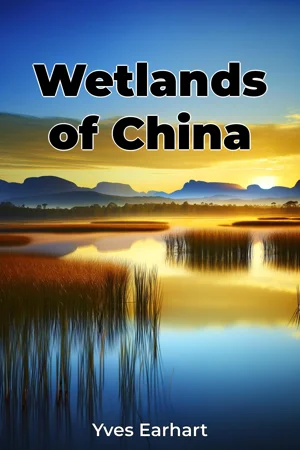
Did you know that the fate of migratory birds across Asia and Australasia hinges on the health of China's wetlands? "Wetlands of China" delves into the crucial role these ecosystems play in flood control, biodiversity conservation, and as vital habitats for migratory bird populations. This book examines the complex interplay between ecological functions and human impact on these fragile environments, highlighting the urgent need for informed conservation strategies. We explore how China's diverse wetland types, ranging from freshwater marshes and coastal mangroves to high-altitude peatlands, contribute significantly to regional water management. These areas act as natural sponges, absorbing excess rainfall and mitigating the severity of floods, particularly in densely populated river basins. Understanding the hydrological processes within these wetlands is paramount to developing sustainable flood management plans. Beyond flood control, we investigate the exceptional biodiversity supported by Chinese wetlands. They serve as breeding grounds, stopover sites, and wintering areas for a vast array of bird species, many of which are globally threatened. The book details the intricate food webs and ecological interactions that sustain this biodiversity, emphasizing the importance of these habitats in maintaining regional and global ecological balance. This study presents data collected from extensive field surveys, satellite imagery analysis, and collaboration with local communities to offer a comprehensive view of the ecological status of China's wetlands. Unique insights are derived from analyzing long-term monitoring data of bird populations, providing a clear picture of the impact of habitat loss and degradation. The central argument of "Wetlands of China" is that the long-term sustainability of China’s wetlands relies on integrating ecological conservation with socioeconomic development. Current practices often prioritize short-term economic gains at the expense of wetland health, leading to habitat loss, pollution, and declining biodiversity. We will present a compelling case for a paradigm shift towards holistic management approaches that recognize the intrinsic value of wetlands and the essential services they provide. The book is structured to guide the reader through a comprehensive understanding of Chinese wetlands. We begin by introducing the various wetland types found across the country and their ecological characteristics. Subsequent chapters delve into specific issues, such as the impact of agriculture and urbanization on wetland ecosystems, the challenges of invasive species, and the effectiveness of current conservation policies. The book culminates in a discussion of potential solutions, innovative management strategies, and recommendations for policy reform, offering practical pathways towards sustainable wetland conservation. This work draws upon diverse data sources, including government reports, scientific publications, and on-the-ground observations. Methodologies employed include ecological modeling, spatial analysis, and socio-economic assessments. "Wetlands of China" also connects to fields such as environmental economics, policy studies, and conservation biology. By examining the economic value of wetland services and analyzing the effectiveness of different policy interventions, the book provides a multidisciplinary perspective on wetland conservation. "Wetlands of China" offers fresh perspectives on the challenges and opportunities facing wetland conservation in a rapidly developing country. This book is written in clear and accessible language, suitable for students, researchers, policymakers, and anyone interested in environmental conservation and sustainable development. The intended audience includes conservation professionals, environmental scientists, policymakers, and informed citizens interested in sustainable development and conservation issues in China. The scope of this book is limited to the territorial boundaries of the People's Republic of China, but the issues discussed have broader relevance to wetland conservation efforts globally. We acknowledge that comprehensive coverage of every wetland site in China is beyond the scope of a single volume. "Wetlands of China" provides a crucial resource for those seeking to understand, protect, and sustainably manage these vital ecosystems.
Did you know that the fate of migratory birds across Asia and Australasia hinges on the health of China's wetlands? "Wetlands of China" delves into the crucial role these ecosystems play in flood control, biodiversity conservation, and as vital habitats for migratory bird populations. This book examines the complex interplay between ecological functions and human impact on these fragile environments, highlighting the urgent need for informed conservation strategies. We explore how China's diverse wetland types, ranging from freshwater marshes and coastal mangroves to high-altitude peatlands, contribute significantly to regional water management. These areas act as natural sponges, absorbing excess rainfall and mitigating the severity of floods, particularly in densely populated river basins. Understanding the hydrological processes within these wetlands is paramount to developing sustainable flood management plans. Beyond flood control, we investigate the exceptional biodiversity supported by Chinese wetlands. They serve as breeding grounds, stopover sites, and wintering areas for a vast array of bird species, many of which are globally threatened. The book details the intricate food webs and ecological interactions that sustain this biodiversity, emphasizing the importance of these habitats in maintaining regional and global ecological balance. This study presents data collected from extensive field surveys, satellite imagery analysis, and collaboration with local communities to offer a comprehensive view of the ecological status of China's wetlands. Unique insights are derived from analyzing long-term monitoring data of bird populations, providing a clear picture of the impact of habitat loss and degradation. The central argument of "Wetlands of China" is that the long-term sustainability of China’s wetlands relies on integrating ecological conservation with socioeconomic development. Current practices often prioritize short-term economic gains at the expense of wetland health, leading to habitat loss, pollution, and declining biodiversity. We will present a compelling case for a paradigm shift towards holistic management approaches that recognize the intrinsic value of wetlands and the essential services they provide. The book is structured to guide the reader through a comprehensive understanding of Chinese wetlands. We begin by introducing the various wetland types found across the country and their ecological characteristics. Subsequent chapters delve into specific issues, such as the impact of agriculture and urbanization on wetland ecosystems, the challenges of invasive species, and the effectiveness of current conservation policies. The book culminates in a discussion of potential solutions, innovative management strategies, and recommendations for policy reform, offering practical pathways towards sustainable wetland conservation. This work draws upon diverse data sources, including government reports, scientific publications, and on-the-ground observations. Methodologies employed include ecological modeling, spatial analysis, and socio-economic assessments. "Wetlands of China" also connects to fields such as environmental economics, policy studies, and conservation biology. By examining the economic value of wetland services and analyzing the effectiveness of different policy interventions, the book provides a multidisciplinary perspective on wetland conservation. "Wetlands of China" offers fresh perspectives on the challenges and opportunities facing wetland conservation in a rapidly developing country. This book is written in clear and accessible language, suitable for students, researchers, policymakers, and anyone interested in environmental conservation and sustainable development. The intended audience includes conservation professionals, environmental scientists, policymakers, and informed citizens interested in sustainable development and conservation issues in China. The scope of this book is limited to the territorial boundaries of the People's Republic of China, but the issues discussed have broader relevance to wetland conservation efforts globally. We acknowledge that comprehensive coverage of every wetland site in China is beyond the scope of a single volume. "Wetlands of China" provides a crucial resource for those seeking to understand, protect, and sustainably manage these vital ecosystems.
"Wetlands of China" explores the critical role of these diverse ecosystems in supporting migratory birds, aiding flood control, and maintaining biodiversity. These wetlands, ranging from freshwater marshes to coastal mangroves, are essential for regional water management, acting as natural buffers against flooding. It's intriguing that these areas serve as vital stopover points for numerous bird species, many of which are endangered, highlighting the importance of China's wetlands in global ecological balance. The book offers an extensive understanding of Chinese wetlands, beginning with an introduction to various wetland types and their ecological characteristics. It then delves into specific issues such as the impact of agriculture and urbanization, challenges posed by invasive species, and the effectiveness of current conservation methods. This study integrates ecological conservation with socio-economic development, advocating for sustainable management approaches that recognize the intrinsic value of wetlands and their essential services.
Book Details
ISBN
9788233985080
Publisher
Publifye AS
Your Licenses
You don't own any licenses for this book
Purchase a license below to unlock this book and download the EPUB.
Purchase License
Select a tier to unlock this book
Need bulk licensing?
Contact us for enterprise agreements.