
About This Book
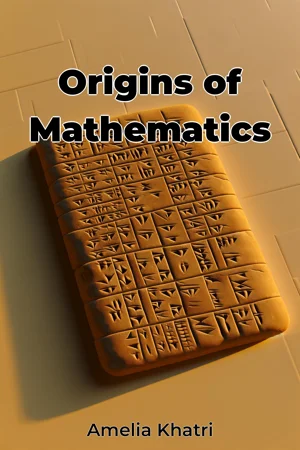
Have you ever wondered how humanity transitioned from simple counting to the complex mathematical systems that underpin modern technology and scientific understanding? "Origins of Mathematics" explores the fascinating journey of mathematical development across early civilizations, revealing how these ancient innovations laid the groundwork for trade, architecture, physics, and even space exploration. This book delves into the crucial role mathematics played in shaping human society and intellectual growth, providing a comprehensive overview of its genesis and evolution. This book focuses on three key areas: the development of number systems, the emergence of geometry, and the application of mathematical principles in early technologies. Understanding the origins of these concepts is vital because they represent fundamental building blocks of human knowledge and continue to influence our world. We examine the historical contexts in which these mathematical ideas arose, highlighting the social, economic, and cultural forces that drove their development. No advanced mathematical knowledge is required; the book aims to be accessible to anyone with an interest in history and the development of human thought. The central argument of "Origins of Mathematics" is that mathematical innovation was not a series of isolated discoveries, but rather a continuous, interconnected process driven by practical needs and intellectual curiosity across various cultures. We demonstrate how different civilizations built upon previous mathematical knowledge, adapting and expanding upon it to solve new problems. This book offers a structured journey through the history of mathematics, beginning with the earliest forms of counting and measurement in ancient Mesopotamia and Egypt. We will then explore the advancements made by the Greeks, including their contributions to geometry and number theory, and how these ideas were further developed in other parts of the world. Finally, we examine the practical applications of early mathematics, from the construction of monumental structures to the development of calendars and navigation systems. The arguments presented in "Origins of Mathematics" are supported by archaeological evidence, historical texts, and analyses of ancient artifacts. We draw upon a wide range of primary and secondary sources, including original mathematical texts, inscriptions, and architectural plans. The book also connects mathematics with other fields, such as history, archaeology, and anthropology, demonstrating how mathematical developments were intertwined with broader social and cultural changes. Furthermore, it explores the connections between mathematics and early engineering, illustrating how mathematical principles were applied to solve practical problems in construction, irrigation, and other technologies. This book adopts a narrative non-fiction style, blending historical analysis with clear and accessible explanations of mathematical concepts. It aims to appeal to a broad audience, including students, history enthusiasts, and anyone curious about the origins of mathematics. "Origins of Mathematics" offers a comprehensive overview of its subject, but focuses primarily on the period before the European Renaissance. While we acknowledge the contributions of other cultures and later periods, the book's central focus remains on the foundational developments of early mathematics. Understanding the origins of mathematical concepts provides useful context for understanding more advanced mathematical theory. This book also addresses ongoing debates about the interpretation of ancient mathematical texts and the cultural influences on mathematical development. It aims to provide a balanced and nuanced perspective on these issues, drawing upon the latest research in the field.
Have you ever wondered how humanity transitioned from simple counting to the complex mathematical systems that underpin modern technology and scientific understanding? "Origins of Mathematics" explores the fascinating journey of mathematical development across early civilizations, revealing how these ancient innovations laid the groundwork for trade, architecture, physics, and even space exploration. This book delves into the crucial role mathematics played in shaping human society and intellectual growth, providing a comprehensive overview of its genesis and evolution. This book focuses on three key areas: the development of number systems, the emergence of geometry, and the application of mathematical principles in early technologies. Understanding the origins of these concepts is vital because they represent fundamental building blocks of human knowledge and continue to influence our world. We examine the historical contexts in which these mathematical ideas arose, highlighting the social, economic, and cultural forces that drove their development. No advanced mathematical knowledge is required; the book aims to be accessible to anyone with an interest in history and the development of human thought. The central argument of "Origins of Mathematics" is that mathematical innovation was not a series of isolated discoveries, but rather a continuous, interconnected process driven by practical needs and intellectual curiosity across various cultures. We demonstrate how different civilizations built upon previous mathematical knowledge, adapting and expanding upon it to solve new problems. This book offers a structured journey through the history of mathematics, beginning with the earliest forms of counting and measurement in ancient Mesopotamia and Egypt. We will then explore the advancements made by the Greeks, including their contributions to geometry and number theory, and how these ideas were further developed in other parts of the world. Finally, we examine the practical applications of early mathematics, from the construction of monumental structures to the development of calendars and navigation systems. The arguments presented in "Origins of Mathematics" are supported by archaeological evidence, historical texts, and analyses of ancient artifacts. We draw upon a wide range of primary and secondary sources, including original mathematical texts, inscriptions, and architectural plans. The book also connects mathematics with other fields, such as history, archaeology, and anthropology, demonstrating how mathematical developments were intertwined with broader social and cultural changes. Furthermore, it explores the connections between mathematics and early engineering, illustrating how mathematical principles were applied to solve practical problems in construction, irrigation, and other technologies. This book adopts a narrative non-fiction style, blending historical analysis with clear and accessible explanations of mathematical concepts. It aims to appeal to a broad audience, including students, history enthusiasts, and anyone curious about the origins of mathematics. "Origins of Mathematics" offers a comprehensive overview of its subject, but focuses primarily on the period before the European Renaissance. While we acknowledge the contributions of other cultures and later periods, the book's central focus remains on the foundational developments of early mathematics. Understanding the origins of mathematical concepts provides useful context for understanding more advanced mathematical theory. This book also addresses ongoing debates about the interpretation of ancient mathematical texts and the cultural influences on mathematical development. It aims to provide a balanced and nuanced perspective on these issues, drawing upon the latest research in the field.
"Origins of Mathematics" explores how early civilizations developed the mathematical systems that underpin modern science and technology. It traces the evolution of mathematical thought from simple counting methods to more complex concepts, revealing the crucial role mathematics played in shaping human society and intellectual growth. The book highlights how mathematical innovation was a continuous, interconnected process driven by practical needs and intellectual curiosity across various cultures, with early number systems and geometry emerging as fundamental building blocks of knowledge. The book begins with the earliest forms of counting and measurement in Mesopotamia and Egypt, then explores the advancements made by the Greeks, including their contributions to geometry and number theory. It examines how these ideas were further developed and applied in practical ways, from monumental construction to navigation systems. Intriguingly, mathematics was not a series of isolated discoveries but adapted and expanded to solve new problems. Supported by archaeological evidence and historical texts, the book connects mathematics with history, archaeology, and anthropology, demonstrating its intertwining with broader social and cultural changes.
Book Details
ISBN
9788233985066
Publisher
Publifye AS
Your Licenses
You don't own any licenses for this book
Purchase a license below to unlock this book and download the EPUB.
Purchase License
Select a tier to unlock this book
Need bulk licensing?
Contact us for enterprise agreements.