
About This Book
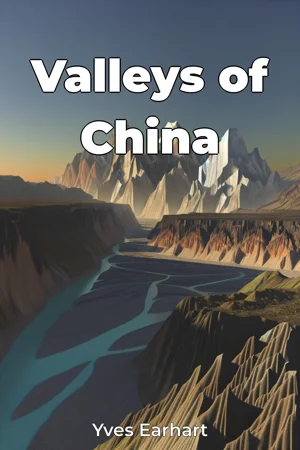
Have you ever wondered how the majestic landscapes of China, with their deep valleys and towering mountains, were sculpted over millennia? "Valleys of China" delves into the geological and ecological processes that have shaped these breathtaking formations, offering a comprehensive exploration of their origin, evolution, and significance. We will examine the interplay of tectonic forces, river systems, and climatic conditions that have carved out these unique environments, and we will investigate the rich biodiversity they now harbor. This book is crucial because understanding the formation and dynamics of China's valleys provides insights into broader earth science principles, and highlights the importance of these ecosystems as biodiversity hotspots. Further, knowledge of these geomorphological processes is essential for sustainable land management and mitigating natural disasters, such as floods and landslides, which disproportionately affect valley regions. "Valleys of China" presents a detailed account of these geological wonders. Starting with an overview of the region's tectonic history and the uplift of the Himalayas, this book establishes the stage for understanding how the major river systems, like the Yangtze and the Yellow River, sculpted the valleys we see today. We will then examine the impact of glacial activity during the Ice Age and the subsequent fluvial erosion that further shaped the landscape. The book's central argument is that the valleys of China represent a dynamic interaction between endogenic (tectonic) and exogenic (climatic and hydrological) forces, resulting in diverse ecosystems that are both fragile and vital. The book begins by introducing the core geological principles and geographical contexts necessary to understand valley formation. It proceeds with in-depth investigations of specific valley regions, exploring their unique geological features, hydrological systems, and ecological communities. Three major sections include: 1) the Formation of Valleys focusing on tectonic activity, orogeny and river erosion; 2) Valley Ecosystems focusing on flora, fauna, and human interactions; and 3) Valley Conservation focusing on sustainable development, environmental challenges, and conservation efforts. The book culminates by discussing the implications of ongoing climate change and human activities on these vulnerable landscapes, advocating for sustainable management practices. The evidence presented in "Valleys of China" is derived from extensive geological surveys, hydrological data, and ecological studies conducted over several decades. We will utilize satellite imagery, topographic maps, and geochemical analyses to illustrate the processes of valley formation and evolution. We will also incorporate paleontological evidence and biodiversity assessments to demonstrate the unique ecological significance of these areas. This book draws connections to various fields, including climatology, ecology, and environmental science. Understanding how climate change impacts glacial melt and river flow is crucial for predicting future changes in valley morphology. Ecological studies shed light on the biodiversity supported by these unique environments, and environmental science provides insights into the sustainable management of these resources. Moreover, the book touches upon the human element, examining how human activity has influenced these valleys through agriculture, urbanization, and infrastructure development. "Valleys of China" adopts an integrated, interdisciplinary approach. It combines geological analyses with ecological assessments and considerations of human impact, providing a holistic perspective on these complex systems. The book provides a detailed examination of less-studied valley regions, offering fresh insights into their formation and ecological dynamics. The tone of the book is informative and engaging, written in a style accessible to both experts and interested readers. It aims to educate and inspire, fostering an appreciation for the natural wonders of China and promoting responsible environmental stewardship. The target audience includes students and researchers in geology, geography, ecology, and environmental science, as well as policymakers and conservation practitioners. Anyone with an interest in China’s landscapes and the forces that shape our planet will find this book a valuable resource. As a work of non-fiction earth science and geography, "Valleys of China" adheres to the conventions of rigorous scientific accuracy and detailed referencing. It presents information in a clear, organized manner, with ample use of maps, diagrams, and photographs to illustrate key concepts. The scope of this book is limited to the major valleys of China, such as those formed by the Yangtze, Yellow, and Mekong Rivers. It does not extend to all types of valleys globally but provides a focused and in-depth exploration of those within China. The knowledge presented in this book can be applied to a range of practical applications, from predicting and mitigating flood risks to informing sustainable land-use planning and conservation efforts. One area of ongoing debate in the field concerns the relative contributions of natural processes versus human activities in shaping valley landscapes. "Valleys of China" will address this debate by presenting evidence-based analyses of both factors, highlighting the complex interplay between them.
Have you ever wondered how the majestic landscapes of China, with their deep valleys and towering mountains, were sculpted over millennia? "Valleys of China" delves into the geological and ecological processes that have shaped these breathtaking formations, offering a comprehensive exploration of their origin, evolution, and significance. We will examine the interplay of tectonic forces, river systems, and climatic conditions that have carved out these unique environments, and we will investigate the rich biodiversity they now harbor. This book is crucial because understanding the formation and dynamics of China's valleys provides insights into broader earth science principles, and highlights the importance of these ecosystems as biodiversity hotspots. Further, knowledge of these geomorphological processes is essential for sustainable land management and mitigating natural disasters, such as floods and landslides, which disproportionately affect valley regions. "Valleys of China" presents a detailed account of these geological wonders. Starting with an overview of the region's tectonic history and the uplift of the Himalayas, this book establishes the stage for understanding how the major river systems, like the Yangtze and the Yellow River, sculpted the valleys we see today. We will then examine the impact of glacial activity during the Ice Age and the subsequent fluvial erosion that further shaped the landscape. The book's central argument is that the valleys of China represent a dynamic interaction between endogenic (tectonic) and exogenic (climatic and hydrological) forces, resulting in diverse ecosystems that are both fragile and vital. The book begins by introducing the core geological principles and geographical contexts necessary to understand valley formation. It proceeds with in-depth investigations of specific valley regions, exploring their unique geological features, hydrological systems, and ecological communities. Three major sections include: 1) the Formation of Valleys focusing on tectonic activity, orogeny and river erosion; 2) Valley Ecosystems focusing on flora, fauna, and human interactions; and 3) Valley Conservation focusing on sustainable development, environmental challenges, and conservation efforts. The book culminates by discussing the implications of ongoing climate change and human activities on these vulnerable landscapes, advocating for sustainable management practices. The evidence presented in "Valleys of China" is derived from extensive geological surveys, hydrological data, and ecological studies conducted over several decades. We will utilize satellite imagery, topographic maps, and geochemical analyses to illustrate the processes of valley formation and evolution. We will also incorporate paleontological evidence and biodiversity assessments to demonstrate the unique ecological significance of these areas. This book draws connections to various fields, including climatology, ecology, and environmental science. Understanding how climate change impacts glacial melt and river flow is crucial for predicting future changes in valley morphology. Ecological studies shed light on the biodiversity supported by these unique environments, and environmental science provides insights into the sustainable management of these resources. Moreover, the book touches upon the human element, examining how human activity has influenced these valleys through agriculture, urbanization, and infrastructure development. "Valleys of China" adopts an integrated, interdisciplinary approach. It combines geological analyses with ecological assessments and considerations of human impact, providing a holistic perspective on these complex systems. The book provides a detailed examination of less-studied valley regions, offering fresh insights into their formation and ecological dynamics. The tone of the book is informative and engaging, written in a style accessible to both experts and interested readers. It aims to educate and inspire, fostering an appreciation for the natural wonders of China and promoting responsible environmental stewardship. The target audience includes students and researchers in geology, geography, ecology, and environmental science, as well as policymakers and conservation practitioners. Anyone with an interest in China’s landscapes and the forces that shape our planet will find this book a valuable resource. As a work of non-fiction earth science and geography, "Valleys of China" adheres to the conventions of rigorous scientific accuracy and detailed referencing. It presents information in a clear, organized manner, with ample use of maps, diagrams, and photographs to illustrate key concepts. The scope of this book is limited to the major valleys of China, such as those formed by the Yangtze, Yellow, and Mekong Rivers. It does not extend to all types of valleys globally but provides a focused and in-depth exploration of those within China. The knowledge presented in this book can be applied to a range of practical applications, from predicting and mitigating flood risks to informing sustainable land-use planning and conservation efforts. One area of ongoing debate in the field concerns the relative contributions of natural processes versus human activities in shaping valley landscapes. "Valleys of China" will address this debate by presenting evidence-based analyses of both factors, highlighting the complex interplay between them.
"Valleys of China" explores the geological processes and ecosystems that define China's valley landscapes, focusing on their formation and ecological importance. The book presents a comprehensive examination of how tectonic activity, fluvial erosion, and climatic conditions have shaped these regions over millennia. One intriguing aspect is the delicate balance between endogenic forces like the uplift of the Himalayas and exogenic forces such as river systems like the Yangtze and Yellow River, which together sculpt the valleys. Understanding these dynamics is crucial not only for earth science but also for sustainable land management. The book's unique value lies in its interdisciplinary approach, combining geological analysis with ecological assessments and an examination of human impact. It begins by laying the groundwork with core geological principles and geographical contexts, then progressing into specific valley regions, exploring their features and ecological communities. The book is divided into three major sections: the Formation of Valleys, focusing on tectonic activity and river erosion; Valley Ecosystems, focusing on flora, fauna, and human interactions; and Valley Conservation, focusing on sustainable development and conservation efforts. The book concludes by addressing the implications of climate change and human activities, advocating for sustainable management practices in these vulnerable landscapes.
Book Details
ISBN
9788233984908
Publisher
Publifye AS
Your Licenses
You don't own any licenses for this book
Purchase a license below to unlock this book and download the EPUB.
Purchase License
Select a tier to unlock this book
Need bulk licensing?
Contact us for enterprise agreements.