
About This Book
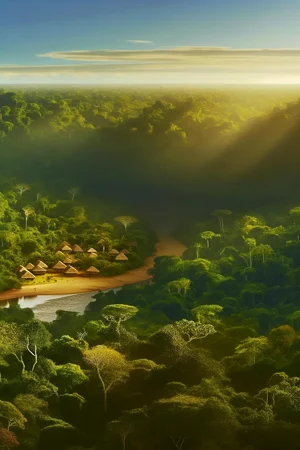
How did a vast territory inhabited by diverse indigenous peoples transform into the Brazil we know today? "Origins of Brazil" delves into the complex and often contradictory forces that shaped this South American nation, exploring the interplay between indigenous societies, Portuguese colonization, and the subsequent cultural fusion that defines its modern identity. Understanding these formative influences is crucial for grasping contemporary Brazil's social, political, and economic landscape. This book provides a comprehensive account of Brazil's genesis, starting with a detailed examination of the pre-colonial era. It explores the diverse cultures, social structures, and environmental adaptations of the various indigenous groups that inhabited the territory for millennia before the arrival of Europeans. This section draws upon archaeological evidence, linguistic analysis, and anthropological studies to reconstruct a rich tapestry of pre-Columbian life, challenging Eurocentric narratives that often marginalize indigenous perspectives. The narrative then shifts to the period of Portuguese colonization, analyzing the motivations, methods, and consequences of European expansion into the region. It examines the establishment of the colonial administration, the rise of the sugar economy, and the brutal system of slavery that fueled its growth. Special attention is paid to the resistance efforts of both indigenous populations and enslaved Africans, highlighting their agency in shaping the course of Brazilian history. A central argument of "Origins of Brazil" is that the nation's identity is not simply a product of European imposition, but rather a dynamic synthesis of indigenous, European, and African influences. The book explores how these different cultures interacted, clashed, and ultimately blended to create a unique cultural melting pot. This synthesis is evident in Brazil's language, religion, music, cuisine, and social customs, all of which bear the imprint of its diverse heritage. The book is structured chronologically, beginning with an overview of the pre-colonial indigenous societies. It proceeds to analyze the Portuguese arrival and the establishment of the colonial system. The core of the book is dedicated to exploring the development of Brazilian society, focusing on slavery, economic transformations, and cultural interactions. Finally, the concluding chapters examine the legacy of colonialism and its ongoing impact on contemporary Brazil. The research presented is grounded in a wide range of primary and secondary sources, including colonial documents, travel accounts, census data, and scholarly analyses from various disciplines. It also incorporates recent archaeological discoveries and anthropological research to provide a nuanced and up-to-date account of Brazil's origins. "Origins of Brazil" connects to the fields of anthropology, sociology, and post-colonial studies, providing insights into the broader themes of cultural contact, identity formation, and the legacies of colonialism. Its approach is primarily historical, presented in an academic but accessible style, aimed at students, scholars, and anyone interested in understanding the complexities of Brazilian history and culture. While the book aims to provide a comprehensive overview of Brazil's origins, it focuses primarily on the period from pre-colonial times to the early 19th century, setting the stage for later developments in Brazilian history. The information presented can offer readers a deeper understanding of Brazil's present-day challenges with race relations, economic inequalities, and social justice issues. The book addresses ongoing debates regarding the interpretation of colonial history, particularly concerning the role and representation of indigenous peoples and enslaved Africans. By presenting a multi-faceted perspective and incorporating diverse voices, "Origins of Brazil" seeks to contribute to a more nuanced and inclusive understanding of this pivotal period in Brazilian history.
How did a vast territory inhabited by diverse indigenous peoples transform into the Brazil we know today? "Origins of Brazil" delves into the complex and often contradictory forces that shaped this South American nation, exploring the interplay between indigenous societies, Portuguese colonization, and the subsequent cultural fusion that defines its modern identity. Understanding these formative influences is crucial for grasping contemporary Brazil's social, political, and economic landscape. This book provides a comprehensive account of Brazil's genesis, starting with a detailed examination of the pre-colonial era. It explores the diverse cultures, social structures, and environmental adaptations of the various indigenous groups that inhabited the territory for millennia before the arrival of Europeans. This section draws upon archaeological evidence, linguistic analysis, and anthropological studies to reconstruct a rich tapestry of pre-Columbian life, challenging Eurocentric narratives that often marginalize indigenous perspectives. The narrative then shifts to the period of Portuguese colonization, analyzing the motivations, methods, and consequences of European expansion into the region. It examines the establishment of the colonial administration, the rise of the sugar economy, and the brutal system of slavery that fueled its growth. Special attention is paid to the resistance efforts of both indigenous populations and enslaved Africans, highlighting their agency in shaping the course of Brazilian history. A central argument of "Origins of Brazil" is that the nation's identity is not simply a product of European imposition, but rather a dynamic synthesis of indigenous, European, and African influences. The book explores how these different cultures interacted, clashed, and ultimately blended to create a unique cultural melting pot. This synthesis is evident in Brazil's language, religion, music, cuisine, and social customs, all of which bear the imprint of its diverse heritage. The book is structured chronologically, beginning with an overview of the pre-colonial indigenous societies. It proceeds to analyze the Portuguese arrival and the establishment of the colonial system. The core of the book is dedicated to exploring the development of Brazilian society, focusing on slavery, economic transformations, and cultural interactions. Finally, the concluding chapters examine the legacy of colonialism and its ongoing impact on contemporary Brazil. The research presented is grounded in a wide range of primary and secondary sources, including colonial documents, travel accounts, census data, and scholarly analyses from various disciplines. It also incorporates recent archaeological discoveries and anthropological research to provide a nuanced and up-to-date account of Brazil's origins. "Origins of Brazil" connects to the fields of anthropology, sociology, and post-colonial studies, providing insights into the broader themes of cultural contact, identity formation, and the legacies of colonialism. Its approach is primarily historical, presented in an academic but accessible style, aimed at students, scholars, and anyone interested in understanding the complexities of Brazilian history and culture. While the book aims to provide a comprehensive overview of Brazil's origins, it focuses primarily on the period from pre-colonial times to the early 19th century, setting the stage for later developments in Brazilian history. The information presented can offer readers a deeper understanding of Brazil's present-day challenges with race relations, economic inequalities, and social justice issues. The book addresses ongoing debates regarding the interpretation of colonial history, particularly concerning the role and representation of indigenous peoples and enslaved Africans. By presenting a multi-faceted perspective and incorporating diverse voices, "Origins of Brazil" seeks to contribute to a more nuanced and inclusive understanding of this pivotal period in Brazilian history.
"Origins of Brazil" explores the intricate genesis of Brazil, from its pre-colonial roots to the forging of its unique cultural identity. The book examines the diverse indigenous societies that thrived for millennia before European contact, highlighting their complex social structures and adaptations to the environment. It then delves into the era of Portuguese colonization, revealing the motivations behind European expansion and the profound consequences of the brutal system of slavery that shaped the nation's early economy. A key insight of the book is that Brazilian identity emerged not solely from European influence, but from a dynamic fusion of indigenous, African, and European cultures. This cultural fusion is evident in Brazil's language, cuisine, and social customs. Structured chronologically, the book begins with pre-colonial societies, moves through Portuguese colonization, and culminates in an examination of Brazilian society's development, emphasizing slavery, economic shifts, and cultural interactions. The concluding chapters discuss the enduring legacy of colonialism and its relevance to contemporary Brazil.
Book Details
ISBN
9788233984649
Publisher
Publifye AS
Your Licenses
You don't own any licenses for this book
Purchase a license below to unlock this book and download the EPUB.
Purchase License
Select a tier to unlock this book
Need bulk licensing?
Contact us for enterprise agreements.