
About This Book
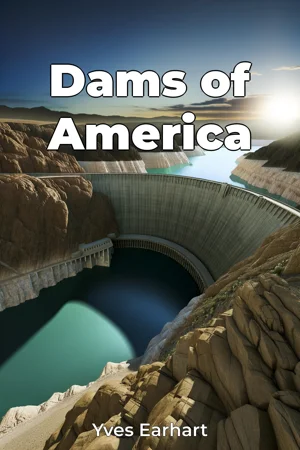
Can the concrete giants that dot the American landscape tell a deeper story about our relationship with nature and technology? This book, "Dams of America," explores the intricate world of the United States' major dams, examining their engineering marvels, their crucial role in water management, and their contributions to hydroelectric power generation. It's a story of ambition, innovation, and the complex consequences of large-scale engineering. We delve into three core areas: the technical achievements embodied in dam construction, the environmental impact dams have on river ecosystems, and the socioeconomic implications for communities both benefiting and burdened by these structures. These topics are important because dams represent a critical intersection of human ingenuity and environmental stewardship. Understanding them is essential for informed decision-making about infrastructure development and resource management in the 21st century. The history of dam construction in the US is intertwined with the nation's westward expansion and industrial growth. From early run-of-the-river dams powering mills to the colossal structures of the New Deal era aimed at flood control and electricity generation, dams have shaped the American landscape. Readers will gain an understanding of basic engineering principles, hydrological cycles, and the history of federal water policy. The central argument of "Dams of America" is that while dams have undeniably provided significant benefits in terms of water supply, flood control, and renewable energy, their long-term ecological and social consequences demand a more nuanced and sustainable approach to water resource management. The book begins by introducing the fundamental concepts of dam engineering, hydrology, and environmental science. It then develops this foundation through examinations of specific dams, grouped geographically and by type, such as the Hoover Dam, Grand Coulee Dam, and those of the Tennessee Valley Authority. Each case study will explore the dam's design and construction, its intended benefits, and its unintended consequences. The culmination of the argument lies in proposing strategies for mitigating the negative impacts of existing dams and implementing more sustainable water management practices for the future. These include dam removal, fish passage improvements, and alternative energy sources. The book draws on a wide range of evidence, including engineering reports, environmental impact statements, historical records, and scientific studies. Primary data from government agencies like the Bureau of Reclamation and the Army Corps of Engineers will be incorporated, alongside academic research in hydrology, ecology, and engineering. "Dams of America" connects to fields such as environmental policy, civil engineering, history, and economics. The environmental impacts discussed relate directly to conservation biology and ecological restoration. The economic considerations are tied to resource economics and regional development. Its historical context relates to the history of technology and the environmental history of the American West. These connections enhance the argument by providing a broader understanding of the complex interplay between human activity and the environment. This book offers a balanced perspective, acknowledging the benefits of dams while critically examining their environmental and social costs. The writing style is fact-based and accessible, making the complex topics understandable for a broad audience. The target audience includes students of environmental science, engineering, and history, as well as policymakers, water resource managers, and anyone interested in the history and future of America's infrastructure. The book's value lies in its comprehensive overview of a critical aspect of American infrastructure and its exploration of the challenges and opportunities for sustainable water management. As a non-fiction work, the book will adhere to standards of accuracy and objectivity, presenting evidence-based arguments and acknowledging different viewpoints. The scope of the book is limited to major dams in the United States, focusing on those with significant impacts on water resources and ecosystems. It does not delve into the details of smaller dams or dams in other countries, allowing for a more focused and in-depth analysis. The information presented can be applied practically by readers involved in water resource planning, environmental advocacy, and infrastructure development. It provides a framework for evaluating the costs and benefits of dams and for making informed decisions about their management. "Dams of America" addresses ongoing debates surrounding dam removal, the ecological impacts of dams on endangered species, and the role of dams in a changing climate. By presenting a balanced and evidence-based analysis, it aims to contribute to a more informed and productive discussion about the future of dams in America.
Can the concrete giants that dot the American landscape tell a deeper story about our relationship with nature and technology? This book, "Dams of America," explores the intricate world of the United States' major dams, examining their engineering marvels, their crucial role in water management, and their contributions to hydroelectric power generation. It's a story of ambition, innovation, and the complex consequences of large-scale engineering. We delve into three core areas: the technical achievements embodied in dam construction, the environmental impact dams have on river ecosystems, and the socioeconomic implications for communities both benefiting and burdened by these structures. These topics are important because dams represent a critical intersection of human ingenuity and environmental stewardship. Understanding them is essential for informed decision-making about infrastructure development and resource management in the 21st century. The history of dam construction in the US is intertwined with the nation's westward expansion and industrial growth. From early run-of-the-river dams powering mills to the colossal structures of the New Deal era aimed at flood control and electricity generation, dams have shaped the American landscape. Readers will gain an understanding of basic engineering principles, hydrological cycles, and the history of federal water policy. The central argument of "Dams of America" is that while dams have undeniably provided significant benefits in terms of water supply, flood control, and renewable energy, their long-term ecological and social consequences demand a more nuanced and sustainable approach to water resource management. The book begins by introducing the fundamental concepts of dam engineering, hydrology, and environmental science. It then develops this foundation through examinations of specific dams, grouped geographically and by type, such as the Hoover Dam, Grand Coulee Dam, and those of the Tennessee Valley Authority. Each case study will explore the dam's design and construction, its intended benefits, and its unintended consequences. The culmination of the argument lies in proposing strategies for mitigating the negative impacts of existing dams and implementing more sustainable water management practices for the future. These include dam removal, fish passage improvements, and alternative energy sources. The book draws on a wide range of evidence, including engineering reports, environmental impact statements, historical records, and scientific studies. Primary data from government agencies like the Bureau of Reclamation and the Army Corps of Engineers will be incorporated, alongside academic research in hydrology, ecology, and engineering. "Dams of America" connects to fields such as environmental policy, civil engineering, history, and economics. The environmental impacts discussed relate directly to conservation biology and ecological restoration. The economic considerations are tied to resource economics and regional development. Its historical context relates to the history of technology and the environmental history of the American West. These connections enhance the argument by providing a broader understanding of the complex interplay between human activity and the environment. This book offers a balanced perspective, acknowledging the benefits of dams while critically examining their environmental and social costs. The writing style is fact-based and accessible, making the complex topics understandable for a broad audience. The target audience includes students of environmental science, engineering, and history, as well as policymakers, water resource managers, and anyone interested in the history and future of America's infrastructure. The book's value lies in its comprehensive overview of a critical aspect of American infrastructure and its exploration of the challenges and opportunities for sustainable water management. As a non-fiction work, the book will adhere to standards of accuracy and objectivity, presenting evidence-based arguments and acknowledging different viewpoints. The scope of the book is limited to major dams in the United States, focusing on those with significant impacts on water resources and ecosystems. It does not delve into the details of smaller dams or dams in other countries, allowing for a more focused and in-depth analysis. The information presented can be applied practically by readers involved in water resource planning, environmental advocacy, and infrastructure development. It provides a framework for evaluating the costs and benefits of dams and for making informed decisions about their management. "Dams of America" addresses ongoing debates surrounding dam removal, the ecological impacts of dams on endangered species, and the role of dams in a changing climate. By presenting a balanced and evidence-based analysis, it aims to contribute to a more informed and productive discussion about the future of dams in America.
"Dams of America" explores the multifaceted role of dams in the United States, examining them not just as feats of civil engineering and crucial infrastructure, but also as significant factors in environmental impact and sustainable water management. Dams provide hydroelectric power and aid water resources, yet they also pose ecological consequences. Discover how these concrete giants have shaped the American landscape, particularly in the American West, influencing everything from water supply to flood control. The book highlights intriguing facts, such as how early dams powered mills, contributing to industrial growth, while later structures like the Hoover Dam addressed flood control and electricity generation during the New Deal era. It progresses from fundamental concepts of dam engineering and hydrology to case studies of specific dams, grouped geographically or by type, and culminates in proposing strategies for sustainable practices. By connecting engineering reports, environmental impact statements, historical records, and scientific studies, the book provides a comprehensive overview. This book uniquely balances the benefits of dams with their environmental and social costs, offering a fact-based and accessible analysis. It's valuable for students, policymakers, and anyone interested in the history and future of American infrastructure, providing a framework for evaluating dams' costs and benefits and informing decisions about their management, including dam removal and alternative energy sources.
Book Details
ISBN
9788233984533
Publisher
Publifye AS
Your Licenses
You don't own any licenses for this book
Purchase a license below to unlock this book and download the EPUB.
Purchase License
Select a tier to unlock this book
Need bulk licensing?
Contact us for enterprise agreements.