
About This Book
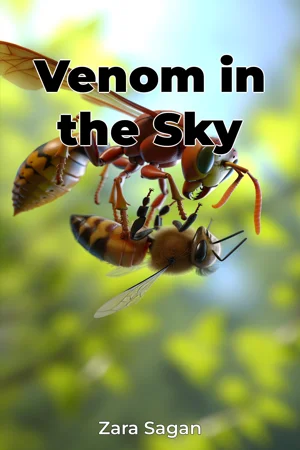
Imagine a world where venom isn't confined to fangs and stingers on the ground, but delivered from above, with surgical precision by creatures of the air. "Venom in the Sky" delves into the fascinating and often overlooked realm of venomous flying animals, exploring their unique adaptations, ecological roles, and evolutionary history. This book unveils how certain wasps, bees, flies, and even some birds have harnessed the power of venom for defense, predation, and survival in the aerial domain. We will examine two core topics. Firstly, the evolution of venom delivery systems in flying animals. We will trace the origins of venom production and injection mechanisms in different lineages, highlighting the selective pressures that drove these adaptations. Secondly, the ecological significance of venom in aerial food webs. We will explore how venomous flying animals interact with their prey, predators, and competitors, shaping community structure and ecosystem dynamics. The existence of venomous flying creatures has often been marginalized in broader discussions of venomous animals. This book provides a necessary corrective, illuminating the significant role these animals play in their respective environments. Understanding the venomous capabilities of these creatures provides valuable insights into evolutionary biology, chemical ecology, and conservation. Our central argument is that venom has been a key innovation enabling certain flying animals to thrive in diverse ecological niches. The book demonstrates that venom has allowed these animals to access resources, defend themselves, and overcome challenges that would otherwise be insurmountable. The book begins by introducing the concept of venom and its diverse chemical compositions. We then transition into the evolution of venom in two major sections; stinging insects and venomous birds. The section on stinging insects discusses the Hymenoptera order (wasps, bees, and ants) and the Diptera order (flies). Venom in birds is less common, but examples such as the spur-winged goose are explored. Each section discusses the morphology of the venom apparatus, the chemical composition of the venom, and the ecological role of venom use. The final chapters synthesize the key findings, discussing the broader implications for our understanding of animal evolution, chemical ecology, and conservation biology. The book draws on a wide range of evidence, including primary research articles, field observations, and analyses of venom composition and morphology. We will present original data from comparative studies of venom delivery systems and ecological interactions. We employ diverse methodologies, including phylogenetic analysis, microscopy, and behavioral experiments. "Venom in the Sky" integrates concepts from evolutionary biology, ecology, toxicology, and biochemistry. This interdisciplinary approach enriches our understanding of the complex interplay between venom, behavior, and the environment. The book also connects to fields such as medicine and pharmacology, as some venoms have potential applications in drug development and disease treatment. This book offers a unique perspective by focusing specifically on venomous flying animals. It moves beyond traditional classifications of venomous creatures to explore the adaptive significance of venom in the aerial realm. The writing style is grounded in scientific accuracy, yet accessible to a broad audience. Technical terms are explained clearly, and complex concepts are illustrated with engaging examples and visuals. The target audience includes students, researchers, conservationists, and anyone with an interest in zoology, ecology, or the natural world. The book would be a valuable resource for courses in animal behavior, evolutionary biology, and toxicology. As a work of scientific non-fiction, “Venom in the Sky” emphasizes accuracy, clarity, and objectivity. Every effort has been made to ensure that the information presented is supported by credible evidence and presented in a balanced and unbiased manner. The scope of the book is limited to venomous animals that spend a significant portion of their lives in flight. While the book provides a broad overview of venomous flying animals, it does not delve into the specific details of every species or venom component. The information presented can be applied to various real-world scenarios, such as developing safer pest control strategies, understanding the ecological impacts of venomous species, and identifying potential sources of novel drugs and therapies. While the study of venomous animals continues to evolve, this book presents a comprehensive, up-to-date overview of the current state of knowledge in this fascinating field.
Imagine a world where venom isn't confined to fangs and stingers on the ground, but delivered from above, with surgical precision by creatures of the air. "Venom in the Sky" delves into the fascinating and often overlooked realm of venomous flying animals, exploring their unique adaptations, ecological roles, and evolutionary history. This book unveils how certain wasps, bees, flies, and even some birds have harnessed the power of venom for defense, predation, and survival in the aerial domain. We will examine two core topics. Firstly, the evolution of venom delivery systems in flying animals. We will trace the origins of venom production and injection mechanisms in different lineages, highlighting the selective pressures that drove these adaptations. Secondly, the ecological significance of venom in aerial food webs. We will explore how venomous flying animals interact with their prey, predators, and competitors, shaping community structure and ecosystem dynamics. The existence of venomous flying creatures has often been marginalized in broader discussions of venomous animals. This book provides a necessary corrective, illuminating the significant role these animals play in their respective environments. Understanding the venomous capabilities of these creatures provides valuable insights into evolutionary biology, chemical ecology, and conservation. Our central argument is that venom has been a key innovation enabling certain flying animals to thrive in diverse ecological niches. The book demonstrates that venom has allowed these animals to access resources, defend themselves, and overcome challenges that would otherwise be insurmountable. The book begins by introducing the concept of venom and its diverse chemical compositions. We then transition into the evolution of venom in two major sections; stinging insects and venomous birds. The section on stinging insects discusses the Hymenoptera order (wasps, bees, and ants) and the Diptera order (flies). Venom in birds is less common, but examples such as the spur-winged goose are explored. Each section discusses the morphology of the venom apparatus, the chemical composition of the venom, and the ecological role of venom use. The final chapters synthesize the key findings, discussing the broader implications for our understanding of animal evolution, chemical ecology, and conservation biology. The book draws on a wide range of evidence, including primary research articles, field observations, and analyses of venom composition and morphology. We will present original data from comparative studies of venom delivery systems and ecological interactions. We employ diverse methodologies, including phylogenetic analysis, microscopy, and behavioral experiments. "Venom in the Sky" integrates concepts from evolutionary biology, ecology, toxicology, and biochemistry. This interdisciplinary approach enriches our understanding of the complex interplay between venom, behavior, and the environment. The book also connects to fields such as medicine and pharmacology, as some venoms have potential applications in drug development and disease treatment. This book offers a unique perspective by focusing specifically on venomous flying animals. It moves beyond traditional classifications of venomous creatures to explore the adaptive significance of venom in the aerial realm. The writing style is grounded in scientific accuracy, yet accessible to a broad audience. Technical terms are explained clearly, and complex concepts are illustrated with engaging examples and visuals. The target audience includes students, researchers, conservationists, and anyone with an interest in zoology, ecology, or the natural world. The book would be a valuable resource for courses in animal behavior, evolutionary biology, and toxicology. As a work of scientific non-fiction, “Venom in the Sky” emphasizes accuracy, clarity, and objectivity. Every effort has been made to ensure that the information presented is supported by credible evidence and presented in a balanced and unbiased manner. The scope of the book is limited to venomous animals that spend a significant portion of their lives in flight. While the book provides a broad overview of venomous flying animals, it does not delve into the specific details of every species or venom component. The information presented can be applied to various real-world scenarios, such as developing safer pest control strategies, understanding the ecological impacts of venomous species, and identifying potential sources of novel drugs and therapies. While the study of venomous animals continues to evolve, this book presents a comprehensive, up-to-date overview of the current state of knowledge in this fascinating field.
"Venom in the Sky" explores the captivating world of venomous flying animals, revealing how creatures like wasps, bees, flies, and certain birds have evolved to utilize venom in the aerial domain. This book highlights the often-overlooked role of venom in the survival strategies of these animals, showcasing how venom has enabled them to thrive in diverse ecological niches. It examines the evolution of venom delivery systems, tracing their origins and the selective pressures that shaped them. For instance, the book delves into how venom allows these animals to access resources, defend themselves, and overcome challenges, significantly impacting their interactions within aerial food webs. The book progresses by first introducing the concept of venom and its chemical composition, then transitions to the evolution of venom in stinging insects and venomous birds. It uniquely synthesizes concepts from evolutionary biology, ecology, and toxicology, explaining complex topics in an accessible manner for a broad audience. By focusing specifically on venomous animals that fly, "Venom in the Sky" provides a fresh perspective, illuminating the significant role these animals play in their environments.
Book Details
ISBN
9788233984519
Publisher
Publifye AS
Your Licenses
You don't own any licenses for this book
Purchase a license below to unlock this book and download the EPUB.
Purchase License
Select a tier to unlock this book
Need bulk licensing?
Contact us for enterprise agreements.