
About This Book
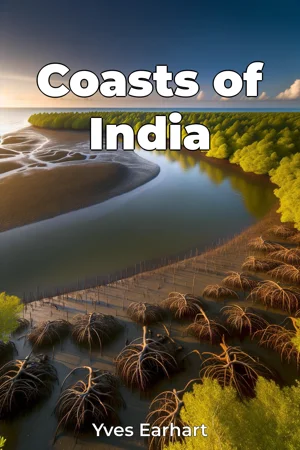
Have you ever considered the multifaceted significance of a coastline, far beyond its scenic beauty? 'Coasts of India' delves deep into the intricate relationship between India's extensive coastline and its environment, economy, and society, exploring the geological, ecological, and economic forces shaping this dynamic zone. We will examine India's diverse coastal ecosystems, the economic importance of coastal resources, and the challenges of managing these valuable assets in a sustainable manner, providing a comprehensive view of this critical region. This book argues that a holistic understanding of India's coasts is essential for informed policy-making, sustainable development, and effective conservation efforts. The argument will be developed by synthesizing geological data, ecological studies, and economic analyses to highlight the interconnectedness of coastal systems and the impact of human activities. 'Coasts of India' is structured to provide a comprehensive understanding of this vital region. The book begins with an introduction to India's coastal geography, highlighting the diverse geological formations, from sandy beaches and rocky cliffs to extensive mangrove forests and deltaic plains. We then delve into the rich biodiversity of these coastal ecosystems, exploring the unique flora and fauna adapted to the intertidal zone, including discussions of coral reefs, seagrass beds, and the crucial role of mangroves in protecting coastlines from erosion and storm surges. A significant portion of the book focuses on the economic importance of India’s coasts. This includes detailed analyses of the fishing industry, port development, coastal tourism, and the extraction of mineral resources. We examine the challenges of balancing economic growth with environmental protection, exploring issues such as pollution, overfishing, and the impacts of climate change on coastal communities. The culminating chapters address strategies for sustainable coastal management, including integrated coastal zone management (ICZM) approaches, community-based conservation initiatives, and policy recommendations for promoting responsible resource use. The research presented is supported by diverse sources, including governmental reports, scientific publications, field studies, and satellite imagery analysis. We incorporate data from the Indian National Centre for Ocean Information Services (INCOIS), the Geological Survey of India (GSI), and the Ministry of Environment, Forest and Climate Change (MoEFCC), providing a robust and data-driven analysis of the issues at hand. This study makes crucial interdisciplinary connections, bringing together earth sciences, ecology, and economics. Earth science principles help us understand the geologic evolution of the coastline and its vulnerability to erosion and sea-level rise. Ecological principles reveal the complex interactions within coastal ecosystems and the impact of human activities on biodiversity. Economic analysis provides a framework for evaluating the costs and benefits of different coastal management strategies. A unique aspect of 'Coasts of India' is its integrated approach, which considers the environmental, economic, and social dimensions of coastal development. It moves beyond traditional sector-specific analyses to provide a more holistic and nuanced understanding of the challenges and opportunities facing India’s coasts. Written in an accessible yet informative style, 'Coasts of India' is intended for a wide audience, including students, researchers, policymakers, environmental managers, and anyone interested in learning more about India's coastline. It provides a valuable resource for understanding the complexities of coastal management and the importance of protecting these valuable ecosystems. As a work of earth sciences geography and nature, this book follows the conventions of providing detailed factual information, scientific analysis, and case studies to support its arguments. It caters to an audience seeking reliable and objective information on the topic. The book primarily focuses on the geographical and economic aspects of the Indian coastline, while intentionally limiting the scope of sociological studies related to coastal communities even though they are indirectly mentioned. The information contained herein has several real-world applications. Coastal managers can use the data and analysis to inform decision-making related to coastal development, conservation, and disaster management. One ongoing debate that the book addresses is the conflict between economic development and environmental conservation along the coast. Different perspectives on this issue are presented, offering a balanced and nuanced analysis of the challenges of balancing competing interests.
Have you ever considered the multifaceted significance of a coastline, far beyond its scenic beauty? 'Coasts of India' delves deep into the intricate relationship between India's extensive coastline and its environment, economy, and society, exploring the geological, ecological, and economic forces shaping this dynamic zone. We will examine India's diverse coastal ecosystems, the economic importance of coastal resources, and the challenges of managing these valuable assets in a sustainable manner, providing a comprehensive view of this critical region. This book argues that a holistic understanding of India's coasts is essential for informed policy-making, sustainable development, and effective conservation efforts. The argument will be developed by synthesizing geological data, ecological studies, and economic analyses to highlight the interconnectedness of coastal systems and the impact of human activities. 'Coasts of India' is structured to provide a comprehensive understanding of this vital region. The book begins with an introduction to India's coastal geography, highlighting the diverse geological formations, from sandy beaches and rocky cliffs to extensive mangrove forests and deltaic plains. We then delve into the rich biodiversity of these coastal ecosystems, exploring the unique flora and fauna adapted to the intertidal zone, including discussions of coral reefs, seagrass beds, and the crucial role of mangroves in protecting coastlines from erosion and storm surges. A significant portion of the book focuses on the economic importance of India’s coasts. This includes detailed analyses of the fishing industry, port development, coastal tourism, and the extraction of mineral resources. We examine the challenges of balancing economic growth with environmental protection, exploring issues such as pollution, overfishing, and the impacts of climate change on coastal communities. The culminating chapters address strategies for sustainable coastal management, including integrated coastal zone management (ICZM) approaches, community-based conservation initiatives, and policy recommendations for promoting responsible resource use. The research presented is supported by diverse sources, including governmental reports, scientific publications, field studies, and satellite imagery analysis. We incorporate data from the Indian National Centre for Ocean Information Services (INCOIS), the Geological Survey of India (GSI), and the Ministry of Environment, Forest and Climate Change (MoEFCC), providing a robust and data-driven analysis of the issues at hand. This study makes crucial interdisciplinary connections, bringing together earth sciences, ecology, and economics. Earth science principles help us understand the geologic evolution of the coastline and its vulnerability to erosion and sea-level rise. Ecological principles reveal the complex interactions within coastal ecosystems and the impact of human activities on biodiversity. Economic analysis provides a framework for evaluating the costs and benefits of different coastal management strategies. A unique aspect of 'Coasts of India' is its integrated approach, which considers the environmental, economic, and social dimensions of coastal development. It moves beyond traditional sector-specific analyses to provide a more holistic and nuanced understanding of the challenges and opportunities facing India’s coasts. Written in an accessible yet informative style, 'Coasts of India' is intended for a wide audience, including students, researchers, policymakers, environmental managers, and anyone interested in learning more about India's coastline. It provides a valuable resource for understanding the complexities of coastal management and the importance of protecting these valuable ecosystems. As a work of earth sciences geography and nature, this book follows the conventions of providing detailed factual information, scientific analysis, and case studies to support its arguments. It caters to an audience seeking reliable and objective information on the topic. The book primarily focuses on the geographical and economic aspects of the Indian coastline, while intentionally limiting the scope of sociological studies related to coastal communities even though they are indirectly mentioned. The information contained herein has several real-world applications. Coastal managers can use the data and analysis to inform decision-making related to coastal development, conservation, and disaster management. One ongoing debate that the book addresses is the conflict between economic development and environmental conservation along the coast. Different perspectives on this issue are presented, offering a balanced and nuanced analysis of the challenges of balancing competing interests.
"Coasts of India" explores the multifaceted significance of India's extensive coastline, highlighting the interplay between its environment, economy, and society. It examines diverse coastal ecosystems, such as mangrove forests and coral reefs, emphasizing their role in protecting coastlines and supporting unique biodiversity. The book delves into the economic importance of coastal resources, including fisheries, tourism, and mineral extraction, while addressing the challenges of sustainable development and environmental conservation. The book uniquely integrates earth sciences, ecology, and economics to provide a holistic understanding of coastal management. For instance, geological data reveals coastal vulnerability to erosion and sea-level rise. The study's integrated approach goes beyond sector-specific analyses, offering a nuanced perspective on the challenges and opportunities facing India's coasts. Beginning with an introduction to India's coastal geography, the book progresses through biodiversity, economic importance, and sustainable management strategies, supported by governmental reports, scientific publications, and field studies.
Book Details
ISBN
9788233984496
Publisher
Publifye AS
Your Licenses
You don't own any licenses for this book
Purchase a license below to unlock this book and download the EPUB.
Purchase License
Select a tier to unlock this book
Need bulk licensing?
Contact us for enterprise agreements.