
About This Book
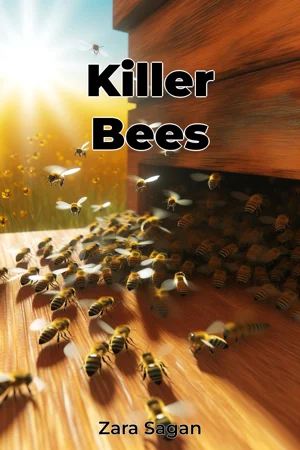
Have you ever wondered what lies behind the swarms of bees capable of inflicting hundreds of stings, sometimes with fatal consequences? "Killer Bees" delves into the biology, behavior, and impact of aggressive bee species, particularly focusing on the Africanized honey bee, a hybrid resulting from the crossbreeding of the African honey bee with various European honey bees. Understanding these bees is crucial, not only for biologists and beekeepers but for anyone living in regions where they are prevalent, as their aggressive defensive strategies pose unique challenges. This book explores several key topics. First, we examine the biological and genetic factors contributing to their heightened aggression. Second, we analyze the ecological and social consequences of their spread, including impacts on native bee populations and human activities. Third, we discuss strategies for managing and mitigating the risks associated with these bees. To fully appreciate the phenomenon of killer bees, it's important to understand their origin. The accidental release of African honey bees in Brazil in the 1950s set in motion a rapid and transformative spread throughout the Americas. These bees, adapted to harsher environments, displayed a significantly more defensive temperament than their European counterparts. This book argues that the aggressive behavior of Africanized honey bees is a complex adaptation shaped by evolutionary pressures, resource availability, and the need for robust colony defense. This argument emphasizes the importance of understanding the ecological context driving their behavior. "Killer Bees" is structured to provide a comprehensive understanding of these insects. It begins with an introduction to honey bee biology, including their social structure, communication methods, and defensive mechanisms. Then, it traces the history of Africanized honey bees, detailing their spread across the Americas and the factors that facilitated their expansion. Major sections are dedicated to analyzing their aggressive behavior, supported by research on venom composition, alarm pheromones, and colony defense strategies. Practical techniques for identifying and managing Africanized honey bees are also covered, including guidelines for beekeepers and the general public. The book culminates with a discussion of the long-term implications of their presence on biodiversity and human societies. The book relies on a wide range of evidence, including scientific literature, field studies, and first-hand accounts. Data on bee venom toxicity, foraging ranges, and colony defense responses are presented to support the analysis of their aggressive behavior. The research incorporates methodologies from entomology, genetics, and ecology to provide a multifaceted perspective. "Killer Bees" intersects with several other fields. Public health is relevant due to the medical implications of bee stings, particularly in cases of mass envenomation. Agricultural science is important, given the impact of bees on pollination and honey production. Finally, social science connects due to the socio-economic effects related to managing bee populations and mitigating human-wildlife conflict. These connections enrich the understanding of the multifaceted challenges posed by Africanized honey bees. This book differentiates itself by offering a balanced perspective on Africanized honey bees. While acknowledging the risks associated with their aggressive behavior, it also highlights their ecological role and potential benefits, such as increased honey production in some environments. It's written in a clear, accessible style suitable for a broad audience, avoiding technical jargon where possible. The intended audience includes students, researchers, beekeepers, public health professionals, and general readers interested in learning more about bees and their impact on the environment. It's especially valuable for those living in areas where Africanized honey bees are common. This work meets the expectations of non-fiction, biology, and natural science books: accurate, evidence-based information, detailed examples, and structured argumentation. The book's scope includes the biology, ecology, and management of aggressive bee species, with a primary focus on Africanized honey bees. It does not delve into the intricacies of apitherapy or alternative uses of bee products. The information can be applied practically by readers through improved bee sting prevention, better colony management techniques for beekeepers, and increased awareness of environmental effects. The book addresses the ongoing debate regarding the integration of Africanized honey bees into beekeeping practices and the effectiveness of various management strategies. Further research is still needed to fully understand their long-term impact and develop sustainable solutions.
Have you ever wondered what lies behind the swarms of bees capable of inflicting hundreds of stings, sometimes with fatal consequences? "Killer Bees" delves into the biology, behavior, and impact of aggressive bee species, particularly focusing on the Africanized honey bee, a hybrid resulting from the crossbreeding of the African honey bee with various European honey bees. Understanding these bees is crucial, not only for biologists and beekeepers but for anyone living in regions where they are prevalent, as their aggressive defensive strategies pose unique challenges. This book explores several key topics. First, we examine the biological and genetic factors contributing to their heightened aggression. Second, we analyze the ecological and social consequences of their spread, including impacts on native bee populations and human activities. Third, we discuss strategies for managing and mitigating the risks associated with these bees. To fully appreciate the phenomenon of killer bees, it's important to understand their origin. The accidental release of African honey bees in Brazil in the 1950s set in motion a rapid and transformative spread throughout the Americas. These bees, adapted to harsher environments, displayed a significantly more defensive temperament than their European counterparts. This book argues that the aggressive behavior of Africanized honey bees is a complex adaptation shaped by evolutionary pressures, resource availability, and the need for robust colony defense. This argument emphasizes the importance of understanding the ecological context driving their behavior. "Killer Bees" is structured to provide a comprehensive understanding of these insects. It begins with an introduction to honey bee biology, including their social structure, communication methods, and defensive mechanisms. Then, it traces the history of Africanized honey bees, detailing their spread across the Americas and the factors that facilitated their expansion. Major sections are dedicated to analyzing their aggressive behavior, supported by research on venom composition, alarm pheromones, and colony defense strategies. Practical techniques for identifying and managing Africanized honey bees are also covered, including guidelines for beekeepers and the general public. The book culminates with a discussion of the long-term implications of their presence on biodiversity and human societies. The book relies on a wide range of evidence, including scientific literature, field studies, and first-hand accounts. Data on bee venom toxicity, foraging ranges, and colony defense responses are presented to support the analysis of their aggressive behavior. The research incorporates methodologies from entomology, genetics, and ecology to provide a multifaceted perspective. "Killer Bees" intersects with several other fields. Public health is relevant due to the medical implications of bee stings, particularly in cases of mass envenomation. Agricultural science is important, given the impact of bees on pollination and honey production. Finally, social science connects due to the socio-economic effects related to managing bee populations and mitigating human-wildlife conflict. These connections enrich the understanding of the multifaceted challenges posed by Africanized honey bees. This book differentiates itself by offering a balanced perspective on Africanized honey bees. While acknowledging the risks associated with their aggressive behavior, it also highlights their ecological role and potential benefits, such as increased honey production in some environments. It's written in a clear, accessible style suitable for a broad audience, avoiding technical jargon where possible. The intended audience includes students, researchers, beekeepers, public health professionals, and general readers interested in learning more about bees and their impact on the environment. It's especially valuable for those living in areas where Africanized honey bees are common. This work meets the expectations of non-fiction, biology, and natural science books: accurate, evidence-based information, detailed examples, and structured argumentation. The book's scope includes the biology, ecology, and management of aggressive bee species, with a primary focus on Africanized honey bees. It does not delve into the intricacies of apitherapy or alternative uses of bee products. The information can be applied practically by readers through improved bee sting prevention, better colony management techniques for beekeepers, and increased awareness of environmental effects. The book addresses the ongoing debate regarding the integration of Africanized honey bees into beekeeping practices and the effectiveness of various management strategies. Further research is still needed to fully understand their long-term impact and develop sustainable solutions.
"Killer Bees" explores the fascinating yet alarming story of Africanized honey bees, a hybrid species known for their heightened aggression and potent stings. Originating from an accidental release in Brazil, these bees rapidly spread across the Americas, presenting unique challenges for both humans and native bee populations. The book examines the biological and genetic factors driving their behavior, revealing how evolutionary pressures and resource availability contribute to their robust colony defense strategies. This exploration begins with an introduction to honey bee biology before detailing the history and expansion of Africanized honey bees. Major sections analyze their aggressive behavior, supported by research on venom composition and colony defense. The book goes on to discuss practical management techniques for beekeepers and the general public while also considering the long-term implications of their presence on biodiversity and human societies. What sets this book apart is its balanced perspective, acknowledging the risks while highlighting the ecological role and potential benefits of these bees. It's an accessible resource for students, researchers, beekeepers, and anyone interested in understanding the complex dynamics of these controversial insects, offering valuable insights into their biology, ecology, and management.
Book Details
ISBN
9788233984434
Publisher
Publifye AS
Your Licenses
You don't own any licenses for this book
Purchase a license below to unlock this book and download the EPUB.
Purchase License
Select a tier to unlock this book
Need bulk licensing?
Contact us for enterprise agreements.