
About This Book
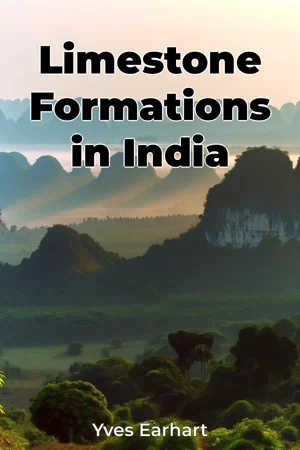
Have you ever wondered how seemingly solid rock can be sculpted into breathtaking landscapes, hidden subterranean worlds, and the very foundations of our industries? "Limestone Formations in India" delves into the fascinating realm of these formations, exploring their profound influence on India's geography, ecosystems, and economic activities. This book unveils the story of limestone, from its geological origins to its multifaceted roles in shaping the Indian subcontinent. The book focuses on three key areas: the geological processes behind limestone formation and their resulting landforms (caves, karsts, and plateaus); the biodiversity hotspots and unique ecosystems that thrive in these limestone regions; and the industrial and economic significance of limestone, particularly in cement production and construction. Understanding these aspects is vital for sustainable resource management, environmental conservation, and informed industrial development. Geologically, we explore the ancient marine environments that gave rise to India's vast limestone deposits, tracing their formation across geological timescales. We will examine the chemical weathering processes that create distinctive karst landscapes, including the formation of spectacular caves with their intricate speleothems. Ecologically, the book reveals how limestone terrains support specialized plant and animal communities, often harboring endemic species adapted to these unique habitats. The book also details the economic importance of limestone as a primary raw material for cement, a critical component of modern infrastructure. We also address the impact of quarrying on the environment. The central argument of this book is that limestone formations are not merely geological features but integral components of India's natural and economic heritage. Understanding their formation, ecological significance, and industrial applications is crucial for responsible stewardship and sustainable development. "Limestone Formations in India" is structured to provide a comprehensive overview of the subject. It begins with an introduction to the geology of limestone and its worldwide distribution, setting the stage for a focused examination of Indian formations. The book then explores the major limestone regions of India, detailing their specific geological characteristics, cave systems, and biodiversity. We will describe key regions such as the Meghalaya Plateau, the Bastar region, and parts of the Himalayas. Subsequent chapters delve into the industrial applications of limestone, analyzing the cement industry's impact on these regions and exploring sustainable extraction practices. The book culminates with a discussion of conservation strategies for protecting limestone ecosystems and ensuring the long-term availability of this valuable resource. The evidence presented is drawn from a variety of sources, including geological surveys, ecological studies, and industrial reports. We incorporate data from the Geological Survey of India, the Botanical Survey of India, and the Zoological Survey of India, as well as academic research in earth sciences, ecology, and environmental economics. The book also features original field observations and photographic documentation of limestone landscapes and ecosystems across India. This book connects to several other fields. Environmental science and conservation efforts aimed at protecting unique cave ecosystems are examined. The book also touches on engineering as it relates to the construction industry and material science. The approach is to present complex geological and ecological concepts in an accessible manner, making the book suitable for a broad audience. The tone is informative and engaging, balancing scientific rigor with clear and concise explanations. "Limestone Formations in India" is intended for students, researchers, policymakers, and anyone interested in the geology, ecology, and industrial development of India. It will be valuable to environmental scientists, geologists, civil engineers, and individuals curious about the natural world. The book adheres to the conventions of non-fiction scientific writing, emphasizing accuracy, clarity, and objectivity. The scope of this book is limited to limestone formations within India, focusing on their geological, ecological, and industrial aspects. It does not delve into the social or cultural impacts of limestone extraction on local communities, although this is acknowledged as an important area for further research. The information in this book can be applied to a range of real-world challenges, including sustainable quarrying practices, cave conservation, and eco-tourism development. It provides a foundation for informed decision-making regarding resource management and environmental protection in limestone regions. The book addresses controversies surrounding mining and its environmental impact. It seeks to provide a balanced perspective on these issues, highlighting both the economic benefits of limestone extraction and the need for responsible environmental stewardship.
Have you ever wondered how seemingly solid rock can be sculpted into breathtaking landscapes, hidden subterranean worlds, and the very foundations of our industries? "Limestone Formations in India" delves into the fascinating realm of these formations, exploring their profound influence on India's geography, ecosystems, and economic activities. This book unveils the story of limestone, from its geological origins to its multifaceted roles in shaping the Indian subcontinent. The book focuses on three key areas: the geological processes behind limestone formation and their resulting landforms (caves, karsts, and plateaus); the biodiversity hotspots and unique ecosystems that thrive in these limestone regions; and the industrial and economic significance of limestone, particularly in cement production and construction. Understanding these aspects is vital for sustainable resource management, environmental conservation, and informed industrial development. Geologically, we explore the ancient marine environments that gave rise to India's vast limestone deposits, tracing their formation across geological timescales. We will examine the chemical weathering processes that create distinctive karst landscapes, including the formation of spectacular caves with their intricate speleothems. Ecologically, the book reveals how limestone terrains support specialized plant and animal communities, often harboring endemic species adapted to these unique habitats. The book also details the economic importance of limestone as a primary raw material for cement, a critical component of modern infrastructure. We also address the impact of quarrying on the environment. The central argument of this book is that limestone formations are not merely geological features but integral components of India's natural and economic heritage. Understanding their formation, ecological significance, and industrial applications is crucial for responsible stewardship and sustainable development. "Limestone Formations in India" is structured to provide a comprehensive overview of the subject. It begins with an introduction to the geology of limestone and its worldwide distribution, setting the stage for a focused examination of Indian formations. The book then explores the major limestone regions of India, detailing their specific geological characteristics, cave systems, and biodiversity. We will describe key regions such as the Meghalaya Plateau, the Bastar region, and parts of the Himalayas. Subsequent chapters delve into the industrial applications of limestone, analyzing the cement industry's impact on these regions and exploring sustainable extraction practices. The book culminates with a discussion of conservation strategies for protecting limestone ecosystems and ensuring the long-term availability of this valuable resource. The evidence presented is drawn from a variety of sources, including geological surveys, ecological studies, and industrial reports. We incorporate data from the Geological Survey of India, the Botanical Survey of India, and the Zoological Survey of India, as well as academic research in earth sciences, ecology, and environmental economics. The book also features original field observations and photographic documentation of limestone landscapes and ecosystems across India. This book connects to several other fields. Environmental science and conservation efforts aimed at protecting unique cave ecosystems are examined. The book also touches on engineering as it relates to the construction industry and material science. The approach is to present complex geological and ecological concepts in an accessible manner, making the book suitable for a broad audience. The tone is informative and engaging, balancing scientific rigor with clear and concise explanations. "Limestone Formations in India" is intended for students, researchers, policymakers, and anyone interested in the geology, ecology, and industrial development of India. It will be valuable to environmental scientists, geologists, civil engineers, and individuals curious about the natural world. The book adheres to the conventions of non-fiction scientific writing, emphasizing accuracy, clarity, and objectivity. The scope of this book is limited to limestone formations within India, focusing on their geological, ecological, and industrial aspects. It does not delve into the social or cultural impacts of limestone extraction on local communities, although this is acknowledged as an important area for further research. The information in this book can be applied to a range of real-world challenges, including sustainable quarrying practices, cave conservation, and eco-tourism development. It provides a foundation for informed decision-making regarding resource management and environmental protection in limestone regions. The book addresses controversies surrounding mining and its environmental impact. It seeks to provide a balanced perspective on these issues, highlighting both the economic benefits of limestone extraction and the need for responsible environmental stewardship.
"Limestone Formations in India" explores the geological origins, ecological significance, and industrial applications of these formations across the Indian subcontinent. It highlights how ancient marine environments gave rise to vast limestone deposits, which through chemical weathering, created distinctive karst landscapes and cave systems. Understanding these formations is vital for sustainable resource management, environmental conservation, and responsible industrial development, particularly in cement production. The book details the unique ecosystems that thrive in limestone regions, often harboring endemic species adapted to these specialized habitats, making these areas biodiversity hotspots. It also examines the economic importance of limestone as a primary raw material for cement and addresses the environmental impact of quarrying. The book progresses from an introduction to limestone geology and its global distribution to a focused examination of Indian formations, detailing their geological characteristics, cave systems, and biodiversity. Finally, "Limestone Formations in India" analyzes the cement industry’s impact on these regions and explores sustainable extraction practices, culminating in a discussion of conservation strategies. This approach provides a comprehensive overview, making it valuable for students, researchers, policymakers, and anyone interested in the intersections of geology, ecology, and industrial development in India.
Book Details
ISBN
9788233984373
Publisher
Publifye AS
Your Licenses
You don't own any licenses for this book
Purchase a license below to unlock this book and download the EPUB.
Purchase License
Select a tier to unlock this book
Need bulk licensing?
Contact us for enterprise agreements.