
About This Book
Have you ever considered the profound influence of rivers on the spiritual and cultural landscape of an entire civilization? "Sacred Rivers of India" delves into the heart of India's most revered waterways, exploring their pivotal role in shaping religious practices, cultural traditions, and the very fabric of Indian society. This book examines the Ganga, Yamuna, and Saraswati Rivers, unraveling their spiritual significance and their influence in religious and cultural traditions. These rivers are not simply geographical features; they are living embodiments of deities, central to Hindu cosmology, and integral to the daily lives of millions. Understanding these rivers offers insight into the core values and beliefs of Hinduism and the rich tapestry of Indian culture. To fully appreciate the rivers' importance, the book explores their historical context, tracing their mentions in ancient scriptures like the Vedas and Puranas, examining their evolving roles through different historical periods, and investigating the impact of societal changes on riverine cultures. It requires an understanding of basic Hindu concepts such as dharma, karma, and moksha, which are intricately linked to the rivers' purifying and life-sustaining qualities. The central argument of "Sacred Rivers of India" is that these rivers are not merely symbols of faith but are active agents in shaping and maintaining the spiritual, social, and ecological balance of the region. This argument highlights the urgent need to understand and protect these vital resources in the face of modern challenges like pollution and climate change. The book is structured to provide a comprehensive understanding of its subject. First, it introduces the concept of sacred rivers in Hinduism and their significance, referencing mythological origins and traditional practices. Second, it explores the individual histories and mythologies of the Ganga, Yamuna, and Saraswati, highlighting their unique characteristics and roles in religious rituals. Third, it examines the cultural impact of these rivers, discussing their influence on art, literature, music, and social customs. The book culminates by addressing the contemporary challenges faced by these rivers and proposing sustainable solutions for their preservation, emphasizing the practical implications of understanding their sacred value. The book draws upon a wide range of evidence, including scriptural texts, archaeological findings, historical accounts, ethnographic studies, and scientific data on river ecology. Unique data sources include translations of ancient hymns dedicated to the rivers and field research conducted along their banks, documenting the living traditions and beliefs of local communities. "Sacred Rivers of India" bridges several disciplines, connecting religious studies, history, anthropology, and environmental science. The exploration of religious beliefs intersects with historical analysis of ritual practices. Anthropological insights into the social structures and cultural practices along the riverbanks are intertwined with environmental studies, creating holistic understanding of how all these elements interact. A unique aspect of this book lies in its holistic approach, combining textual analysis with on-the-ground observations and scientific data to provide a nuanced understanding of the rivers' multifaceted significance. It moves beyond a purely religious or historical perspective, integrating ecological concerns and offering practical solutions for sustainable river management. The tone is informative and accessible, blending scholarly rigor with engaging storytelling to captivate a broad audience. The writing style aims to be clear, concise, and respectful of the subject matter, avoiding jargon while maintaining intellectual depth. The target audience includes students of religion, history, and South Asian studies, as well as anyone interested in Indian culture, spirituality, and environmental issues. This book offers valuable insights into the complex interplay between religion, culture, and ecology, deepening their appreciation for the importance of sacred sites and natural resources. As a work of non-fiction within the genres of religion, world history, and historical studies, the book aims to be authoritative and well-researched, presenting information in a clear and unbiased manner while acknowledging different perspectives and interpretations. The book focuses specifically on the Ganga, Yamuna, and Saraswati rivers, acknowledging that other rivers in India also hold religious significance. The scope is limited to exploring the spiritual, cultural, and historical dimensions of these three rivers, without delving into detailed hydrological or engineering aspects. Readers can apply the knowledge gained from this book to better understand the cultural and religious values associated with water resources in India and other parts of the world. It provides a framework for analyzing the complex relationship between humans and the environment, promoting informed decision-making and sustainable practices. While the sanctity of these rivers is widely accepted by Hindus, there are ongoing debates about the interpretation of scriptural texts, the efficacy of traditional purification rituals, and the best approaches to address pollution and environmental degradation. This book acknowledges these controversies and presents different viewpoints, encouraging critical thinking and open dialogue.
Have you ever considered the profound influence of rivers on the spiritual and cultural landscape of an entire civilization? "Sacred Rivers of India" delves into the heart of India's most revered waterways, exploring their pivotal role in shaping religious practices, cultural traditions, and the very fabric of Indian society. This book examines the Ganga, Yamuna, and Saraswati Rivers, unraveling their spiritual significance and their influence in religious and cultural traditions. These rivers are not simply geographical features; they are living embodiments of deities, central to Hindu cosmology, and integral to the daily lives of millions. Understanding these rivers offers insight into the core values and beliefs of Hinduism and the rich tapestry of Indian culture. To fully appreciate the rivers' importance, the book explores their historical context, tracing their mentions in ancient scriptures like the Vedas and Puranas, examining their evolving roles through different historical periods, and investigating the impact of societal changes on riverine cultures. It requires an understanding of basic Hindu concepts such as dharma, karma, and moksha, which are intricately linked to the rivers' purifying and life-sustaining qualities. The central argument of "Sacred Rivers of India" is that these rivers are not merely symbols of faith but are active agents in shaping and maintaining the spiritual, social, and ecological balance of the region. This argument highlights the urgent need to understand and protect these vital resources in the face of modern challenges like pollution and climate change. The book is structured to provide a comprehensive understanding of its subject. First, it introduces the concept of sacred rivers in Hinduism and their significance, referencing mythological origins and traditional practices. Second, it explores the individual histories and mythologies of the Ganga, Yamuna, and Saraswati, highlighting their unique characteristics and roles in religious rituals. Third, it examines the cultural impact of these rivers, discussing their influence on art, literature, music, and social customs. The book culminates by addressing the contemporary challenges faced by these rivers and proposing sustainable solutions for their preservation, emphasizing the practical implications of understanding their sacred value. The book draws upon a wide range of evidence, including scriptural texts, archaeological findings, historical accounts, ethnographic studies, and scientific data on river ecology. Unique data sources include translations of ancient hymns dedicated to the rivers and field research conducted along their banks, documenting the living traditions and beliefs of local communities. "Sacred Rivers of India" bridges several disciplines, connecting religious studies, history, anthropology, and environmental science. The exploration of religious beliefs intersects with historical analysis of ritual practices. Anthropological insights into the social structures and cultural practices along the riverbanks are intertwined with environmental studies, creating holistic understanding of how all these elements interact. A unique aspect of this book lies in its holistic approach, combining textual analysis with on-the-ground observations and scientific data to provide a nuanced understanding of the rivers' multifaceted significance. It moves beyond a purely religious or historical perspective, integrating ecological concerns and offering practical solutions for sustainable river management. The tone is informative and accessible, blending scholarly rigor with engaging storytelling to captivate a broad audience. The writing style aims to be clear, concise, and respectful of the subject matter, avoiding jargon while maintaining intellectual depth. The target audience includes students of religion, history, and South Asian studies, as well as anyone interested in Indian culture, spirituality, and environmental issues. This book offers valuable insights into the complex interplay between religion, culture, and ecology, deepening their appreciation for the importance of sacred sites and natural resources. As a work of non-fiction within the genres of religion, world history, and historical studies, the book aims to be authoritative and well-researched, presenting information in a clear and unbiased manner while acknowledging different perspectives and interpretations. The book focuses specifically on the Ganga, Yamuna, and Saraswati rivers, acknowledging that other rivers in India also hold religious significance. The scope is limited to exploring the spiritual, cultural, and historical dimensions of these three rivers, without delving into detailed hydrological or engineering aspects. Readers can apply the knowledge gained from this book to better understand the cultural and religious values associated with water resources in India and other parts of the world. It provides a framework for analyzing the complex relationship between humans and the environment, promoting informed decision-making and sustainable practices. While the sanctity of these rivers is widely accepted by Hindus, there are ongoing debates about the interpretation of scriptural texts, the efficacy of traditional purification rituals, and the best approaches to address pollution and environmental degradation. This book acknowledges these controversies and presents different viewpoints, encouraging critical thinking and open dialogue.
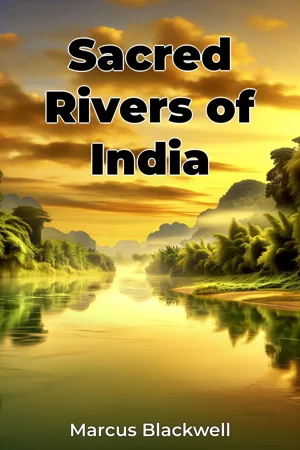
"Sacred Rivers of India" explores the profound spiritual and cultural significance of India's most revered waterways, particularly the Ganga, Yamuna, and Saraswati rivers. These rivers are not merely geographical features but vital arteries of Indian civilization, deeply intertwined with religious practices, cultural traditions, and the core tenets of Hinduism. The book examines how these rivers embody deities and are central to Hindu cosmology, influencing daily life and shaping societal values. The book delves into the historical context of these rivers, tracing their mentions in ancient scriptures and examining their evolving roles through different historical periods. It also explores the cultural impact of these rivers on art, literature, music, and social customs. By bridging religious studies, history, and environmental science, "Sacred Rivers of India" offers a holistic understanding of the rivers' multifaceted significance. The book progresses from introducing the concept of sacred rivers in Hinduism to exploring the individual histories of the Ganga, Yamuna, and Saraswati, and culminates by addressing contemporary challenges and proposing sustainable solutions.
Book Details
ISBN
9788233984335
Publisher
Publifye AS
Your Licenses
You don't own any licenses for this book
Purchase a license below to unlock this book and download the EPUB.
Purchase License
Select a tier to unlock this book
Need bulk licensing?
Contact us for enterprise agreements.