
About This Book
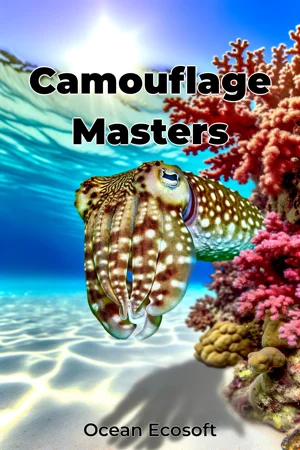
Have you ever wondered how some creatures seemingly disappear into their surroundings? This book, "Camouflage Masters," delves into the fascinating world of camouflage, exploring the science and strategies employed by animals like chameleons, cuttlefish, and stick insects to both hunt and evade predators. We examine how these creatures, and many others, have mastered the art of disguise, showcasing the remarkable power of natural selection. Camouflage is not mere trickery; it’s a complex adaptation driven by survival. The core of our investigation lies in three key areas: understanding the mechanisms behind camouflage, exploring the evolutionary pressures that drive its development, and examining the various types of camouflage found in nature. These topics are significant because they provide insight into the intricate interplay between predator and prey, illuminating the constant arms race that shapes biodiversity. To fully appreciate the intricacies of camouflage, it's important to understand the basics of animal behavior, evolutionary biology, and visual perception. We will briefly touch upon the history of camouflage research, from early observations to modern scientific studies using advanced imaging techniques and genetic analysis. This historical context provides a foundation for understanding the current state of knowledge and the ongoing debates within the field. Our central argument is that camouflage is not simply a static trait but a dynamic and adaptable strategy that reflects the ever-changing environments in which these creatures live. The book will demonstrate how the pressures of natural selection have shaped the development of diverse camouflage techniques, each finely tuned to specific habitats and threats. This understanding is fundamental to comprehending the broader ecological dynamics that govern animal populations. The book is structured to guide you through a comprehensive understanding of camouflage. It begins with an introduction to the basic principles and terminology, laying the groundwork for more in-depth discussions. The subsequent chapters are organized around major camouflage strategies, such as background matching, disruptive coloration, masquerade, and motion camouflage, offering detailed examples of each type. We then explore the sensory ecology of camouflage, emphasizing how predators and prey perceive their environment. The book culminates in an examination of the evolutionary arms race between camouflage and detection, highlighting the ongoing adaptations and counter-adaptations that drive this process. To support this central argument, the book draws upon a wide range of scientific literature, including peer-reviewed research articles, field studies, and laboratory experiments. We will showcase examples of unique data sources, such as long-term observational studies of camouflage effectiveness in natural populations, and cutting-edge research using computer modeling to simulate camouflage strategies. "Camouflage Masters" also connects to several other fields of study. Firstly, it links to the field of materials science, as researchers are increasingly looking to nature for inspiration in developing advanced camouflage materials for military and civilian applications. Secondly, it connects to computer science through the development of algorithms for camouflage detection and simulation. Thirdly, there are connections to art and design, exploring the use of camouflage principles in visual arts and fashion. These connections demonstrate the broad relevance and interdisciplinary nature of camouflage research. This book takes a unique approach by integrating ecological, evolutionary, and sensory perspectives to provide a holistic understanding of camouflage. We will delve into the sensory world of animals, exploring how their visual systems influence both the development of and response to camouflage strategies. This sensory perspective sets it apart from many existing works on the subject. The tone is informative and accessible, designed to engage a broad audience while maintaining scientific accuracy. The writing style is clear and concise, avoiding jargon when possible and providing definitions for technical terms. The target audience includes students, educators, nature enthusiasts, and anyone curious about the natural world. This book offers valuable insights into animal behavior, evolution, and ecology, providing a deeper appreciation for the ingenuity of nature. As a fact-based exploration of a biological topic, this book adheres to the conventions of science writing, emphasizing evidence-based arguments and rigorous analysis. We aim to present complex information in a clear and engaging manner, using illustrations and examples to enhance understanding. While the book covers a broad range of camouflage strategies, it primarily focuses on visual camouflage, acknowledging that other forms of camouflage, such as acoustic and chemical camouflage, also play important roles in the natural world. However, these will only be touched upon briefly. The information in this book can be applied to a variety of real-world contexts, from designing effective camouflage for military use to understanding the ecological impacts of habitat loss on camouflage effectiveness. Furthermore, this book explores some of the debates and controversies surrounding camouflage, such as the role of learning and plasticity in camouflage development, and the effectiveness of different camouflage strategies in variable environments.
Have you ever wondered how some creatures seemingly disappear into their surroundings? This book, "Camouflage Masters," delves into the fascinating world of camouflage, exploring the science and strategies employed by animals like chameleons, cuttlefish, and stick insects to both hunt and evade predators. We examine how these creatures, and many others, have mastered the art of disguise, showcasing the remarkable power of natural selection. Camouflage is not mere trickery; it’s a complex adaptation driven by survival. The core of our investigation lies in three key areas: understanding the mechanisms behind camouflage, exploring the evolutionary pressures that drive its development, and examining the various types of camouflage found in nature. These topics are significant because they provide insight into the intricate interplay between predator and prey, illuminating the constant arms race that shapes biodiversity. To fully appreciate the intricacies of camouflage, it's important to understand the basics of animal behavior, evolutionary biology, and visual perception. We will briefly touch upon the history of camouflage research, from early observations to modern scientific studies using advanced imaging techniques and genetic analysis. This historical context provides a foundation for understanding the current state of knowledge and the ongoing debates within the field. Our central argument is that camouflage is not simply a static trait but a dynamic and adaptable strategy that reflects the ever-changing environments in which these creatures live. The book will demonstrate how the pressures of natural selection have shaped the development of diverse camouflage techniques, each finely tuned to specific habitats and threats. This understanding is fundamental to comprehending the broader ecological dynamics that govern animal populations. The book is structured to guide you through a comprehensive understanding of camouflage. It begins with an introduction to the basic principles and terminology, laying the groundwork for more in-depth discussions. The subsequent chapters are organized around major camouflage strategies, such as background matching, disruptive coloration, masquerade, and motion camouflage, offering detailed examples of each type. We then explore the sensory ecology of camouflage, emphasizing how predators and prey perceive their environment. The book culminates in an examination of the evolutionary arms race between camouflage and detection, highlighting the ongoing adaptations and counter-adaptations that drive this process. To support this central argument, the book draws upon a wide range of scientific literature, including peer-reviewed research articles, field studies, and laboratory experiments. We will showcase examples of unique data sources, such as long-term observational studies of camouflage effectiveness in natural populations, and cutting-edge research using computer modeling to simulate camouflage strategies. "Camouflage Masters" also connects to several other fields of study. Firstly, it links to the field of materials science, as researchers are increasingly looking to nature for inspiration in developing advanced camouflage materials for military and civilian applications. Secondly, it connects to computer science through the development of algorithms for camouflage detection and simulation. Thirdly, there are connections to art and design, exploring the use of camouflage principles in visual arts and fashion. These connections demonstrate the broad relevance and interdisciplinary nature of camouflage research. This book takes a unique approach by integrating ecological, evolutionary, and sensory perspectives to provide a holistic understanding of camouflage. We will delve into the sensory world of animals, exploring how their visual systems influence both the development of and response to camouflage strategies. This sensory perspective sets it apart from many existing works on the subject. The tone is informative and accessible, designed to engage a broad audience while maintaining scientific accuracy. The writing style is clear and concise, avoiding jargon when possible and providing definitions for technical terms. The target audience includes students, educators, nature enthusiasts, and anyone curious about the natural world. This book offers valuable insights into animal behavior, evolution, and ecology, providing a deeper appreciation for the ingenuity of nature. As a fact-based exploration of a biological topic, this book adheres to the conventions of science writing, emphasizing evidence-based arguments and rigorous analysis. We aim to present complex information in a clear and engaging manner, using illustrations and examples to enhance understanding. While the book covers a broad range of camouflage strategies, it primarily focuses on visual camouflage, acknowledging that other forms of camouflage, such as acoustic and chemical camouflage, also play important roles in the natural world. However, these will only be touched upon briefly. The information in this book can be applied to a variety of real-world contexts, from designing effective camouflage for military use to understanding the ecological impacts of habitat loss on camouflage effectiveness. Furthermore, this book explores some of the debates and controversies surrounding camouflage, such as the role of learning and plasticity in camouflage development, and the effectiveness of different camouflage strategies in variable environments.
"Camouflage Masters" explores the fascinating world of animal camouflage, a survival strategy honed by evolution and natural selection. This book investigates how creatures like chameleons and stick insects use disguise to hunt and evade predators, highlighting the intricate predator-prey interactions that shape biodiversity. Camouflage is not just trickery; it's a dynamic adaptation, with some species changing color in milliseconds to match their environments, while others mimic inedible objects like bird droppings to avoid detection. The book examines the mechanisms, evolutionary pressures, and various types of camouflage, offering a holistic understanding by integrating ecological, evolutionary, and sensory perspectives. It progresses from basic principles to major camouflage strategies like background matching and disruptive coloration. The book also considers the sensory ecology of camouflage, emphasizing how animals perceive their surroundings. By delving into visual perception and the ongoing arms race between camouflage and detection, "Camouflage Masters" provides insights into animal behavior, ecology, and the ingenuity of nature.
Book Details
ISBN
9788233984304
Publisher
Publifye AS
Your Licenses
You don't own any licenses for this book
Purchase a license below to unlock this book and download the EPUB.
Purchase License
Select a tier to unlock this book
Need bulk licensing?
Contact us for enterprise agreements.