
About This Book
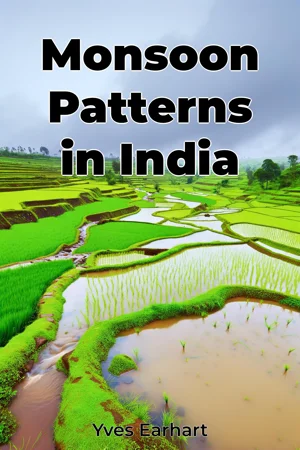
Imagine a natural phenomenon so pervasive it dictates the rhythm of a nation, shaping its economy, culture, and very survival. This book, "Monsoon Patterns in India," delves into this intricate relationship, exploring how the monsoon winds govern India’s climate, agriculture, and water resources, thereby affecting millions of lives each year. The book emphasizes the critical need to understand, predict, and adapt to the monsoon's variability in the face of growing environmental challenges. Our primary focus lies on three key areas: the climatological mechanisms driving the monsoon, its profound impact on Indian agriculture, and the challenges of water resource management in a monsoon-dependent nation. Understanding these elements is crucial because the monsoon is not simply a weather event; it's a complex system that influences food security, economic stability, and the overall well-being of a vast population. To understand the monsoon, we delve into its historical context, tracing the evolution of scientific understanding from early observations to modern climate models. We examine the social implications, considering how traditional knowledge systems have shaped adaptation strategies over centuries. No prior expertise in climatology is assumed; however, a basic understanding of geography and environmental science will enhance the reader's comprehension. The central argument of this book is that a comprehensive, interdisciplinary understanding of the monsoon is essential for developing effective strategies to mitigate its adverse effects and harness its benefits. We need to move beyond simplistic views of the monsoon as merely a source of rain and recognize its multifaceted role in shaping India's environment and society. The book is structured to provide a clear, progressive understanding. First, we introduce the fundamental concepts of monsoon meteorology, explaining the atmospheric and oceanic processes that drive the seasonal winds. We then examine the monsoon's impact on agriculture, analyzing crop patterns, irrigation techniques, and the vulnerability of farming communities to monsoon variability. Next, the focus shifts to water resources, assessing the challenges of water scarcity, flood management, and the role of infrastructure in ensuring water security. Finally, the book culminates in a discussion of future challenges and adaptation strategies, considering the impacts of climate change and the need for sustainable water management practices. The evidence presented in this book draws from a wide range of sources, including meteorological data from the Indian Meteorological Department, agricultural statistics from government agencies, hydrological data from river basin organizations, and case studies of communities affected by monsoon variability. We also incorporate insights from scientific literature, policy reports, and interviews with experts in the fields of climatology, agriculture, and water resource management. This study also touches on several interdisciplinary areas. First, environmental science since it addresses the effects of climate change on monsoon patterns and examines ecological consequences. Second, economics as it analyzes the economic impacts of monsoon variability on agriculture and related sectors. Third, social science as it explores the social and cultural dimensions of monsoon adaptation and the role of community-based strategies. This book distinguishes itself by taking a holistic view of the monsoon, integrating scientific analysis with social and economic perspectives. It acknowledges the complexity of the monsoon system and avoids reductionist approaches that focus solely on meteorological aspects. Instead, it emphasizes the interconnectedness of climate, agriculture, and water resources, providing a more nuanced and comprehensive understanding. The writing style is professional yet accessible, avoiding technical jargon where possible and providing clear explanations of complex concepts. The book is targeted to a broad audience, including students, researchers, policymakers, and anyone interested in understanding the monsoon and its impact on India. It will be particularly valuable to those working in the fields of environmental science, geography, agriculture, and water resource management. As a work of non-fiction, this book adheres to the genre's conventions by presenting factual information, supporting arguments with evidence, and maintaining an objective tone. While the book explores the breadth of monsoon impacts across India, it acknowledges limitations in providing in-depth regional analyses due to space constraints. The information presented has practical applications for readers. Farmers can use the insights on monsoon variability to adapt their planting schedules and irrigation practices. Policymakers can leverage the analysis of water resource management to develop more effective strategies for ensuring water security. Researchers can build upon the interdisciplinary framework to conduct further studies on the monsoon and its impacts. Finally, the book addresses ongoing debates in the field, such as the extent to which climate change is altering monsoon patterns and the effectiveness of different adaptation strategies. By presenting a balanced view of these controversies, the book encourages readers to engage critically with the issues and to consider different perspectives.
Imagine a natural phenomenon so pervasive it dictates the rhythm of a nation, shaping its economy, culture, and very survival. This book, "Monsoon Patterns in India," delves into this intricate relationship, exploring how the monsoon winds govern India’s climate, agriculture, and water resources, thereby affecting millions of lives each year. The book emphasizes the critical need to understand, predict, and adapt to the monsoon's variability in the face of growing environmental challenges. Our primary focus lies on three key areas: the climatological mechanisms driving the monsoon, its profound impact on Indian agriculture, and the challenges of water resource management in a monsoon-dependent nation. Understanding these elements is crucial because the monsoon is not simply a weather event; it's a complex system that influences food security, economic stability, and the overall well-being of a vast population. To understand the monsoon, we delve into its historical context, tracing the evolution of scientific understanding from early observations to modern climate models. We examine the social implications, considering how traditional knowledge systems have shaped adaptation strategies over centuries. No prior expertise in climatology is assumed; however, a basic understanding of geography and environmental science will enhance the reader's comprehension. The central argument of this book is that a comprehensive, interdisciplinary understanding of the monsoon is essential for developing effective strategies to mitigate its adverse effects and harness its benefits. We need to move beyond simplistic views of the monsoon as merely a source of rain and recognize its multifaceted role in shaping India's environment and society. The book is structured to provide a clear, progressive understanding. First, we introduce the fundamental concepts of monsoon meteorology, explaining the atmospheric and oceanic processes that drive the seasonal winds. We then examine the monsoon's impact on agriculture, analyzing crop patterns, irrigation techniques, and the vulnerability of farming communities to monsoon variability. Next, the focus shifts to water resources, assessing the challenges of water scarcity, flood management, and the role of infrastructure in ensuring water security. Finally, the book culminates in a discussion of future challenges and adaptation strategies, considering the impacts of climate change and the need for sustainable water management practices. The evidence presented in this book draws from a wide range of sources, including meteorological data from the Indian Meteorological Department, agricultural statistics from government agencies, hydrological data from river basin organizations, and case studies of communities affected by monsoon variability. We also incorporate insights from scientific literature, policy reports, and interviews with experts in the fields of climatology, agriculture, and water resource management. This study also touches on several interdisciplinary areas. First, environmental science since it addresses the effects of climate change on monsoon patterns and examines ecological consequences. Second, economics as it analyzes the economic impacts of monsoon variability on agriculture and related sectors. Third, social science as it explores the social and cultural dimensions of monsoon adaptation and the role of community-based strategies. This book distinguishes itself by taking a holistic view of the monsoon, integrating scientific analysis with social and economic perspectives. It acknowledges the complexity of the monsoon system and avoids reductionist approaches that focus solely on meteorological aspects. Instead, it emphasizes the interconnectedness of climate, agriculture, and water resources, providing a more nuanced and comprehensive understanding. The writing style is professional yet accessible, avoiding technical jargon where possible and providing clear explanations of complex concepts. The book is targeted to a broad audience, including students, researchers, policymakers, and anyone interested in understanding the monsoon and its impact on India. It will be particularly valuable to those working in the fields of environmental science, geography, agriculture, and water resource management. As a work of non-fiction, this book adheres to the genre's conventions by presenting factual information, supporting arguments with evidence, and maintaining an objective tone. While the book explores the breadth of monsoon impacts across India, it acknowledges limitations in providing in-depth regional analyses due to space constraints. The information presented has practical applications for readers. Farmers can use the insights on monsoon variability to adapt their planting schedules and irrigation practices. Policymakers can leverage the analysis of water resource management to develop more effective strategies for ensuring water security. Researchers can build upon the interdisciplinary framework to conduct further studies on the monsoon and its impacts. Finally, the book addresses ongoing debates in the field, such as the extent to which climate change is altering monsoon patterns and the effectiveness of different adaptation strategies. By presenting a balanced view of these controversies, the book encourages readers to engage critically with the issues and to consider different perspectives.
"Monsoon Patterns in India" explores the profound influence of the Indian Monsoon on the nation’s climate, agriculture, and water resources. It highlights that understanding monsoon variability is critical for India's future, especially given growing environmental challenges and climate change impacts. The book delves into the climatological mechanisms driving the monsoon, its impact on Indian agriculture, and the challenges of water management. One intriguing fact is how deeply the monsoon affects food security and the economic stability of a vast population. The book adopts an interdisciplinary approach, integrating scientific analysis with social and economic perspectives. It progresses from fundamental concepts of monsoon meteorology to impacts on agriculture and water resources, culminating in a discussion of future challenges and adaptation strategies. The book emphasizes the interconnectedness of climate, agriculture, and water resources. It highlights the need to move beyond simplistic views of the monsoon as merely a source of rain and recognize its multifaceted role in shaping India's environment and society.
Book Details
ISBN
9788233984298
Publisher
Publifye AS
Your Licenses
You don't own any licenses for this book
Purchase a license below to unlock this book and download the EPUB.
Purchase License
Select a tier to unlock this book
Need bulk licensing?
Contact us for enterprise agreements.