
About This Book
How did a network of interconnected trading posts and warring principalities transform into one of the world's largest nations? "Origins of Russia" delves into the formative era of Kievan Rus', exploring how this medieval state, forged in the crucible of trade, war, and cultural exchange, laid the bedrock for modern Russia. This book examines three pivotal themes: the impact of Byzantine culture and religion on the nascent Slavic state, the crucial role of river trade routes in connecting disparate territories, and the constant struggle for power and resources that defined Kievan Rus' political landscape. Understanding these elements is essential to comprehending not only Russia's early history but also core aspects of its enduring cultural identity, geopolitical strategies, and societal structures. The narrative begins with the arrival of the Varangians, Norse adventurers who established control over crucial trade routes. It explores the adoption of Orthodox Christianity under Vladimir the Great, an event that fundamentally shaped Rus' culture, law, and international relations, linking it inextricably to the Byzantine world. We then analyze the intricate network of river systems, particularly the Volga and Dnieper, which served as arteries of commerce, connecting Scandinavia and the Baltic with the Black Sea and the Byzantine Empire. The book will follow the evolution of political power, from the early consolidation of power in Kiev to the fragmentation into competing principalities, highlighting the internal conflicts and external threats from nomadic groups that continuously challenged the stability of Rus'. "Origins of Russia" argues that Kievan Rus' was not merely a precursor to Russia but a distinct civilization with its own unique characteristics, whose legacy continues to resonate through Russian history and identity. The book is structured chronologically, starting with the pre-Kievan period and culminating with the Mongol invasion in the 13th century, which marked a turning point in Russian history. Each chapter will delve into specific events, figures, and social trends, building a comprehensive picture of Kievan Rus' society, politics, economy, and culture. The arguments presented are supported by extensive research drawing on primary sources like chronicles, archaeological findings, and legal codes, as well as secondary analyses from leading historians. The book integrates insights from archaeology to provide a balanced view of material culture and everyday life. The book also considers the intersections of history with religious studies, exploring the impact of Orthodox Christianity on Rus' society, law, and culture. It also connects to the fields of political science and international relations, examining the geopolitical dynamics of the region and the constant negotiation between Rus' principalities and their neighbors, including the Byzantine Empire, the nomadic Polovtsy, and later the Mongol Empire. This book offers a fresh perspective by emphasizing the dynamic interplay between internal political fragmentation and external cultural and economic influences, underscoring how Kievan Rus' was shaped by both its internal contradictions and its strategic position in the broader Eurasian world. Information is presented in a fact-based, analytical, and engaging manner, accessible to both scholars and general readers interested in Russian history. This study is intended for history enthusiasts, students, and anyone seeking a deeper understanding of the roots of Russian civilization. It provides valuable background for understanding contemporary Russian politics and culture, by revealing the long-term historical forces that have shaped the nation. The scope of "Origins of Russia" is limited to the period between the 9th and 13th centuries, focusing primarily on the territory of modern-day Ukraine, Belarus, and Western Russia. While acknowledging the contributions of other groups who inhabited the region, it concentrates primarily on the Slavic and Varangian elements that gave rise to Kievan Rus'. The knowledge gained can be applied to understanding current geopolitical issues in Eastern Europe, providing historical context for ongoing conflicts and cultural divisions. The book engages with debates surrounding the legacy of Kievan Rus', particularly its contested place in the national narratives of Russia, Ukraine, and Belarus.
How did a network of interconnected trading posts and warring principalities transform into one of the world's largest nations? "Origins of Russia" delves into the formative era of Kievan Rus', exploring how this medieval state, forged in the crucible of trade, war, and cultural exchange, laid the bedrock for modern Russia. This book examines three pivotal themes: the impact of Byzantine culture and religion on the nascent Slavic state, the crucial role of river trade routes in connecting disparate territories, and the constant struggle for power and resources that defined Kievan Rus' political landscape. Understanding these elements is essential to comprehending not only Russia's early history but also core aspects of its enduring cultural identity, geopolitical strategies, and societal structures. The narrative begins with the arrival of the Varangians, Norse adventurers who established control over crucial trade routes. It explores the adoption of Orthodox Christianity under Vladimir the Great, an event that fundamentally shaped Rus' culture, law, and international relations, linking it inextricably to the Byzantine world. We then analyze the intricate network of river systems, particularly the Volga and Dnieper, which served as arteries of commerce, connecting Scandinavia and the Baltic with the Black Sea and the Byzantine Empire. The book will follow the evolution of political power, from the early consolidation of power in Kiev to the fragmentation into competing principalities, highlighting the internal conflicts and external threats from nomadic groups that continuously challenged the stability of Rus'. "Origins of Russia" argues that Kievan Rus' was not merely a precursor to Russia but a distinct civilization with its own unique characteristics, whose legacy continues to resonate through Russian history and identity. The book is structured chronologically, starting with the pre-Kievan period and culminating with the Mongol invasion in the 13th century, which marked a turning point in Russian history. Each chapter will delve into specific events, figures, and social trends, building a comprehensive picture of Kievan Rus' society, politics, economy, and culture. The arguments presented are supported by extensive research drawing on primary sources like chronicles, archaeological findings, and legal codes, as well as secondary analyses from leading historians. The book integrates insights from archaeology to provide a balanced view of material culture and everyday life. The book also considers the intersections of history with religious studies, exploring the impact of Orthodox Christianity on Rus' society, law, and culture. It also connects to the fields of political science and international relations, examining the geopolitical dynamics of the region and the constant negotiation between Rus' principalities and their neighbors, including the Byzantine Empire, the nomadic Polovtsy, and later the Mongol Empire. This book offers a fresh perspective by emphasizing the dynamic interplay between internal political fragmentation and external cultural and economic influences, underscoring how Kievan Rus' was shaped by both its internal contradictions and its strategic position in the broader Eurasian world. Information is presented in a fact-based, analytical, and engaging manner, accessible to both scholars and general readers interested in Russian history. This study is intended for history enthusiasts, students, and anyone seeking a deeper understanding of the roots of Russian civilization. It provides valuable background for understanding contemporary Russian politics and culture, by revealing the long-term historical forces that have shaped the nation. The scope of "Origins of Russia" is limited to the period between the 9th and 13th centuries, focusing primarily on the territory of modern-day Ukraine, Belarus, and Western Russia. While acknowledging the contributions of other groups who inhabited the region, it concentrates primarily on the Slavic and Varangian elements that gave rise to Kievan Rus'. The knowledge gained can be applied to understanding current geopolitical issues in Eastern Europe, providing historical context for ongoing conflicts and cultural divisions. The book engages with debates surrounding the legacy of Kievan Rus', particularly its contested place in the national narratives of Russia, Ukraine, and Belarus.
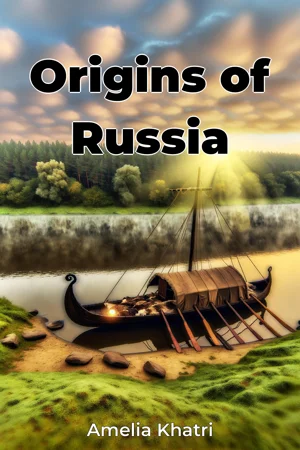
"Origins of Russia" examines the formative era of Kievan Rus', a medieval state that laid the foundation for modern Russia. It explores how the interconnected trading posts and warring principalities transformed over time. The book highlights the significant impact of the Byzantine Empire on the nascent Slavic state, and the vital role of river trade routes, like the Volga and Dnieper, in connecting disparate territories. These trade routes served as arteries of commerce, linking Scandinavia and the Baltic with the Black Sea and the Byzantine Empire. The book progresses chronologically, starting with the arrival of the Varangians and the adoption of Orthodox Christianity, culminating with the Mongol invasion in the 13th century. The narrative emphasizes the dynamic interplay between internal political fragmentation and external cultural influences. By exploring the political landscape and cultural exchanges, "Origins of Russia" reveals how Kievan Rus' was shaped by its internal contradictions and strategic position in the broader Eurasian world.
Book Details
ISBN
9788233984243
Publisher
Publifye AS
Your Licenses
You don't own any licenses for this book
Purchase a license below to unlock this book and download the EPUB.
Purchase License
Select a tier to unlock this book
Need bulk licensing?
Contact us for enterprise agreements.