
About This Book
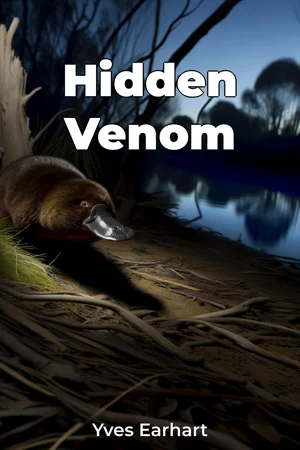
Did you know that some of the most seemingly harmless creatures harbor a secret weapon: venom? "Hidden Venom" unveils the surprising world of venomous animals that defy common expectations, challenging our understanding of nature's defense mechanisms. This book delves into the biology, evolution, and ecological significance of venom in unexpected species, shedding light on a hidden facet of the animal kingdom. This book explores two primary topics: the evolutionary pathways that lead to venom production in surprising species, and the ecological roles these venoms play in their respective environments. These topics are crucial because they challenge long-held assumptions about which animals are truly "dangerous" and reveal the complex interplay between predator and prey. Understanding the chemical composition, delivery mechanisms, and overall biological effects of these “hidden” venoms is essential for broader comprehension of ecological balance and potential applications in medicine. To appreciate the significance of these surprising venomous creatures, it's important to understand the historical context of venom research. Traditionally, venom research focused on well-known venomous animals like snakes, scorpions, and spiders. However, recent scientific advances, particularly in molecular biology and proteomics, have allowed researchers to identify venom components in species previously considered harmless. The central argument of "Hidden Venom" is that venom is far more widespread in the animal kingdom than previously believed, and its presence in unexpected species reflects the diverse evolutionary pressures shaping animal life. This argument is important because it necessitates a re-evaluation of our understanding of animal adaptations, ecological interactions, and the potential biomedical applications of venoms. The book is structured to provide a comprehensive overview of this intriguing subject. First, we introduce the concept of "hidden venom" and challenge the conventional wisdom regarding venomous animals (Chapter 1). We then explore the evolutionary origins and diversification of venom in lineages where its presence is unexpected, such as mammals (platypus and shrews), amphibians, and even some fish species (Chapter 2). A detailed examination of the complex chemistry and pharmacology of these venoms follows (Chapter 3). Each major animal group is evaluated in dedicated chapters. Finally, the book culminates with an analysis of the ecological roles of these "hidden" venoms and potential applications in medicine and biotechnology (Chapter 4). The arguments presented in "Hidden Venom" are supported by a wealth of scientific evidence, gathered from peer-reviewed research articles, field studies, and cutting-edge laboratory analyses. The book draws upon diverse data sources, including proteomic analyses of venom composition, behavioral observations of venomous animals in the wild, and experimental studies of venom effects on prey species. "Hidden Venom" connects to several other fields of study, including evolutionary biology, ecology, biochemistry, and pharmacology. Evolutionary biology provides the framework for understanding how venom evolved in different species and how venom composition has changed over time. Ecology helps to illuminate the role of venom in shaping predator-prey interactions and community dynamics. Biochemistry is essential for understanding the molecular mechanisms of venom action, and pharmacology explores the potential therapeutic applications of venom components. This work offers a unique perspective by focusing on previously overlooked venomous animals. While existing literature tends to emphasize the "usual suspects," "Hidden Venom" shines a light on the underappreciated diversity of venomous life. The book adopts a conversational yet authoritative tone, making complex scientific concepts accessible to a broad audience while maintaining scientific rigor. The target audience for "Hidden Venom" includes anyone with an interest in natural history, biology, or the natural sciences. The book's appeal lies in its ability to reveal surprising and fascinating facts about the animal kingdom, making it valuable for both casual readers and students. As a work of science-based nature writing, the book is presented in a clear, structured fashion, making it accessible to a broad audience. The scope of the book encompasses venomous traits across a variety of animal taxa, but it is limited to species where venom is not a primary or well-known characteristic. The information presented in "Hidden Venom" has several real-world applications. A deeper understanding of venom composition can aid in the development of new drugs and therapies. By studying how animals use venom to capture prey, we can gain insights into pest control strategies. The book also touches upon areas of ongoing debate, such as the precise evolutionary origins of venom in certain animal lineages and the ecological consequences of venom variation. "Hidden Venom" serves as a valuable introduction to a rapidly evolving field, encouraging future scientific research.
Did you know that some of the most seemingly harmless creatures harbor a secret weapon: venom? "Hidden Venom" unveils the surprising world of venomous animals that defy common expectations, challenging our understanding of nature's defense mechanisms. This book delves into the biology, evolution, and ecological significance of venom in unexpected species, shedding light on a hidden facet of the animal kingdom. This book explores two primary topics: the evolutionary pathways that lead to venom production in surprising species, and the ecological roles these venoms play in their respective environments. These topics are crucial because they challenge long-held assumptions about which animals are truly "dangerous" and reveal the complex interplay between predator and prey. Understanding the chemical composition, delivery mechanisms, and overall biological effects of these “hidden” venoms is essential for broader comprehension of ecological balance and potential applications in medicine. To appreciate the significance of these surprising venomous creatures, it's important to understand the historical context of venom research. Traditionally, venom research focused on well-known venomous animals like snakes, scorpions, and spiders. However, recent scientific advances, particularly in molecular biology and proteomics, have allowed researchers to identify venom components in species previously considered harmless. The central argument of "Hidden Venom" is that venom is far more widespread in the animal kingdom than previously believed, and its presence in unexpected species reflects the diverse evolutionary pressures shaping animal life. This argument is important because it necessitates a re-evaluation of our understanding of animal adaptations, ecological interactions, and the potential biomedical applications of venoms. The book is structured to provide a comprehensive overview of this intriguing subject. First, we introduce the concept of "hidden venom" and challenge the conventional wisdom regarding venomous animals (Chapter 1). We then explore the evolutionary origins and diversification of venom in lineages where its presence is unexpected, such as mammals (platypus and shrews), amphibians, and even some fish species (Chapter 2). A detailed examination of the complex chemistry and pharmacology of these venoms follows (Chapter 3). Each major animal group is evaluated in dedicated chapters. Finally, the book culminates with an analysis of the ecological roles of these "hidden" venoms and potential applications in medicine and biotechnology (Chapter 4). The arguments presented in "Hidden Venom" are supported by a wealth of scientific evidence, gathered from peer-reviewed research articles, field studies, and cutting-edge laboratory analyses. The book draws upon diverse data sources, including proteomic analyses of venom composition, behavioral observations of venomous animals in the wild, and experimental studies of venom effects on prey species. "Hidden Venom" connects to several other fields of study, including evolutionary biology, ecology, biochemistry, and pharmacology. Evolutionary biology provides the framework for understanding how venom evolved in different species and how venom composition has changed over time. Ecology helps to illuminate the role of venom in shaping predator-prey interactions and community dynamics. Biochemistry is essential for understanding the molecular mechanisms of venom action, and pharmacology explores the potential therapeutic applications of venom components. This work offers a unique perspective by focusing on previously overlooked venomous animals. While existing literature tends to emphasize the "usual suspects," "Hidden Venom" shines a light on the underappreciated diversity of venomous life. The book adopts a conversational yet authoritative tone, making complex scientific concepts accessible to a broad audience while maintaining scientific rigor. The target audience for "Hidden Venom" includes anyone with an interest in natural history, biology, or the natural sciences. The book's appeal lies in its ability to reveal surprising and fascinating facts about the animal kingdom, making it valuable for both casual readers and students. As a work of science-based nature writing, the book is presented in a clear, structured fashion, making it accessible to a broad audience. The scope of the book encompasses venomous traits across a variety of animal taxa, but it is limited to species where venom is not a primary or well-known characteristic. The information presented in "Hidden Venom" has several real-world applications. A deeper understanding of venom composition can aid in the development of new drugs and therapies. By studying how animals use venom to capture prey, we can gain insights into pest control strategies. The book also touches upon areas of ongoing debate, such as the precise evolutionary origins of venom in certain animal lineages and the ecological consequences of venom variation. "Hidden Venom" serves as a valuable introduction to a rapidly evolving field, encouraging future scientific research.
"Hidden Venom" explores the fascinating world of venomous animals beyond the usual suspects like snakes and spiders, revealing how venom has evolved in surprising species such as certain mammals, amphibians, and fish. The book challenges our conventional understanding of nature's defense mechanisms, highlighting that venom is far more widespread than previously believed. Intriguingly, the book notes that advances in molecular biology and proteomics have been crucial in identifying venom components in creatures once considered harmless. This exploration sheds light on the complex interplay between predator and prey, and how these "hidden" venoms influence ecological balance. The book progresses by first introducing the concept of "hidden venom" and then delving into the evolutionary origins and diversification of venom in unexpected lineages. It also examines the complex chemistry and pharmacology of these venoms, dedicating chapters to major animal groups. The book emphasizes the ecological roles of these "hidden" venoms and their potential applications in medicine and biotechnology. By focusing on overlooked venomous animals, "Hidden Venom" provides a unique perspective that is valuable for anyone interested in natural history, biology, or the life sciences.
Book Details
ISBN
9788233984199
Publisher
Publifye AS
Your Licenses
You don't own any licenses for this book
Purchase a license below to unlock this book and download the EPUB.
Purchase License
Select a tier to unlock this book
Need bulk licensing?
Contact us for enterprise agreements.