
About This Book
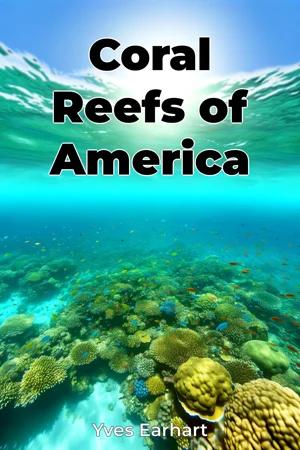
Imagine a world without the vibrant colors and teeming life of coral reefs. "Coral Reefs of America" delves into these underwater ecosystems, exploring their intricate biodiversity and the escalating threats they face. This book is a journey through the reefs that fringe the coasts of the United States, from the Florida Keys to the remote Pacific territories, revealing their ecological importance and the urgent need for their conservation. This book addresses two critical topics: the unparalleled biodiversity of American coral reefs and the multifaceted threats imperiling their existence. Understanding reef ecosystems is vital because they support a quarter of all marine life, protect coastlines from erosion, and contribute billions of dollars to the economy through tourism and fisheries. The threats, primarily climate change and pollution, demand immediate attention as they are pushing these delicate environments to the brink of collapse. We begin by establishing a foundational understanding of coral biology and reef formation, tracing the geological history of these underwater structures and the evolutionary processes that have shaped their diverse inhabitants. Readers will gain insight into the symbiotic relationships between coral polyps and algae, the complex food webs that sustain reef life, and the physical factors that determine reef distribution. The central argument of "Coral Reefs of America" is that the future of American coral reefs hinges on a comprehensive understanding of their ecological complexity and the implementation of effective conservation strategies to mitigate the impacts of climate change and pollution. This argument is crucial because coral reefs are among the most vulnerable ecosystems on Earth, and their decline has far-reaching consequences for marine biodiversity, coastal communities, and global economies. The book is structured into three major sections. The first introduces the fundamental concepts of coral reef ecology and the threats. The second details the specific challenges posed by climate change, including ocean acidification and coral bleaching, alongside the detrimental effects of pollution from land-based sources. The third and final section presents a comprehensive overview of conservation efforts, including marine protected areas, coral restoration projects, and policy initiatives aimed at reducing carbon emissions and pollution. The book relies on a wealth of scientific data, including original research from peer-reviewed publications, reports from governmental agencies like the National Oceanic and Atmospheric Administration (NOAA), and findings from field studies conducted by leading marine biologists. Data on coral cover, fish populations, water quality, and ocean temperature trends are presented to illustrate the severity of the challenges facing American coral reefs. "Coral Reefs of America" connects to several interdisciplinary fields. It links to climate science by examining the impacts of global warming on ocean ecosystems. It connects to economics by analyzing the economic value of coral reef services and the costs associated with reef degradation. It also connects to political science by evaluating the effectiveness of environmental policies and international agreements aimed at protecting coral reefs. This book offers a unique perspective by focusing specifically on the coral reefs within United States territories, highlighting both their ecological significance and their cultural value to American communities. It also integrates the latest scientific findings with accessible language, making complex concepts understandable to a wide audience. The tone is informative and engaging, avoiding overly technical jargon while maintaining scientific accuracy. The writing style is clear and concise, designed to convey complex information in an accessible manner. This book is intended for a broad audience, including students, educators, policymakers, conservationists, and anyone with an interest in marine biology and environmental issues. It offers valuable insights into the challenges and opportunities facing coral reef conservation in America. As a work of environmental non-fiction, the book adheres to genre conventions by providing factual information, supporting claims with evidence, and maintaining objectivity in its analysis. The scope of the book is limited to coral reefs within United States jurisdiction, although the broader implications of coral reef decline are discussed in a global context. It does not delve deeply into the specific taxonomic details of every reef organism, but rather focuses on the ecological processes and conservation challenges. The information presented in "Coral Reefs of America" can be applied practically by readers who wish to become involved in coral reef conservation efforts, whether through supporting conservation organizations, advocating for policy changes, or adopting sustainable practices in their daily lives. The book addresses ongoing debates within the scientific community regarding the most effective strategies for coral reef restoration and the role of technological solutions in mitigating the impacts of climate change. By presenting diverse perspectives and evaluating the evidence, it aims to foster informed discussion and promote collaborative action.
Imagine a world without the vibrant colors and teeming life of coral reefs. "Coral Reefs of America" delves into these underwater ecosystems, exploring their intricate biodiversity and the escalating threats they face. This book is a journey through the reefs that fringe the coasts of the United States, from the Florida Keys to the remote Pacific territories, revealing their ecological importance and the urgent need for their conservation. This book addresses two critical topics: the unparalleled biodiversity of American coral reefs and the multifaceted threats imperiling their existence. Understanding reef ecosystems is vital because they support a quarter of all marine life, protect coastlines from erosion, and contribute billions of dollars to the economy through tourism and fisheries. The threats, primarily climate change and pollution, demand immediate attention as they are pushing these delicate environments to the brink of collapse. We begin by establishing a foundational understanding of coral biology and reef formation, tracing the geological history of these underwater structures and the evolutionary processes that have shaped their diverse inhabitants. Readers will gain insight into the symbiotic relationships between coral polyps and algae, the complex food webs that sustain reef life, and the physical factors that determine reef distribution. The central argument of "Coral Reefs of America" is that the future of American coral reefs hinges on a comprehensive understanding of their ecological complexity and the implementation of effective conservation strategies to mitigate the impacts of climate change and pollution. This argument is crucial because coral reefs are among the most vulnerable ecosystems on Earth, and their decline has far-reaching consequences for marine biodiversity, coastal communities, and global economies. The book is structured into three major sections. The first introduces the fundamental concepts of coral reef ecology and the threats. The second details the specific challenges posed by climate change, including ocean acidification and coral bleaching, alongside the detrimental effects of pollution from land-based sources. The third and final section presents a comprehensive overview of conservation efforts, including marine protected areas, coral restoration projects, and policy initiatives aimed at reducing carbon emissions and pollution. The book relies on a wealth of scientific data, including original research from peer-reviewed publications, reports from governmental agencies like the National Oceanic and Atmospheric Administration (NOAA), and findings from field studies conducted by leading marine biologists. Data on coral cover, fish populations, water quality, and ocean temperature trends are presented to illustrate the severity of the challenges facing American coral reefs. "Coral Reefs of America" connects to several interdisciplinary fields. It links to climate science by examining the impacts of global warming on ocean ecosystems. It connects to economics by analyzing the economic value of coral reef services and the costs associated with reef degradation. It also connects to political science by evaluating the effectiveness of environmental policies and international agreements aimed at protecting coral reefs. This book offers a unique perspective by focusing specifically on the coral reefs within United States territories, highlighting both their ecological significance and their cultural value to American communities. It also integrates the latest scientific findings with accessible language, making complex concepts understandable to a wide audience. The tone is informative and engaging, avoiding overly technical jargon while maintaining scientific accuracy. The writing style is clear and concise, designed to convey complex information in an accessible manner. This book is intended for a broad audience, including students, educators, policymakers, conservationists, and anyone with an interest in marine biology and environmental issues. It offers valuable insights into the challenges and opportunities facing coral reef conservation in America. As a work of environmental non-fiction, the book adheres to genre conventions by providing factual information, supporting claims with evidence, and maintaining objectivity in its analysis. The scope of the book is limited to coral reefs within United States jurisdiction, although the broader implications of coral reef decline are discussed in a global context. It does not delve deeply into the specific taxonomic details of every reef organism, but rather focuses on the ecological processes and conservation challenges. The information presented in "Coral Reefs of America" can be applied practically by readers who wish to become involved in coral reef conservation efforts, whether through supporting conservation organizations, advocating for policy changes, or adopting sustainable practices in their daily lives. The book addresses ongoing debates within the scientific community regarding the most effective strategies for coral reef restoration and the role of technological solutions in mitigating the impacts of climate change. By presenting diverse perspectives and evaluating the evidence, it aims to foster informed discussion and promote collaborative action.
"Coral Reefs of America" explores the captivating world of coral reefs within United States territories, highlighting their ecological importance and the urgent need for conservation. These vibrant ecosystems, often called the "rainforests of the sea," support a quarter of all marine life. The book reveals that coral reefs protect coastlines from erosion and contribute billions to the economy through tourism and fisheries, making their preservation paramount. The book begins with an introduction to coral biology and reef formation, then details the challenges posed by climate change, such as ocean acidification and coral bleaching, alongside the detrimental effects of pollution. It presents scientific data to illustrate the severity of these challenges. Finally, it provides a comprehensive overview of current conservation efforts, including marine protected areas and coral restoration projects. The book emphasizes that effective conservation strategies are crucial for the future of these vulnerable ecosystems.
Book Details
ISBN
9788233984182
Publisher
Publifye AS
Your Licenses
You don't own any licenses for this book
Purchase a license below to unlock this book and download the EPUB.
Purchase License
Select a tier to unlock this book
Need bulk licensing?
Contact us for enterprise agreements.