
About This Book
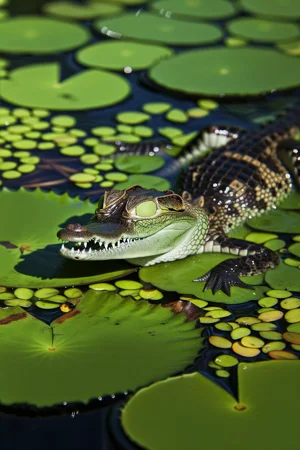
From the moment they hatch or are born, some animals are already lethal predators, equipped with instincts and physical capabilities that allow them to hunt and survive in a dangerous world. 'Dangerous Hatchlings' delves into the lives of these young predators, exploring the biological and environmental factors that shape their early development and predatory behaviors. This book is important because it sheds light on the fundamental principles of predation, survival, and adaptation in the animal kingdom, while examining the evolutionary pressures that shaped these behaviors. We will explore case studies of several species, including sharks, crocodiles, and venomous snakes to understand how they become efficient hunters from a young age. This topic is relevant to anyone interested in wildlife biology, animal behavior, and evolutionary processes. The book provides a comprehensive overview of the development of predatory skills in young animals. We begin by establishing a baseline understanding of predator-prey relationships, natural selection, and the concept of "nature versus nurture" in animal behavior. A basic understanding of evolution and ecology will be helpful. The central argument of 'Dangerous Hatchlings' is that while innate instincts play a crucial role in the predatory success of young animals, environmental factors and early learning experiences are also significant contributors to their development as efficient hunters. We will demonstrate that the interplay between genetics and environment shapes the predatory behaviors of these hatchlings, influencing their survival and ecological impact. The book is structured into three major sections. First, we will introduce the key concepts of innate behavior, instinct, and the development of physical capabilities necessary for predation, using examples to illustrate. Second, we will explore the case studies of sharks, crocodiles, and snakes, examining their hunting techniques, sensory adaptations, and early life strategies. Third, we will discuss the environmental and ecological factors that affect the survival and development of these young predators, including habitat availability, competition, and the presence of larger predators, culminating in a discussion on the conservation implications. The evidence presented will be drawn from scientific literature, field studies, and behavioral observations of relevant species. We will incorporate data on hunting success rates, growth rates, and survival rates, accompanied by anatomical and physiological data to support our arguments regarding the interplay between genetics, environment and behavior. 'Dangerous Hatchlings' also touches on several other fields, including ecology, evolutionary biology, and conservation biology. We will draw connections between our findings and the broader ecological context, highlighting the role of young predators in maintaining ecosystem balance and the implications of their conservation. This book offers a unique perspective by combining a detailed analysis of innate behaviors with an examination of the environmental factors that shape the development of young predators. Our approach emphasizes the complexity of predator-prey relationships and the importance of considering both genetic and environmental influences when studying animal behavior. The book's tone is informative and accessible, aiming to engage a broad readership while maintaining scientific accuracy. The writing style avoids technical jargon where possible and provides clear explanations of complex concepts. The target audience includes students, educators, wildlife enthusiasts, and anyone interested in animal behavior and ecology. It will be valuable to readers who wish to expand their knowledge of the natural world and gain a deeper understanding of the processes that shape the lives of young predators. As a work of non-fiction in the fields of nature, life sciences, and biology, 'Dangerous Hatchlings' adheres to the conventions of accuracy, objectivity, and evidence-based reporting. We will provide thorough citations for all sources and ensure that the information presented is consistent with current scientific knowledge. The scope of the book is limited to the early development and predatory behaviors of selected species of sharks, crocodiles, and snakes. We will not cover all predatory animals or all aspects of their life histories. This intentional limitation allows us to focus on the specific research questions and provide a more in-depth analysis. The information in this book can be applied to practical conservation efforts by providing insights into the ecological needs of young predators and the factors that affect their survival. Understanding the developmental pathways of these animals can inform management strategies and help to mitigate human impacts on their populations. The book also touches on the ongoing debate about the relative importance of nature versus nurture in shaping animal behavior. While 'Dangerous Hatchlings' acknowledges the significant role of innate instincts, it also emphasizes the importance of environmental factors and early learning experiences, thus contributing to a more nuanced understanding of this complex issue.
From the moment they hatch or are born, some animals are already lethal predators, equipped with instincts and physical capabilities that allow them to hunt and survive in a dangerous world. 'Dangerous Hatchlings' delves into the lives of these young predators, exploring the biological and environmental factors that shape their early development and predatory behaviors. This book is important because it sheds light on the fundamental principles of predation, survival, and adaptation in the animal kingdom, while examining the evolutionary pressures that shaped these behaviors. We will explore case studies of several species, including sharks, crocodiles, and venomous snakes to understand how they become efficient hunters from a young age. This topic is relevant to anyone interested in wildlife biology, animal behavior, and evolutionary processes. The book provides a comprehensive overview of the development of predatory skills in young animals. We begin by establishing a baseline understanding of predator-prey relationships, natural selection, and the concept of "nature versus nurture" in animal behavior. A basic understanding of evolution and ecology will be helpful. The central argument of 'Dangerous Hatchlings' is that while innate instincts play a crucial role in the predatory success of young animals, environmental factors and early learning experiences are also significant contributors to their development as efficient hunters. We will demonstrate that the interplay between genetics and environment shapes the predatory behaviors of these hatchlings, influencing their survival and ecological impact. The book is structured into three major sections. First, we will introduce the key concepts of innate behavior, instinct, and the development of physical capabilities necessary for predation, using examples to illustrate. Second, we will explore the case studies of sharks, crocodiles, and snakes, examining their hunting techniques, sensory adaptations, and early life strategies. Third, we will discuss the environmental and ecological factors that affect the survival and development of these young predators, including habitat availability, competition, and the presence of larger predators, culminating in a discussion on the conservation implications. The evidence presented will be drawn from scientific literature, field studies, and behavioral observations of relevant species. We will incorporate data on hunting success rates, growth rates, and survival rates, accompanied by anatomical and physiological data to support our arguments regarding the interplay between genetics, environment and behavior. 'Dangerous Hatchlings' also touches on several other fields, including ecology, evolutionary biology, and conservation biology. We will draw connections between our findings and the broader ecological context, highlighting the role of young predators in maintaining ecosystem balance and the implications of their conservation. This book offers a unique perspective by combining a detailed analysis of innate behaviors with an examination of the environmental factors that shape the development of young predators. Our approach emphasizes the complexity of predator-prey relationships and the importance of considering both genetic and environmental influences when studying animal behavior. The book's tone is informative and accessible, aiming to engage a broad readership while maintaining scientific accuracy. The writing style avoids technical jargon where possible and provides clear explanations of complex concepts. The target audience includes students, educators, wildlife enthusiasts, and anyone interested in animal behavior and ecology. It will be valuable to readers who wish to expand their knowledge of the natural world and gain a deeper understanding of the processes that shape the lives of young predators. As a work of non-fiction in the fields of nature, life sciences, and biology, 'Dangerous Hatchlings' adheres to the conventions of accuracy, objectivity, and evidence-based reporting. We will provide thorough citations for all sources and ensure that the information presented is consistent with current scientific knowledge. The scope of the book is limited to the early development and predatory behaviors of selected species of sharks, crocodiles, and snakes. We will not cover all predatory animals or all aspects of their life histories. This intentional limitation allows us to focus on the specific research questions and provide a more in-depth analysis. The information in this book can be applied to practical conservation efforts by providing insights into the ecological needs of young predators and the factors that affect their survival. Understanding the developmental pathways of these animals can inform management strategies and help to mitigate human impacts on their populations. The book also touches on the ongoing debate about the relative importance of nature versus nurture in shaping animal behavior. While 'Dangerous Hatchlings' acknowledges the significant role of innate instincts, it also emphasizes the importance of environmental factors and early learning experiences, thus contributing to a more nuanced understanding of this complex issue.
"Dangerous Hatchlings" explores the fascinating world of young predators, examining how certain animals are equipped from birth with the instincts and abilities to hunt. The book focuses on species such as sharks, crocodiles, and venomous snakes, illuminating the interplay between innate behaviors and environmental factors in shaping their predatory skills. One intriguing fact is that some hatchlings exhibit complex hunting strategies without prior learning, suggesting a strong genetic component. Moreover, the book emphasizes that early life experiences significantly influence their development, highlighting the ongoing "nature versus nurture" debate in wildlife biology. This book uniquely combines detailed case studies with broader ecological and evolutionary contexts. It progresses from foundational concepts like natural selection and predator-prey relationships to in-depth analyses of specific species and their hunting techniques. The approach emphasizes the importance of considering both genetic predispositions and environmental influences when studying animal behavior. Ultimately, "Dangerous Hatchlings" offers valuable insights into the lives of these young predators and the conservation implications of understanding their early development.
Book Details
ISBN
9788233984045
Publisher
Publifye AS
Your Licenses
You don't own any licenses for this book
Purchase a license below to unlock this book and download the EPUB.
Purchase License
Select a tier to unlock this book
Need bulk licensing?
Contact us for enterprise agreements.