
About This Book
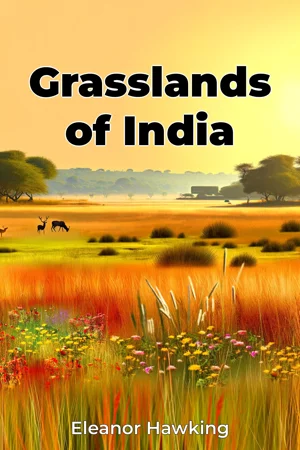
Have you ever considered the fate of India’s grasslands, ecosystems often overshadowed by forests and wetlands, yet crucial for biodiversity and human livelihoods? "Grasslands of India" offers a comprehensive exploration of these vital but frequently ignored landscapes, their ecological significance, and the challenges they face in a rapidly changing world. We will delve into the rich biodiversity of Indian grasslands, focusing on the unique ecosystems they support and the diverse wildlife that depends on them. We examine the ecological roles of these grasslands, their importance for carbon sequestration, water conservation, and soil health, and their contribution to local and regional economies. The book provides essential historical, social, and scientific context. Understanding the historical land use patterns and traditional ecological knowledge is critical to grasping the current state of these ecosystems. We also address the scientific principles underlying grassland ecology, including plant-animal interactions, nutrient cycling, and disturbance regimes. The central argument of "Grasslands of India" is that these ecosystems are essential components of India’s natural heritage and require urgent conservation efforts. We argue that their neglect has far-reaching consequences for biodiversity, climate change mitigation, and the well-being of rural communities. The book is structured to provide a complete picture of Indian grasslands. It begins with an introduction that defines grasslands, explains their global distribution, and highlights their unique characteristics in the Indian context. Following this, we explore the different types of grasslands found across India, from the semi-arid regions of Rajasthan to the montane grasslands of the Himalayas, detailing their specific flora, fauna, and ecological functions. A significant section addresses the threats facing these ecosystems, including habitat loss due to agricultural expansion, overgrazing, invasive species, and climate change. We also analyze the socio-economic dimensions of grassland management, considering the livelihoods of pastoralist communities and the role of government policies. The book culminates in a discussion of conservation strategies, including community-based approaches, ecological restoration, and policy interventions. The evidence presented in "Grasslands of India" is based on a synthesis of scientific literature, field research, and case studies. We draw upon data from ecological surveys, remote sensing studies, and socio-economic assessments to provide a robust and evidence-based analysis. The book also incorporates traditional ecological knowledge gathered through interviews with local communities, offering valuable insights into sustainable grassland management practices. "Grasslands of India" connects to several other fields, including ecology, conservation biology, climate science, and environmental policy. The book also resonates with fields like anthropology and sociology as it explores human-environment interactions. This interdisciplinary approach enriches the analysis and highlights the complex challenges and opportunities associated with grassland conservation. Our approach stands out by integrating ecological science with social and economic considerations, recognizing the importance of involving local communities in conservation efforts. The tone is informative and accessible, aiming to engage a broad audience of scientists, policymakers, conservation practitioners, and the general public. The primary target audience includes environmental scientists, conservation biologists, policymakers, students, and anyone interested in the natural history of India. This book offers valuable insights for those working to protect and manage these ecosystems. The book embraces the conventions of nature writing and environmental science, offering a blend of scientific rigor and engaging storytelling. The scope of "Grasslands of India" is limited to the grasslands within the geographical boundaries of India. While we acknowledge the global significance of grasslands, our focus is specifically on the unique ecological and socio-economic context of India. The information can be applied practically by conservation organizations, government agencies, and local communities to develop and implement effective grassland management strategies. The ongoing debates surrounding land use policies, grazing rights, and conservation priorities are also addressed, presenting different perspectives and potential solutions.
Have you ever considered the fate of India’s grasslands, ecosystems often overshadowed by forests and wetlands, yet crucial for biodiversity and human livelihoods? "Grasslands of India" offers a comprehensive exploration of these vital but frequently ignored landscapes, their ecological significance, and the challenges they face in a rapidly changing world. We will delve into the rich biodiversity of Indian grasslands, focusing on the unique ecosystems they support and the diverse wildlife that depends on them. We examine the ecological roles of these grasslands, their importance for carbon sequestration, water conservation, and soil health, and their contribution to local and regional economies. The book provides essential historical, social, and scientific context. Understanding the historical land use patterns and traditional ecological knowledge is critical to grasping the current state of these ecosystems. We also address the scientific principles underlying grassland ecology, including plant-animal interactions, nutrient cycling, and disturbance regimes. The central argument of "Grasslands of India" is that these ecosystems are essential components of India’s natural heritage and require urgent conservation efforts. We argue that their neglect has far-reaching consequences for biodiversity, climate change mitigation, and the well-being of rural communities. The book is structured to provide a complete picture of Indian grasslands. It begins with an introduction that defines grasslands, explains their global distribution, and highlights their unique characteristics in the Indian context. Following this, we explore the different types of grasslands found across India, from the semi-arid regions of Rajasthan to the montane grasslands of the Himalayas, detailing their specific flora, fauna, and ecological functions. A significant section addresses the threats facing these ecosystems, including habitat loss due to agricultural expansion, overgrazing, invasive species, and climate change. We also analyze the socio-economic dimensions of grassland management, considering the livelihoods of pastoralist communities and the role of government policies. The book culminates in a discussion of conservation strategies, including community-based approaches, ecological restoration, and policy interventions. The evidence presented in "Grasslands of India" is based on a synthesis of scientific literature, field research, and case studies. We draw upon data from ecological surveys, remote sensing studies, and socio-economic assessments to provide a robust and evidence-based analysis. The book also incorporates traditional ecological knowledge gathered through interviews with local communities, offering valuable insights into sustainable grassland management practices. "Grasslands of India" connects to several other fields, including ecology, conservation biology, climate science, and environmental policy. The book also resonates with fields like anthropology and sociology as it explores human-environment interactions. This interdisciplinary approach enriches the analysis and highlights the complex challenges and opportunities associated with grassland conservation. Our approach stands out by integrating ecological science with social and economic considerations, recognizing the importance of involving local communities in conservation efforts. The tone is informative and accessible, aiming to engage a broad audience of scientists, policymakers, conservation practitioners, and the general public. The primary target audience includes environmental scientists, conservation biologists, policymakers, students, and anyone interested in the natural history of India. This book offers valuable insights for those working to protect and manage these ecosystems. The book embraces the conventions of nature writing and environmental science, offering a blend of scientific rigor and engaging storytelling. The scope of "Grasslands of India" is limited to the grasslands within the geographical boundaries of India. While we acknowledge the global significance of grasslands, our focus is specifically on the unique ecological and socio-economic context of India. The information can be applied practically by conservation organizations, government agencies, and local communities to develop and implement effective grassland management strategies. The ongoing debates surrounding land use policies, grazing rights, and conservation priorities are also addressed, presenting different perspectives and potential solutions.
"Grasslands of India" sheds light on India's often-overlooked grassland ecosystems, emphasizing their crucial role in biodiversity, carbon sequestration, and supporting rural livelihoods. These ecosystems, ranging from semi-arid regions to the Himalayas, are vital for various wildlife species, and play a significant role in water conservation and soil health. The book uniquely addresses the ecological importance of these areas while integrating historical land use patterns and traditional ecological knowledge. This exploration of Indian grasslands details the threats they face, including habitat loss, overgrazing, invasive species, and climate change. It examines the socio-economic dimensions of grassland management, considering the livelihoods of pastoralist communities and the impact of government policies. By presenting a synthesis of scientific literature, field research, and case studies, "Grasslands of India" offers practical strategies for conservation, community-based approaches, and ecological restoration. The book progresses from defining grasslands and their types, to analyzing threats and socio-economic factors, culminating in conservation strategies.
Book Details
ISBN
9788233984021
Publisher
Publifye AS
Your Licenses
You don't own any licenses for this book
Purchase a license below to unlock this book and download the EPUB.
Purchase License
Select a tier to unlock this book
Need bulk licensing?
Contact us for enterprise agreements.