
About This Book
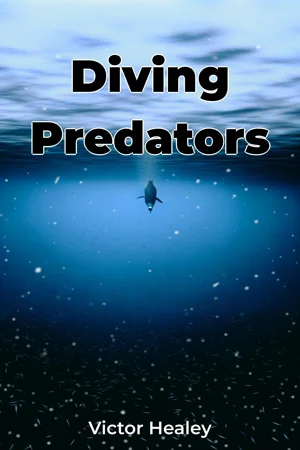
What drives a creature to plunge into the frigid depths, holding its breath against immense pressure, all for a single meal? *Diving Predators* explores the remarkable adaptations and hunting strategies of air-breathing animals that dominate underwater ecosystems. This book delves into the fascinating world of marine predators, focusing on penguins, seals, cormorants, and other species that have evolved incredible physiological and behavioral traits to thrive in aquatic environments. Understanding these animals offers vital insights into marine ecology, evolutionary biology, and the impacts of environmental change on ocean ecosystems. The book directly confronts the challenge of understanding how air-breathing vertebrates can function effectively as underwater predators. Current environmental pressures from climate change and overfishing add to the urgency of understanding these animals. *Diving Predators* examines the critical role these predators play in marine food webs. Their hunting success influences prey populations, shapes community structures, and affects overall ecosystem health. The book details the sensory adaptations, such as enhanced vision and echolocation, that allow predators to locate prey in murky underwater conditions. We also discuss the physiological adaptations that allow them to conserve oxygen, withstand pressure, and manage body temperature in extreme environments. This book will provide a comprehensive overview of the diverse diving strategies employed by different predator species. It will highlight how body size, habitat, and prey type influence diving behavior. The book will also look into the energetic costs and benefits of deep diving, examining how predators balance the need to hunt with the physiological challenges of prolonged underwater activity. The structure of the book will follow a logical progression. First, it will introduce the fundamental principles of diving physiology and underwater hunting. Secondly, it will explore specific case studies of different predator groups, detailing their unique adaptations and hunting techniques. Thirdly, it will consider the ecological role of diving predators and potential conservation challenges. Finally, it will examine the future of these predators in a changing ocean. The findings and arguments presented in the text are substantiated by analyses of extensive scientific literature, including observational studies of wild populations, laboratory experiments on diving physiology, and modeling of predator-prey interactions. We will analyze data from satellite tracking, animal-borne sensors, and underwater cameras to provide a comprehensive picture of diving predator behavior and ecology. *Diving Predators* highlights connections between marine biology, physiology, and climate science. The book explores how alterations in ocean temperature, acidity, and prey availability impact the foraging behavior and survival of diving predators, making it relevant to conservation efforts and policy-making. It also touches upon engineering by examining how human technology has drawn inspiration from animal adaptations. This book takes a unique approach by integrating diverse research fields, including behavioral ecology, comparative physiology, and oceanography, to provide a holistic understanding of diving predators. It moves beyond simple descriptions of diving behavior to explore the underlying mechanisms and evolutionary drivers that shape these adaptations. The book employs a clear and engaging approach to bridge the gap between technical scientific language and general interest. It is intended for a broad audience, including students, researchers, conservation professionals, and anyone interested in the wonders of the marine world. The book will enrich the reader's understanding of marine ecosystems and the challenges these animals face in a rapidly changing world. Aligned with the conventions of nature and science non-fiction, the book integrates factual information with compelling narratives and illustrative visuals to enhance accessibility and engagement. The scope of the book is broad, covering a wide range of diving predator species from different geographic regions. However, it does not aim to provide a detailed taxonomic review of all marine predators but rather concentrates on those with well-studied diving adaptations. The information contained in *Diving Predators* can be applied to real-world conservation efforts, informing management strategies aimed at protecting vulnerable predator populations and their prey. It highlights the importance of understanding predator-prey dynamics and the roles of these animals in maintaining healthy ocean ecosystems. The conservation of diving predators can be controversial, particularly when management strategies impact fisheries. The book explores these issues, presenting multiple perspectives and suggesting solutions that balance economic interests with conservation goals.
What drives a creature to plunge into the frigid depths, holding its breath against immense pressure, all for a single meal? *Diving Predators* explores the remarkable adaptations and hunting strategies of air-breathing animals that dominate underwater ecosystems. This book delves into the fascinating world of marine predators, focusing on penguins, seals, cormorants, and other species that have evolved incredible physiological and behavioral traits to thrive in aquatic environments. Understanding these animals offers vital insights into marine ecology, evolutionary biology, and the impacts of environmental change on ocean ecosystems. The book directly confronts the challenge of understanding how air-breathing vertebrates can function effectively as underwater predators. Current environmental pressures from climate change and overfishing add to the urgency of understanding these animals. *Diving Predators* examines the critical role these predators play in marine food webs. Their hunting success influences prey populations, shapes community structures, and affects overall ecosystem health. The book details the sensory adaptations, such as enhanced vision and echolocation, that allow predators to locate prey in murky underwater conditions. We also discuss the physiological adaptations that allow them to conserve oxygen, withstand pressure, and manage body temperature in extreme environments. This book will provide a comprehensive overview of the diverse diving strategies employed by different predator species. It will highlight how body size, habitat, and prey type influence diving behavior. The book will also look into the energetic costs and benefits of deep diving, examining how predators balance the need to hunt with the physiological challenges of prolonged underwater activity. The structure of the book will follow a logical progression. First, it will introduce the fundamental principles of diving physiology and underwater hunting. Secondly, it will explore specific case studies of different predator groups, detailing their unique adaptations and hunting techniques. Thirdly, it will consider the ecological role of diving predators and potential conservation challenges. Finally, it will examine the future of these predators in a changing ocean. The findings and arguments presented in the text are substantiated by analyses of extensive scientific literature, including observational studies of wild populations, laboratory experiments on diving physiology, and modeling of predator-prey interactions. We will analyze data from satellite tracking, animal-borne sensors, and underwater cameras to provide a comprehensive picture of diving predator behavior and ecology. *Diving Predators* highlights connections between marine biology, physiology, and climate science. The book explores how alterations in ocean temperature, acidity, and prey availability impact the foraging behavior and survival of diving predators, making it relevant to conservation efforts and policy-making. It also touches upon engineering by examining how human technology has drawn inspiration from animal adaptations. This book takes a unique approach by integrating diverse research fields, including behavioral ecology, comparative physiology, and oceanography, to provide a holistic understanding of diving predators. It moves beyond simple descriptions of diving behavior to explore the underlying mechanisms and evolutionary drivers that shape these adaptations. The book employs a clear and engaging approach to bridge the gap between technical scientific language and general interest. It is intended for a broad audience, including students, researchers, conservation professionals, and anyone interested in the wonders of the marine world. The book will enrich the reader's understanding of marine ecosystems and the challenges these animals face in a rapidly changing world. Aligned with the conventions of nature and science non-fiction, the book integrates factual information with compelling narratives and illustrative visuals to enhance accessibility and engagement. The scope of the book is broad, covering a wide range of diving predator species from different geographic regions. However, it does not aim to provide a detailed taxonomic review of all marine predators but rather concentrates on those with well-studied diving adaptations. The information contained in *Diving Predators* can be applied to real-world conservation efforts, informing management strategies aimed at protecting vulnerable predator populations and their prey. It highlights the importance of understanding predator-prey dynamics and the roles of these animals in maintaining healthy ocean ecosystems. The conservation of diving predators can be controversial, particularly when management strategies impact fisheries. The book explores these issues, presenting multiple perspectives and suggesting solutions that balance economic interests with conservation goals.
*Diving Predators* explores the captivating world of air-breathing marine animals that hunt underwater, examining their unique adaptations and crucial role in ocean ecosystems. The book reveals how creatures like penguins, seals, and cormorants have evolved remarkable physiological traits to thrive in challenging aquatic environments. These diving predators demonstrate sensory adaptations, such as enhanced vision, and physiological adaptations that allow them to conserve oxygen and withstand immense pressure. The book progresses logically, starting with the principles of diving physiology, then exploring case studies of predator groups and their hunting methods. The book then considers their ecological role and conservation challenges. By integrating diverse research from behavioral ecology to oceanography, *Diving Predators* provides a holistic understanding of these animals, highlighting the impact of climate change and overfishing on their survival and foraging behavior.
Book Details
ISBN
9788233984007
Publisher
Publifye AS
Your Licenses
You don't own any licenses for this book
Purchase a license below to unlock this book and download the EPUB.
Purchase License
Select a tier to unlock this book
Need bulk licensing?
Contact us for enterprise agreements.