
About This Book
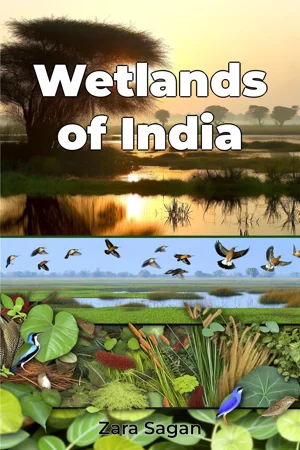
Are India's wetlands simply overlooked patches of watery land, or are they vital organs in the subcontinent's ecological body? "Wetlands of India" argues unequivocally for the latter, revealing the profound importance of these ecosystems for biodiversity, flood control, migratory bird support, and much more. This book explores the intricate web of life within India’s wetlands, demonstrating their indispensable role in the nation's environmental and economic well-being. Central to our discussion are three key areas. First, we examine the astounding biodiversity hosted by these wetlands, teeming with unique flora and fauna, many of which are endangered or endemic. Second, we investigate the critical function wetlands serve in mitigating floods and droughts, acting as natural sponges that absorb excess water and recharge groundwater reserves. Third, we detail the vital support wetlands provide to migratory bird populations, serving as essential stopover points and wintering grounds along major flyways. The book will demonstrate that the degradation and loss of these wetlands have far-reaching consequences, threatening not only wildlife but also human livelihoods and national resilience. Understanding the historical and social context is vital. For centuries, Indian communities have relied on wetlands for their livelihoods, drawing sustenance from fishing, agriculture, and other traditional practices. However, rapid urbanization, industrialization, and unsustainable agricultural practices have placed immense pressure on these ecosystems, leading to their degradation and loss. We address the existing policies and conservation efforts, examining their effectiveness and identifying areas for improvement. "Wetlands of India" presents a central argument: the long-term sustainability of India's environment and economy depends on the effective conservation and management of its wetlands. This argument is crucial because wetlands are often undervalued and overlooked in development planning, leading to their unnecessary destruction. We aim to shift this paradigm by providing a comprehensive understanding of their ecological and economic significance. The book unfolds in a structured manner. Firstly, the introductory chapters define wetlands, exploring their diverse types and ecological characteristics. Then, we delve into specific case studies of major Indian wetlands, such as the Sundarbans, Chilika Lake, and the Kerala Backwaters, highlighting their unique biodiversity and ecological functions. Subsequently, we analyze the threats facing these ecosystems, including pollution, encroachment, and climate change. Further, we explore conservation strategies and management practices, drawing on successful examples from India and around the world. Finally, the concluding chapters synthesize the key findings and offer recommendations for policy and action, emphasizing the need for integrated approaches that involve local communities, government agencies, and the private sector. The evidence presented in this book draws from a wide range of sources, including scientific research papers, government reports, field surveys, and interviews with local communities and experts. We utilize spatial data analysis and remote sensing techniques to assess the extent and condition of wetlands across India. We also incorporate indigenous knowledge and traditional ecological practices, recognizing the valuable insights that local communities hold. This book connects to several interconnected fields, including environmental science, economics, and sociology. The book recognizes the economic value of wetlands through ecosystem services, such as water purification, fisheries production, and tourism. Sociologically, it examines the impact of wetland degradation on local communities and the role of participatory approaches in conservation. "Wetlands of India" adopts a holistic perspective, integrating ecological, economic, and social considerations. The writing style is accessible and informative, aimed at a broad audience, including students, researchers, policymakers, conservation practitioners, and anyone interested in India's environment. The target audience includes environmental science students, conservation biologists, policymakers, and anyone interested in Indian ecosystems. The book is valuable to them because it provides a comprehensive and up-to-date assessment of the importance of Indian wetlands. This non-fiction book relies on empirical evidence, scientific analysis, and expert opinions to support its arguments. While the book aims to provide a comprehensive overview of Indian wetlands, it acknowledges certain limitations in scope. We focus primarily on freshwater and coastal wetlands, with less emphasis on artificial wetlands. The information in this book can be practically applied by readers in various ways. Policymakers can use the findings to develop more effective conservation strategies and management plans. Conservation practitioners can implement the recommended approaches to protect and restore degraded wetlands. Local communities can utilize the information to advocate for their rights and participate in sustainable development initiatives. Ongoing debates about the optimal balance between development and conservation, the effectiveness of different conservation strategies, and the role of local communities in wetland management are addressed throughout.
Are India's wetlands simply overlooked patches of watery land, or are they vital organs in the subcontinent's ecological body? "Wetlands of India" argues unequivocally for the latter, revealing the profound importance of these ecosystems for biodiversity, flood control, migratory bird support, and much more. This book explores the intricate web of life within India’s wetlands, demonstrating their indispensable role in the nation's environmental and economic well-being. Central to our discussion are three key areas. First, we examine the astounding biodiversity hosted by these wetlands, teeming with unique flora and fauna, many of which are endangered or endemic. Second, we investigate the critical function wetlands serve in mitigating floods and droughts, acting as natural sponges that absorb excess water and recharge groundwater reserves. Third, we detail the vital support wetlands provide to migratory bird populations, serving as essential stopover points and wintering grounds along major flyways. The book will demonstrate that the degradation and loss of these wetlands have far-reaching consequences, threatening not only wildlife but also human livelihoods and national resilience. Understanding the historical and social context is vital. For centuries, Indian communities have relied on wetlands for their livelihoods, drawing sustenance from fishing, agriculture, and other traditional practices. However, rapid urbanization, industrialization, and unsustainable agricultural practices have placed immense pressure on these ecosystems, leading to their degradation and loss. We address the existing policies and conservation efforts, examining their effectiveness and identifying areas for improvement. "Wetlands of India" presents a central argument: the long-term sustainability of India's environment and economy depends on the effective conservation and management of its wetlands. This argument is crucial because wetlands are often undervalued and overlooked in development planning, leading to their unnecessary destruction. We aim to shift this paradigm by providing a comprehensive understanding of their ecological and economic significance. The book unfolds in a structured manner. Firstly, the introductory chapters define wetlands, exploring their diverse types and ecological characteristics. Then, we delve into specific case studies of major Indian wetlands, such as the Sundarbans, Chilika Lake, and the Kerala Backwaters, highlighting their unique biodiversity and ecological functions. Subsequently, we analyze the threats facing these ecosystems, including pollution, encroachment, and climate change. Further, we explore conservation strategies and management practices, drawing on successful examples from India and around the world. Finally, the concluding chapters synthesize the key findings and offer recommendations for policy and action, emphasizing the need for integrated approaches that involve local communities, government agencies, and the private sector. The evidence presented in this book draws from a wide range of sources, including scientific research papers, government reports, field surveys, and interviews with local communities and experts. We utilize spatial data analysis and remote sensing techniques to assess the extent and condition of wetlands across India. We also incorporate indigenous knowledge and traditional ecological practices, recognizing the valuable insights that local communities hold. This book connects to several interconnected fields, including environmental science, economics, and sociology. The book recognizes the economic value of wetlands through ecosystem services, such as water purification, fisheries production, and tourism. Sociologically, it examines the impact of wetland degradation on local communities and the role of participatory approaches in conservation. "Wetlands of India" adopts a holistic perspective, integrating ecological, economic, and social considerations. The writing style is accessible and informative, aimed at a broad audience, including students, researchers, policymakers, conservation practitioners, and anyone interested in India's environment. The target audience includes environmental science students, conservation biologists, policymakers, and anyone interested in Indian ecosystems. The book is valuable to them because it provides a comprehensive and up-to-date assessment of the importance of Indian wetlands. This non-fiction book relies on empirical evidence, scientific analysis, and expert opinions to support its arguments. While the book aims to provide a comprehensive overview of Indian wetlands, it acknowledges certain limitations in scope. We focus primarily on freshwater and coastal wetlands, with less emphasis on artificial wetlands. The information in this book can be practically applied by readers in various ways. Policymakers can use the findings to develop more effective conservation strategies and management plans. Conservation practitioners can implement the recommended approaches to protect and restore degraded wetlands. Local communities can utilize the information to advocate for their rights and participate in sustainable development initiatives. Ongoing debates about the optimal balance between development and conservation, the effectiveness of different conservation strategies, and the role of local communities in wetland management are addressed throughout.
"Wetlands of India" highlights the critical, often overlooked, role of these ecosystems in India's ecological and economic well-being. The book explores their astonishing biodiversity, from endangered flora and fauna to their function as vital habitats. It also investigates their crucial role in flood and drought mitigation, acting as natural sponges. The book emphasizes that these wetlands are essential stopover points for migratory birds, showcasing the far-reaching consequences of their degradation. The book unfolds by defining wetlands and exploring their ecological characteristics. Case studies of major Indian wetlands, like the Sundarbans and Chilika Lake, illustrate unique biodiversity and ecological functions. Threats such as pollution and climate change are analyzed, followed by an exploration of conservation strategies. Ultimately, the book argues that sustainable environmental and economic futures depend on effective wetland conservation.
Book Details
ISBN
9788233983918
Publisher
Publifye AS
Your Licenses
You don't own any licenses for this book
Purchase a license below to unlock this book and download the EPUB.
Purchase License
Select a tier to unlock this book
Need bulk licensing?
Contact us for enterprise agreements.