
About This Book
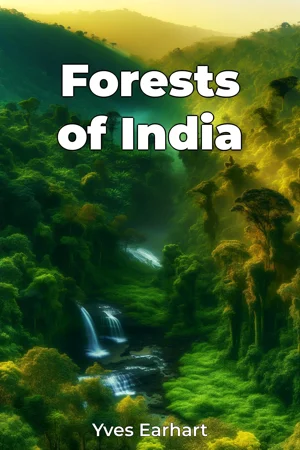
Did you know that India's forests, though under increasing pressure, are still home to a dazzling array of species and play a vital role in the ecological health of the entire subcontinent? "Forests of India" delves into this complex and crucial ecosystem, examining its biodiversity, the threats it faces, and the strategies necessary for its preservation. This book explores three core themes: the ecological significance of India’s diverse forest types, the human-wildlife interface within these habitats, and the urgent need for sustainable conservation practices. These topics are critically important because India's forests are not only biodiversity hotspots but also essential resources for millions of people, providing livelihoods, regulating water cycles, and mitigating climate change. Understanding the intricate relationships within these ecosystems is vital for informed policy-making and effective conservation efforts. To fully appreciate the present state of India's forests, we will explore their historical context, from ancient forest management practices to the impact of colonial policies and post-independence development. A basic understanding of ecological principles, such as food webs, nutrient cycles, and the concept of biodiversity, will be helpful but is not required, as the book will introduce and explain these concepts as needed. The central argument of "Forests of India" is that the long-term health and resilience of India's forests depend on a holistic approach that integrates ecological science, community involvement, and sound governance. We demonstrate that conservation efforts must move beyond simplistic protectionism and embrace a more nuanced understanding of the complex social-ecological systems at play. The book begins by introducing the major forest types found in India, from the Himalayan temperate forests to the tropical rainforests of the Western Ghats and the mangroves of the coastal regions. We examine each forest type in detail, discussing its unique flora and fauna, ecological functions, and the threats it faces. The book then explores the human-wildlife interface, looking at issues such as habitat fragmentation, human-wildlife conflict, and the role of local communities in conservation. Finally, we turn to the topic of sustainable conservation, evaluating different approaches to forest management, community-based conservation initiatives, and the role of government policies and international agreements. The book culminates by presenting practical recommendations for strengthening forest conservation efforts in India and ensuring the long-term sustainability of these vital ecosystems. The arguments presented in "Forests of India" will be supported by a wide range of evidence, including scientific studies, government reports, case studies of successful and unsuccessful conservation projects, and interviews with forest dwellers, conservationists, and policymakers. We will draw on data from sources such as the Forest Survey of India, the Wildlife Institute of India, and various academic institutions. This book connects to several other fields, including environmental science, sociology, economics, and political science. Understanding the ecological aspects of forestry requires a strong grounding in environmental science, while addressing the social and economic dimensions of conservation requires insights from sociology and economics. Moreover, effective forest governance requires an understanding of political systems and policy-making processes. "Forests of India" offers a unique perspective by emphasizing the importance of integrating different disciplines and perspectives in forest conservation. It moves beyond purely scientific or economic approaches and instead adopts a more holistic, systems-based view. The writing style will be informative and accessible, avoiding technical jargon whenever possible and providing clear explanations of complex concepts. The book is aimed at a broad audience, including students, researchers, policymakers, conservation practitioners, and anyone interested in learning more about India's forests and the challenges of conserving them. This book is valuable for anyone seeking a comprehensive and up-to-date overview of the state of India's forests and the strategies needed to protect them for future generations. As a work of non-fiction, this book adheres to standards of accuracy, objectivity, and evidence-based reasoning. It provides a balanced and nuanced account of the issues, acknowledging different perspectives and avoiding overly simplistic generalizations. The scope of this book is limited to the forests within the geographical boundaries of India. While it touches on broader global issues such as climate change and biodiversity loss, its primary focus is on the specific challenges and opportunities related to forest conservation in India. The information presented in this book can be applied in a variety of practical ways. For example, it can inform the development of more effective forest management policies, guide the design of community-based conservation projects, and raise awareness among the public about the importance of forest conservation. The book will address ongoing debates about the best approaches to forest conservation, such as the relative merits of top-down versus bottom-up approaches, the role of economic incentives in conservation, and the balance between conservation and development. By presenting different perspectives and analyzing the evidence, the book will contribute to a more informed and constructive dialogue about these important issues.
Did you know that India's forests, though under increasing pressure, are still home to a dazzling array of species and play a vital role in the ecological health of the entire subcontinent? "Forests of India" delves into this complex and crucial ecosystem, examining its biodiversity, the threats it faces, and the strategies necessary for its preservation. This book explores three core themes: the ecological significance of India’s diverse forest types, the human-wildlife interface within these habitats, and the urgent need for sustainable conservation practices. These topics are critically important because India's forests are not only biodiversity hotspots but also essential resources for millions of people, providing livelihoods, regulating water cycles, and mitigating climate change. Understanding the intricate relationships within these ecosystems is vital for informed policy-making and effective conservation efforts. To fully appreciate the present state of India's forests, we will explore their historical context, from ancient forest management practices to the impact of colonial policies and post-independence development. A basic understanding of ecological principles, such as food webs, nutrient cycles, and the concept of biodiversity, will be helpful but is not required, as the book will introduce and explain these concepts as needed. The central argument of "Forests of India" is that the long-term health and resilience of India's forests depend on a holistic approach that integrates ecological science, community involvement, and sound governance. We demonstrate that conservation efforts must move beyond simplistic protectionism and embrace a more nuanced understanding of the complex social-ecological systems at play. The book begins by introducing the major forest types found in India, from the Himalayan temperate forests to the tropical rainforests of the Western Ghats and the mangroves of the coastal regions. We examine each forest type in detail, discussing its unique flora and fauna, ecological functions, and the threats it faces. The book then explores the human-wildlife interface, looking at issues such as habitat fragmentation, human-wildlife conflict, and the role of local communities in conservation. Finally, we turn to the topic of sustainable conservation, evaluating different approaches to forest management, community-based conservation initiatives, and the role of government policies and international agreements. The book culminates by presenting practical recommendations for strengthening forest conservation efforts in India and ensuring the long-term sustainability of these vital ecosystems. The arguments presented in "Forests of India" will be supported by a wide range of evidence, including scientific studies, government reports, case studies of successful and unsuccessful conservation projects, and interviews with forest dwellers, conservationists, and policymakers. We will draw on data from sources such as the Forest Survey of India, the Wildlife Institute of India, and various academic institutions. This book connects to several other fields, including environmental science, sociology, economics, and political science. Understanding the ecological aspects of forestry requires a strong grounding in environmental science, while addressing the social and economic dimensions of conservation requires insights from sociology and economics. Moreover, effective forest governance requires an understanding of political systems and policy-making processes. "Forests of India" offers a unique perspective by emphasizing the importance of integrating different disciplines and perspectives in forest conservation. It moves beyond purely scientific or economic approaches and instead adopts a more holistic, systems-based view. The writing style will be informative and accessible, avoiding technical jargon whenever possible and providing clear explanations of complex concepts. The book is aimed at a broad audience, including students, researchers, policymakers, conservation practitioners, and anyone interested in learning more about India's forests and the challenges of conserving them. This book is valuable for anyone seeking a comprehensive and up-to-date overview of the state of India's forests and the strategies needed to protect them for future generations. As a work of non-fiction, this book adheres to standards of accuracy, objectivity, and evidence-based reasoning. It provides a balanced and nuanced account of the issues, acknowledging different perspectives and avoiding overly simplistic generalizations. The scope of this book is limited to the forests within the geographical boundaries of India. While it touches on broader global issues such as climate change and biodiversity loss, its primary focus is on the specific challenges and opportunities related to forest conservation in India. The information presented in this book can be applied in a variety of practical ways. For example, it can inform the development of more effective forest management policies, guide the design of community-based conservation projects, and raise awareness among the public about the importance of forest conservation. The book will address ongoing debates about the best approaches to forest conservation, such as the relative merits of top-down versus bottom-up approaches, the role of economic incentives in conservation, and the balance between conservation and development. By presenting different perspectives and analyzing the evidence, the book will contribute to a more informed and constructive dialogue about these important issues.
"Forests of India" explores the critical role of India's forests in maintaining ecological health and biodiversity while addressing the increasing pressures they face. It emphasizes the need for sustainable conservation by examining the ecological significance of various forest types, the complexities of the human-wildlife interface, and the importance of community involvement. India's forests, which serve as crucial resources for millions and play a vital role in regulating water cycles, are explored through a historical lens, from ancient management practices to modern conservation efforts. The book uniquely advocates for a holistic approach, integrating ecological science with community involvement and effective governance to ensure the long-term resilience of these ecosystems. It highlights that effective conservation requires moving beyond simple protectionism to embrace a nuanced understanding of complex social-ecological systems. The book progresses by introducing major forest types, examining the human-wildlife interface, and evaluating different conservation approaches, offering practical recommendations for strengthening forest conservation efforts in India.
Book Details
ISBN
9788233983864
Publisher
Publifye AS
Your Licenses
You don't own any licenses for this book
Purchase a license below to unlock this book and download the EPUB.
Purchase License
Select a tier to unlock this book
Need bulk licensing?
Contact us for enterprise agreements.