
About This Book
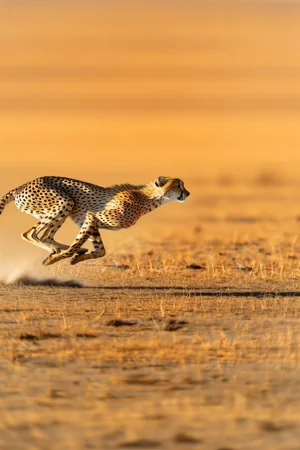
What if survival depended on achieving speeds previously thought impossible? *Earth's Fastest Predators* delves into the specialized world of animals that have evolved to hunt with unparalleled swiftness, focusing on the cheetah, the peregrine falcon, and the sailfish as prime examples of nature's speed specialists. This book is important because understanding these adaptations provides insights into evolutionary biology, biomechanics, and the delicate balances within ecosystems. The book explores how natural selection has shaped these predators, demonstrating how their physical attributes and hunting strategies have been sculpted over millennia to maximize success in often challenging environments. The context and background necessary for understanding these adaptations involves basic knowledge of evolutionary principles, such as natural selection and adaptation, as well as an understanding of biomechanics and fluid dynamics. No prior expertise is required, as these concepts will be explained clearly and accessibly. The central argument of this book is that the evolution of extreme speed in predators is a product of specific environmental pressures, resulting in remarkable physiological and behavioral adaptations that push the boundaries of biological possibility. This argument is important because it sheds light on the limits of evolution and the diverse strategies organisms employ to thrive. *Earth's Fastest Predators* is structured to comprehensively explore this topic. The introduction lays the groundwork by defining key concepts such as speed, acceleration, and the energetic costs of high-speed predation. It also introduces the three model species—cheetahs, peregrine falcons, and sailfish—outlining their unique attributes and ecological roles. The subsequent chapters will examine each predator in detail. The cheetah section analyzes its flexible spine, powerful leg muscles, and specialized respiratory system that enable it to achieve incredible bursts of speed on land. The peregrine falcon section explores its aerial adaptations, focusing on its streamlined body, specialized vision, and precise control of its flight feathers during high-speed dives. The sailfish section examines its hydrodynamic body shape, large sail-like dorsal fin, and coordinated muscle contractions that allow it to reach astonishing speeds in the water. The culmination of the argument will be a comparative analysis of these predators, highlighting similarities and differences in their adaptations, and exploring the evolutionary trade-offs associated with extreme speed. The book concludes with a discussion of the conservation challenges faced by these animals and the implications of their adaptations for understanding broader ecological principles. The evidence and research presented in this book draw from a wide range of scientific disciplines, including biomechanics, physiology, ecology, and evolutionary biology. The analysis incorporates data from field observations, laboratory experiments, and computational modeling to provide a rigorous and comprehensive understanding of these predators. Unique data sources include high-speed video analysis of hunting behavior, physiological measurements of energy expenditure, and genetic analyses of population structure. Interdisciplinary connections enhance the book's argument. First, engineering principles are used to understand the biomechanics of movement, providing insights into how these predators achieve their remarkable speeds. Second, ecological studies highlight the interactions between these predators and their prey, revealing the co-evolutionary dynamics that drive the evolution of speed. Lastly, climate science is relevant as changing environmental conditions impact the prey and habitat that these predators require. The approach in this book is to present information in a fact-based, non-fiction style that is accessible to a broad audience while maintaining scientific rigor. The writing style is engaging and descriptive, using vivid language and compelling anecdotes to bring the science to life. The target audience is anyone with an interest in nature, biology, or animal behavior, including students, educators, and general readers. This book would be valuable because it provides a comprehensive and up-to-date overview of the science of speed in predators, offering insights into the remarkable adaptations that enable these animals to thrive. As a work of nature/science non-fiction, this book adheres to the conventions of clear, accurate, and evidence-based reporting. The scope of the book is limited to a detailed exploration of the cheetah, peregrine falcon, and sailfish, chosen as representative examples of terrestrial, aerial, and aquatic speed specialists. This intentional limitation allows for a deeper dive into the specific adaptations of these animals, rather than attempting to provide a superficial overview of all fast predators. Real-world applications of the information in this book include informing conservation efforts by highlighting the vulnerability of these predators to habitat loss and climate change. Additionally, the biomechanical principles that are uncovered can be applied to engineering design, inspiring new technologies for locomotion and aerodynamics. The book will touch on debates regarding the impact of human activities on predator populations and the ethical considerations of wildlife conservation.
What if survival depended on achieving speeds previously thought impossible? *Earth's Fastest Predators* delves into the specialized world of animals that have evolved to hunt with unparalleled swiftness, focusing on the cheetah, the peregrine falcon, and the sailfish as prime examples of nature's speed specialists. This book is important because understanding these adaptations provides insights into evolutionary biology, biomechanics, and the delicate balances within ecosystems. The book explores how natural selection has shaped these predators, demonstrating how their physical attributes and hunting strategies have been sculpted over millennia to maximize success in often challenging environments. The context and background necessary for understanding these adaptations involves basic knowledge of evolutionary principles, such as natural selection and adaptation, as well as an understanding of biomechanics and fluid dynamics. No prior expertise is required, as these concepts will be explained clearly and accessibly. The central argument of this book is that the evolution of extreme speed in predators is a product of specific environmental pressures, resulting in remarkable physiological and behavioral adaptations that push the boundaries of biological possibility. This argument is important because it sheds light on the limits of evolution and the diverse strategies organisms employ to thrive. *Earth's Fastest Predators* is structured to comprehensively explore this topic. The introduction lays the groundwork by defining key concepts such as speed, acceleration, and the energetic costs of high-speed predation. It also introduces the three model species—cheetahs, peregrine falcons, and sailfish—outlining their unique attributes and ecological roles. The subsequent chapters will examine each predator in detail. The cheetah section analyzes its flexible spine, powerful leg muscles, and specialized respiratory system that enable it to achieve incredible bursts of speed on land. The peregrine falcon section explores its aerial adaptations, focusing on its streamlined body, specialized vision, and precise control of its flight feathers during high-speed dives. The sailfish section examines its hydrodynamic body shape, large sail-like dorsal fin, and coordinated muscle contractions that allow it to reach astonishing speeds in the water. The culmination of the argument will be a comparative analysis of these predators, highlighting similarities and differences in their adaptations, and exploring the evolutionary trade-offs associated with extreme speed. The book concludes with a discussion of the conservation challenges faced by these animals and the implications of their adaptations for understanding broader ecological principles. The evidence and research presented in this book draw from a wide range of scientific disciplines, including biomechanics, physiology, ecology, and evolutionary biology. The analysis incorporates data from field observations, laboratory experiments, and computational modeling to provide a rigorous and comprehensive understanding of these predators. Unique data sources include high-speed video analysis of hunting behavior, physiological measurements of energy expenditure, and genetic analyses of population structure. Interdisciplinary connections enhance the book's argument. First, engineering principles are used to understand the biomechanics of movement, providing insights into how these predators achieve their remarkable speeds. Second, ecological studies highlight the interactions between these predators and their prey, revealing the co-evolutionary dynamics that drive the evolution of speed. Lastly, climate science is relevant as changing environmental conditions impact the prey and habitat that these predators require. The approach in this book is to present information in a fact-based, non-fiction style that is accessible to a broad audience while maintaining scientific rigor. The writing style is engaging and descriptive, using vivid language and compelling anecdotes to bring the science to life. The target audience is anyone with an interest in nature, biology, or animal behavior, including students, educators, and general readers. This book would be valuable because it provides a comprehensive and up-to-date overview of the science of speed in predators, offering insights into the remarkable adaptations that enable these animals to thrive. As a work of nature/science non-fiction, this book adheres to the conventions of clear, accurate, and evidence-based reporting. The scope of the book is limited to a detailed exploration of the cheetah, peregrine falcon, and sailfish, chosen as representative examples of terrestrial, aerial, and aquatic speed specialists. This intentional limitation allows for a deeper dive into the specific adaptations of these animals, rather than attempting to provide a superficial overview of all fast predators. Real-world applications of the information in this book include informing conservation efforts by highlighting the vulnerability of these predators to habitat loss and climate change. Additionally, the biomechanical principles that are uncovered can be applied to engineering design, inspiring new technologies for locomotion and aerodynamics. The book will touch on debates regarding the impact of human activities on predator populations and the ethical considerations of wildlife conservation.
"Earth's Fastest Predators" explores the extraordinary adaptations that enable certain animals to achieve unparalleled speeds in their pursuit of prey. Focusing on speed specialists like the cheetah, peregrine falcon, and sailfish, the book delves into the evolutionary and biomechanical marvels that make these creatures nature's ultimate hunters. It examines how specific environmental pressures have shaped their unique hunting strategies, showcasing the remarkable interplay between form and function. Did you know that the peregrine falcon can reach speeds exceeding 200 mph during its hunting dives, or that the sailfish is considered the fastest fish in the ocean? The book progresses systematically, dedicating chapters to each predator. It analyzes the cheetah's flexible spine and powerful muscles, the falcon's streamlined body and aerial precision, and the sailfish's hydrodynamic form and coordinated muscle contractions. By examining each animal's unique physiology and hunting behavior, the book reveals the evolutionary trade-offs associated with extreme speed. "Earth's Fastest Predators" presents this information in an accessible, fact-based style, offering insights into evolutionary biology and biomechanics, and highlighting the importance of wildlife conservation.
Book Details
ISBN
9788233983833
Publisher
Publifye AS
Your Licenses
You don't own any licenses for this book
Purchase a license below to unlock this book and download the EPUB.
Purchase License
Select a tier to unlock this book
Need bulk licensing?
Contact us for enterprise agreements.