
About This Book
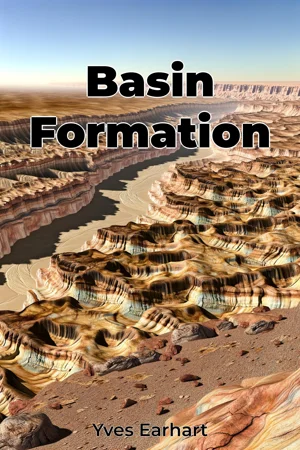
Have you ever considered the intricate geological processes that sculpt the very landscapes that sustain life? "Basin Formation" delves into the fascinating world of geological depressions, exploring their fundamental creation through tectonic forces and erosional processes. This book seeks to illuminate how these natural formations shape regions and directly influence the availability of vital resources like water, along with the possibilities for fertile agricultural land. The book focuses on two primary areas of inquiry: the tectonic activities that initiate basin formation, and the erosional forces that further mold and define their structure. Understanding both is crucial because it allows us to anticipate the potential for resource availability, assess environmental risks, and develop sustainable land management strategies. Tectonic activity will be explored through plate movements, faulting, and folding, while erosion will be studied by examining weathering, sediment transportation, and deposition. "Basin Formation" is not just a geological study but rather looks at the crucial intersection of earth science and human civilization. The book will weave together historical examples of human settlements correlating with basin regions, highlighting how water resources and fertile land have influenced societal development. It will start with the introductory concepts of plate tectonics and geomorphology and then move on to more complex discussions of basin formation mechanisms, providing a step-by-step analysis. The central argument of "Basin Formation" is that a comprehensive understanding of basin formation is essential for sustainable resource management and environmental planning. This argument is vital because, as global populations grow and climate change intensifies, there is a pressing need to manage water resources and land in ways that ensure long-term sustainability. The book is structured in a logical progression. First, it introduces the fundamental geological concepts, including an overview of plate tectonics, the rock cycle, and weathering processes. Then, it examines the various mechanisms of basin formation, such as extensional tectonics leading to rift basins, flexural loading generating foreland basins, and the role of erosion in carving out topographic depressions. Case studies of well-known basins around the world (e.g., the East African Rift Valley, the Amazon Basin) are presented to illustrate these different formation processes. The book culminates by discussing the implications of basin morphology for water resource management, agricultural development, and natural hazard assessment. Practical applications, such as groundwater exploration techniques and strategies for mitigating flood risks, are also addressed. Evidence is drawn from a variety of sources, including geological surveys, seismic data, satellite imagery, and geochemical analyses. The book synthesizes existing research and presents it in a clear and accessible format. Furthermore, the book acknowledges the inherent limitations of studying geological processes that unfold over vast timescales. "Basin Formation" connects geology to other fields, such as hydrology, ecology, and civil engineering. The hydrological implications of basin morphology are explored, including the factors controlling groundwater recharge and surface water runoff. The book illustrates how basin shape and sediment composition influence ecosystem distribution. It also examines how an understanding of basin geology is essential for designing stable and sustainable infrastructure. The book's unique perspective lies in its integrated approach, combining an analysis of formative processes with a discussion of the environmental and societal implications. Instead of focusing solely on the geological aspects, it explores the broader context of how basin formation affects natural resources, ecosystems, and human activities. The tone of "Basin Formation" is informative and accessible, aiming to engage readers with clear explanations, illustrative examples, and real-world applications. While presenting rigorous scientific content, it avoids overly technical jargon. The book's target audience includes students and researchers in geology, geography, environmental science, and related fields, as well as professionals involved in resource management, land-use planning, and environmental consulting. It should also appeal to general readers with an interest in earth science and the natural world. As non-fiction in earth sciences, "Basin Formation" is presented with factual accuracy, supported by evidence, and without embellishment. The scope of "Basin Formation" is intentionally broad, covering a wide range of basin types and formation mechanisms. However, it does not delve into the detailed specifics of petroleum geology. It touches upon the challenges posed by ongoing debates surrounding human impact on erosional processes and the role of climate change in altering basin dynamics. By showing the interconnectedness of geological forces and their impact on societies, ecosystems, and resource management, "Basin Formation" is designed to empower its readers with a deeper understanding of the world we inhabit.
Have you ever considered the intricate geological processes that sculpt the very landscapes that sustain life? "Basin Formation" delves into the fascinating world of geological depressions, exploring their fundamental creation through tectonic forces and erosional processes. This book seeks to illuminate how these natural formations shape regions and directly influence the availability of vital resources like water, along with the possibilities for fertile agricultural land. The book focuses on two primary areas of inquiry: the tectonic activities that initiate basin formation, and the erosional forces that further mold and define their structure. Understanding both is crucial because it allows us to anticipate the potential for resource availability, assess environmental risks, and develop sustainable land management strategies. Tectonic activity will be explored through plate movements, faulting, and folding, while erosion will be studied by examining weathering, sediment transportation, and deposition. "Basin Formation" is not just a geological study but rather looks at the crucial intersection of earth science and human civilization. The book will weave together historical examples of human settlements correlating with basin regions, highlighting how water resources and fertile land have influenced societal development. It will start with the introductory concepts of plate tectonics and geomorphology and then move on to more complex discussions of basin formation mechanisms, providing a step-by-step analysis. The central argument of "Basin Formation" is that a comprehensive understanding of basin formation is essential for sustainable resource management and environmental planning. This argument is vital because, as global populations grow and climate change intensifies, there is a pressing need to manage water resources and land in ways that ensure long-term sustainability. The book is structured in a logical progression. First, it introduces the fundamental geological concepts, including an overview of plate tectonics, the rock cycle, and weathering processes. Then, it examines the various mechanisms of basin formation, such as extensional tectonics leading to rift basins, flexural loading generating foreland basins, and the role of erosion in carving out topographic depressions. Case studies of well-known basins around the world (e.g., the East African Rift Valley, the Amazon Basin) are presented to illustrate these different formation processes. The book culminates by discussing the implications of basin morphology for water resource management, agricultural development, and natural hazard assessment. Practical applications, such as groundwater exploration techniques and strategies for mitigating flood risks, are also addressed. Evidence is drawn from a variety of sources, including geological surveys, seismic data, satellite imagery, and geochemical analyses. The book synthesizes existing research and presents it in a clear and accessible format. Furthermore, the book acknowledges the inherent limitations of studying geological processes that unfold over vast timescales. "Basin Formation" connects geology to other fields, such as hydrology, ecology, and civil engineering. The hydrological implications of basin morphology are explored, including the factors controlling groundwater recharge and surface water runoff. The book illustrates how basin shape and sediment composition influence ecosystem distribution. It also examines how an understanding of basin geology is essential for designing stable and sustainable infrastructure. The book's unique perspective lies in its integrated approach, combining an analysis of formative processes with a discussion of the environmental and societal implications. Instead of focusing solely on the geological aspects, it explores the broader context of how basin formation affects natural resources, ecosystems, and human activities. The tone of "Basin Formation" is informative and accessible, aiming to engage readers with clear explanations, illustrative examples, and real-world applications. While presenting rigorous scientific content, it avoids overly technical jargon. The book's target audience includes students and researchers in geology, geography, environmental science, and related fields, as well as professionals involved in resource management, land-use planning, and environmental consulting. It should also appeal to general readers with an interest in earth science and the natural world. As non-fiction in earth sciences, "Basin Formation" is presented with factual accuracy, supported by evidence, and without embellishment. The scope of "Basin Formation" is intentionally broad, covering a wide range of basin types and formation mechanisms. However, it does not delve into the detailed specifics of petroleum geology. It touches upon the challenges posed by ongoing debates surrounding human impact on erosional processes and the role of climate change in altering basin dynamics. By showing the interconnectedness of geological forces and their impact on societies, ecosystems, and resource management, "Basin Formation" is designed to empower its readers with a deeper understanding of the world we inhabit.
"Basin Formation" explores the geological processes behind the creation and evolution of basins, vital depressions that significantly influence Earth's geography, ecosystems, and resource availability. The book highlights how tectonic activity, such as plate movements and faulting, initiates basin formation, while erosion, through weathering and sediment transportation, further shapes these landscapes. Understanding these processes is crucial, as basins often serve as critical reservoirs for water resources and fertile agricultural land, supporting diverse ecosystems and human settlements. This study also highlights the intersection of earth science and human civilization, demonstrating how basin regions have historically influenced societal development. Consider, for example, how the shape of a basin directly impacts water runoff and groundwater recharge, influencing the distribution of ecosystems. "Basin Formation" progresses logically from fundamental geological concepts to complex formation mechanisms, using case studies like the East African Rift Valley to illustrate key principles. The book uniquely combines the analysis of formative processes with their broader environmental and societal implications, emphasizing the importance of sustainable resource management and environmental planning. By connecting geology with fields like hydrology and ecology, "Basin Formation" empowers readers with a deeper understanding of the interconnectedness between geological forces and their impact on societies and the environment.
Book Details
ISBN
9788233983826
Publisher
Publifye AS
Your Licenses
You don't own any licenses for this book
Purchase a license below to unlock this book and download the EPUB.
Purchase License
Select a tier to unlock this book
Need bulk licensing?
Contact us for enterprise agreements.