
About This Book
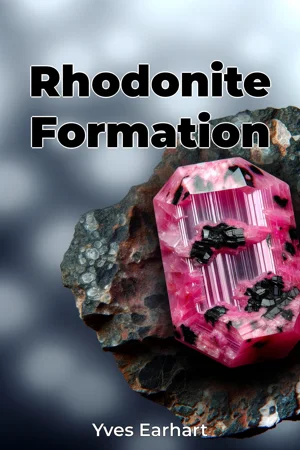
Have you ever wondered how a vibrant pink gemstone forms deep within the Earth's crust? This book, "Rhodonite Formation," delves into the fascinating geological processes behind the creation of rhodonite, a manganese silicate mineral prized for its distinctive color and ornamental appeal. We will examine the intricate interplay of metamorphism, chemical reactions, and geological settings that give rise to this beautiful stone. The book focuses on two main topics: the metamorphic environments conducive to rhodonite formation and the specific geochemical conditions required for its crystallization. The first topic explores the types of manganese-rich rocks, such as those found in metamorphosed sedimentary or volcanic deposits, where rhodonite is commonly found. Understanding these environments is crucial because it provides context for the geological forces at play. The second focus dives deep into the chemical reactions, involving manganese, silica, and other elements, that lead to rhodonite's unique composition. We will show how these reactions are influenced by temperature, pressure, and the presence of fluids. To fully understand the genesis of rhodonite, we'll explore a historical perspective of metamorphic geology and the development of our understanding of mineral formation. A basic understanding of mineralogy and metamorphic rock types will be helpful, but we will provide accessible explanations to ensure that readers from various backgrounds can follow the discussion. The central argument of this book is that rhodonite formation serves as a case study for understanding broader metamorphic processes and the role of specific chemical environments in mineral genesis. By studying rhodonite, we gain insights into how other minerals form and how regional geological events have shaped the Earth's crust. The book begins with an introduction to rhodonite, its properties, and its historical uses as an gemstone. We will explore the geological settings where rhodonite is typically found, examining the metamorphic rocks and mineral assemblages associated with it. The central chapters detail the geochemical processes involved in rhodonite formation, including the sources of manganese, the role of fluids, and the influence of temperature and pressure. We then present research based on field studies, geochemical analyses, and experimental petrology. The book culminates with a discussion of the broader implications of rhodonite formation for understanding metamorphic processes and the evolution of ore deposits. Practical applications are discussed in the context of mineral exploration. Our research is based on a comprehensive review of existing literature, alongside original data from field studies of rhodonite-bearing metamorphic rocks and geochemical analyses. The book features detailed petrographic descriptions, geochemical data, and thermodynamic calculations that support our arguments. This book connects to other areas of study, including geochemistry, petrology, and ore deposit geology. Geochemistry provides the tools to understand the chemical reactions involved, petrology offers insights into the rock types where rhodonite forms, and ore deposit geology demonstrates the broader economic significance of manganese-rich rocks. These interdisciplinary connections broaden understanding. "Rhodonite Formation" adopts a fact-based approach to presenting information. Its goal is to provide a clear and accessible explanation of the scientific principles involved in rhodonite formation. The target audience includes advanced students and researchers in geology, mineralogy, and geochemistry. Individuals interested in gemology and mineral collecting will also find this book valuable. As a non-fiction work in Earth Sciences, the book strives to provide accurate and up-to-date information, supported by scientific evidence. While the book covers a wide range of topics related to rhodonite formation, it focuses primarily on the geological and geochemical aspects. The information presented in the book has practical applications in mineral exploration, particularly in identifying potential ore deposits associated with manganese-rich metamorphic rocks. While the basic principles of rhodonite formation are well-established, there remain ongoing debates regarding the precise timing and conditions of metamorphism in specific geological settings. We will present different viewpoints and highlight areas where further research is needed.
Have you ever wondered how a vibrant pink gemstone forms deep within the Earth's crust? This book, "Rhodonite Formation," delves into the fascinating geological processes behind the creation of rhodonite, a manganese silicate mineral prized for its distinctive color and ornamental appeal. We will examine the intricate interplay of metamorphism, chemical reactions, and geological settings that give rise to this beautiful stone. The book focuses on two main topics: the metamorphic environments conducive to rhodonite formation and the specific geochemical conditions required for its crystallization. The first topic explores the types of manganese-rich rocks, such as those found in metamorphosed sedimentary or volcanic deposits, where rhodonite is commonly found. Understanding these environments is crucial because it provides context for the geological forces at play. The second focus dives deep into the chemical reactions, involving manganese, silica, and other elements, that lead to rhodonite's unique composition. We will show how these reactions are influenced by temperature, pressure, and the presence of fluids. To fully understand the genesis of rhodonite, we'll explore a historical perspective of metamorphic geology and the development of our understanding of mineral formation. A basic understanding of mineralogy and metamorphic rock types will be helpful, but we will provide accessible explanations to ensure that readers from various backgrounds can follow the discussion. The central argument of this book is that rhodonite formation serves as a case study for understanding broader metamorphic processes and the role of specific chemical environments in mineral genesis. By studying rhodonite, we gain insights into how other minerals form and how regional geological events have shaped the Earth's crust. The book begins with an introduction to rhodonite, its properties, and its historical uses as an gemstone. We will explore the geological settings where rhodonite is typically found, examining the metamorphic rocks and mineral assemblages associated with it. The central chapters detail the geochemical processes involved in rhodonite formation, including the sources of manganese, the role of fluids, and the influence of temperature and pressure. We then present research based on field studies, geochemical analyses, and experimental petrology. The book culminates with a discussion of the broader implications of rhodonite formation for understanding metamorphic processes and the evolution of ore deposits. Practical applications are discussed in the context of mineral exploration. Our research is based on a comprehensive review of existing literature, alongside original data from field studies of rhodonite-bearing metamorphic rocks and geochemical analyses. The book features detailed petrographic descriptions, geochemical data, and thermodynamic calculations that support our arguments. This book connects to other areas of study, including geochemistry, petrology, and ore deposit geology. Geochemistry provides the tools to understand the chemical reactions involved, petrology offers insights into the rock types where rhodonite forms, and ore deposit geology demonstrates the broader economic significance of manganese-rich rocks. These interdisciplinary connections broaden understanding. "Rhodonite Formation" adopts a fact-based approach to presenting information. Its goal is to provide a clear and accessible explanation of the scientific principles involved in rhodonite formation. The target audience includes advanced students and researchers in geology, mineralogy, and geochemistry. Individuals interested in gemology and mineral collecting will also find this book valuable. As a non-fiction work in Earth Sciences, the book strives to provide accurate and up-to-date information, supported by scientific evidence. While the book covers a wide range of topics related to rhodonite formation, it focuses primarily on the geological and geochemical aspects. The information presented in the book has practical applications in mineral exploration, particularly in identifying potential ore deposits associated with manganese-rich metamorphic rocks. While the basic principles of rhodonite formation are well-established, there remain ongoing debates regarding the precise timing and conditions of metamorphism in specific geological settings. We will present different viewpoints and highlight areas where further research is needed.
"Rhodonite Formation" explores the fascinating geological processes behind the creation of rhodonite, a manganese silicate mineral prized as a gemstone. The book delves into metamorphic environments and geochemical conditions necessary for rhodonite's unique crystallization. It examines how manganese-rich rocks, transformed through metamorphism in specific geological settings, give rise to this vibrant pink stone. One intriguing aspect covered is the role of fluids, temperature, and pressure in influencing the chemical reactions that form rhodonite. This book uniquely blends historical context with modern research, connecting the study of rhodonite to broader concepts in Earth Sciences. It uses a fact-based approach, presenting petrographic descriptions, geochemical data, and thermodynamic calculations to support its arguments. The chapters progress from introducing rhodonite's properties and geological settings to detailing geochemical processes and presenting field studies, culminating in a discussion of broader implications for understanding metamorphic processes and ore deposit evolution.
Book Details
ISBN
9788233983789
Publisher
Publifye AS
Your Licenses
You don't own any licenses for this book
Purchase a license below to unlock this book and download the EPUB.
Purchase License
Select a tier to unlock this book
Need bulk licensing?
Contact us for enterprise agreements.