
About This Book
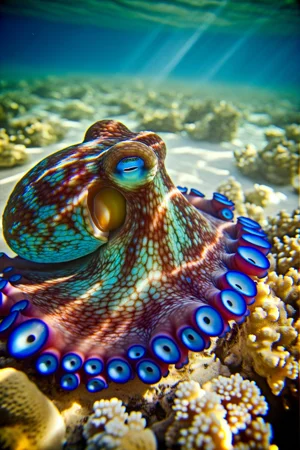
Have you ever considered the ocean as a vast chemical arms race, where survival hinges on the deadliest toxins imaginable? "Toxic Oceans" plunges into this world, revealing the intricate and often lethal strategies marine creatures employ to thrive in a competitive environment. This book explores the fascinating world of marine toxins, examining their sources, mechanisms, and ecological significance. The central aim is to illustrate how toxicity is not merely a defense mechanism but a fundamental driver of marine biodiversity and ecological balance. This exploration is crucial because understanding these toxins provides insights into marine ecology, evolution, and potential biomedical applications. Furthermore, as human activities increasingly impact ocean ecosystems, comprehending the role of toxins in marine life becomes vital for conservation efforts. Foundational knowledge in basic biology and chemistry will certainly enhance the reading experience, though efforts will be made to ensure accessibility for a broad audience. "Toxic Oceans" argues that marine toxins represent a vast, largely untapped reservoir of biological and chemical diversity, shaped by intense selective pressures. We posit that the study of these toxins offers a unique lens through which to view the evolution of marine life and adaptation and resilience in the face of environmental change. The book unfolds in stages. First, we introduce key concepts, such as the chemical structures of different toxins, their modes of action, and the evolutionary origins of toxicity. Then, we delve into specific examples, focusing on creatures like the blue-ringed octopus, whose tetrodotoxin-laden saliva can paralyze prey in seconds, and the box jellyfish, whose venom is among the most potent in the animal kingdom. We dedicate substantial attention to the ecological roles of these toxins, detailing how predators use them to capture prey, how prey animals develop resistance, and how toxins mediate competition for resources. The book culminates by examining the implications of marine toxins for human health, including the dangers of seafood poisoning, the potential for toxin-derived pharmaceuticals, and the impact of ocean pollution on toxin production. The arguments presented are supported by a wealth of scientific evidence, drawing from primary research articles, field studies, and laboratory experiments. We utilize data from oceanographic surveys, biochemical analyses, and phylogenetic studies to construct a comprehensive picture of marine toxicity. "Toxic Oceans" is inherently interdisciplinary. It connects to fields such as pharmacology, exploring the potential of marine toxins as drug leads; evolutionary biology, examining the origins and diversification of toxin-producing organisms; and environmental science, assessing the impact of pollution on marine toxin production and bioaccumulation. These interdisciplinary connections highlight the broad relevance of the topic and enrich the book's perspective. What sets "Toxic Oceans" apart is its holistic approach, which integrates chemical, biological, and ecological perspectives to understand marine toxicity. Instead of simply cataloging different toxins, we strive to elucidate the ecological contexts that shape their evolution and function. The book is written in a clear, accessible style, aiming to engage both scientists and non-specialists. Complex scientific concepts are explained in plain language, with ample illustrations and examples. The writing style promotes understanding by removing jargon whenever possible. The target audience includes students, researchers, and anyone with an interest in marine biology, toxicology, or natural history. The book's comprehensive coverage and accessible style make it ideally suited for use as a textbook or supplementary reading in courses on marine biology, toxicology, or ecology. As a work of non-fiction in the life sciences, "Toxic Oceans" adheres to the highest standards of scientific accuracy and objectivity. All claims are supported by evidence from peer-reviewed scientific literature, and sources are fully cited. The scope of "Toxic Oceans" is global, encompassing a wide range of marine environments and organisms. However, the book focuses primarily on toxins produced by animals, with less emphasis on algal toxins. This limitation reflects the current state of research, where animal toxins are better understood. Practically speaking, "Toxic Oceans" provides information relevant to public health, environmental monitoring, and drug discovery. Understanding marine toxins is essential for preventing seafood poisoning, assessing the impact of pollution on marine ecosystems, and developing new therapies for a variety of diseases. The field of marine toxicology is not without its controversies. For example, there is ongoing debate about the relative importance of different toxins in shaping marine communities and the potential for marine toxins to be used as bioweapons. "Toxic Oceans" addresses these controversies, presenting different perspectives and encouraging critical thinking. In conclusion, "Toxic Oceans" offers a comprehensive and engaging exploration into the hidden world of marine toxins, revealing their ecological significance, evolutionary origins, and potential applications. It is a journey into the depths of marine life, where chemistry and biology intertwine to create a fascinating story of survival and adaptation.
Have you ever considered the ocean as a vast chemical arms race, where survival hinges on the deadliest toxins imaginable? "Toxic Oceans" plunges into this world, revealing the intricate and often lethal strategies marine creatures employ to thrive in a competitive environment. This book explores the fascinating world of marine toxins, examining their sources, mechanisms, and ecological significance. The central aim is to illustrate how toxicity is not merely a defense mechanism but a fundamental driver of marine biodiversity and ecological balance. This exploration is crucial because understanding these toxins provides insights into marine ecology, evolution, and potential biomedical applications. Furthermore, as human activities increasingly impact ocean ecosystems, comprehending the role of toxins in marine life becomes vital for conservation efforts. Foundational knowledge in basic biology and chemistry will certainly enhance the reading experience, though efforts will be made to ensure accessibility for a broad audience. "Toxic Oceans" argues that marine toxins represent a vast, largely untapped reservoir of biological and chemical diversity, shaped by intense selective pressures. We posit that the study of these toxins offers a unique lens through which to view the evolution of marine life and adaptation and resilience in the face of environmental change. The book unfolds in stages. First, we introduce key concepts, such as the chemical structures of different toxins, their modes of action, and the evolutionary origins of toxicity. Then, we delve into specific examples, focusing on creatures like the blue-ringed octopus, whose tetrodotoxin-laden saliva can paralyze prey in seconds, and the box jellyfish, whose venom is among the most potent in the animal kingdom. We dedicate substantial attention to the ecological roles of these toxins, detailing how predators use them to capture prey, how prey animals develop resistance, and how toxins mediate competition for resources. The book culminates by examining the implications of marine toxins for human health, including the dangers of seafood poisoning, the potential for toxin-derived pharmaceuticals, and the impact of ocean pollution on toxin production. The arguments presented are supported by a wealth of scientific evidence, drawing from primary research articles, field studies, and laboratory experiments. We utilize data from oceanographic surveys, biochemical analyses, and phylogenetic studies to construct a comprehensive picture of marine toxicity. "Toxic Oceans" is inherently interdisciplinary. It connects to fields such as pharmacology, exploring the potential of marine toxins as drug leads; evolutionary biology, examining the origins and diversification of toxin-producing organisms; and environmental science, assessing the impact of pollution on marine toxin production and bioaccumulation. These interdisciplinary connections highlight the broad relevance of the topic and enrich the book's perspective. What sets "Toxic Oceans" apart is its holistic approach, which integrates chemical, biological, and ecological perspectives to understand marine toxicity. Instead of simply cataloging different toxins, we strive to elucidate the ecological contexts that shape their evolution and function. The book is written in a clear, accessible style, aiming to engage both scientists and non-specialists. Complex scientific concepts are explained in plain language, with ample illustrations and examples. The writing style promotes understanding by removing jargon whenever possible. The target audience includes students, researchers, and anyone with an interest in marine biology, toxicology, or natural history. The book's comprehensive coverage and accessible style make it ideally suited for use as a textbook or supplementary reading in courses on marine biology, toxicology, or ecology. As a work of non-fiction in the life sciences, "Toxic Oceans" adheres to the highest standards of scientific accuracy and objectivity. All claims are supported by evidence from peer-reviewed scientific literature, and sources are fully cited. The scope of "Toxic Oceans" is global, encompassing a wide range of marine environments and organisms. However, the book focuses primarily on toxins produced by animals, with less emphasis on algal toxins. This limitation reflects the current state of research, where animal toxins are better understood. Practically speaking, "Toxic Oceans" provides information relevant to public health, environmental monitoring, and drug discovery. Understanding marine toxins is essential for preventing seafood poisoning, assessing the impact of pollution on marine ecosystems, and developing new therapies for a variety of diseases. The field of marine toxicology is not without its controversies. For example, there is ongoing debate about the relative importance of different toxins in shaping marine communities and the potential for marine toxins to be used as bioweapons. "Toxic Oceans" addresses these controversies, presenting different perspectives and encouraging critical thinking. In conclusion, "Toxic Oceans" offers a comprehensive and engaging exploration into the hidden world of marine toxins, revealing their ecological significance, evolutionary origins, and potential applications. It is a journey into the depths of marine life, where chemistry and biology intertwine to create a fascinating story of survival and adaptation.
"Toxic Oceans" explores the chemical arms race of marine life, where toxins play a central role in survival and ecological balance. This book delves into the fascinating world of marine toxins, revealing their diverse sources, mechanisms, and ecological significance. It highlights how toxicity is not just a defense mechanism but a key driver of marine biodiversity. For instance, the book examines creatures like the blue-ringed octopus, whose potent venom can paralyze prey, and the ecological roles of toxins in predator-prey relationships. A key argument is that marine toxins represent an untapped reservoir of biological and chemical diversity, shaped by intense selective pressures. The book adopts a holistic, interdisciplinary approach, integrating chemical, biological, and ecological perspectives to understand marine toxicity. It connects to fields like pharmacology, evolutionary biology, and environmental science. Progressing through the chapters, "Toxic Oceans" introduces fundamental concepts, delves into specific examples, and examines the implications of marine toxins for human health, including seafood poisoning and potential pharmaceuticals. This comprehensive exploration makes it valuable for anyone interested in marine biology, toxicology, or natural history.
Book Details
ISBN
9788233983734
Publisher
Publifye AS
Your Licenses
You don't own any licenses for this book
Purchase a license below to unlock this book and download the EPUB.
Purchase License
Select a tier to unlock this book
Need bulk licensing?
Contact us for enterprise agreements.