
About This Book
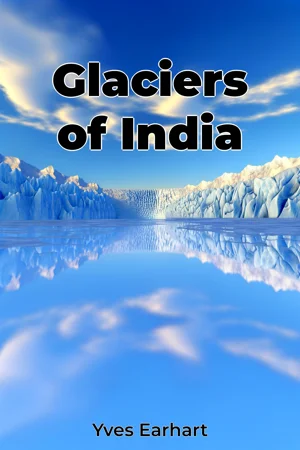
Are the glaciers of India, the icy sentinels of the Himalayas, silently vanishing? This book, 'Glaciers of India,' delves into the crucial role these frozen reservoirs play in sustaining life across the Indian subcontinent and examines the alarming impact of climate change on their existence. We explore not only the geographical significance of these glaciers but also their profound environmental importance. The book primarily focuses on three key areas: the geography and hydrology of Indian glaciers, the science of glaciology with specific applications to the region, and the effects of global warming on glacial melt rates and the resulting consequences for downstream communities. Understanding these interconnected topics is critical, especially as water scarcity becomes an increasingly pressing global challenge. 'Glaciers of India' provides a comprehensive overview of the Himalayan glaciers, the lifeblood of major river systems. The book argues that the accelerated melting of these glaciers, driven by anthropogenic climate change, poses a significant threat to water security, agricultural stability, and overall environmental health in the region. This argument is significant as it shifts the focus from general climate change discussions to the specific and tangible impacts on a vital geographical area. The structure of the book proceeds logically. First, we introduce the reader to the diverse types of glaciers found in India, detailing their formation, distribution, and unique characteristics. Second, we explore the scientific principles behind glacial movement, ice accumulation, ablation processes, and the crucial role of glaciers in feeding major river systems like the Ganges, Indus, and Brahmaputra. Third, through detailed analysis of temperature data, satellite imagery, and field studies, we examine the impact of rising global temperatures on glacial melt rates and the formation of glacial lakes, which can lead to devastating outburst floods. Finally, we discuss potential mitigation strategies and adaptation measures that can be implemented to address the challenges posed by glacial retreat, including sustainable water management practices and community-based disaster preparedness programs. The core argument is supported by a combination of primary and secondary data, including extensive glaciological studies conducted by Indian research institutions, satellite-derived measurements of glacier mass balance, and hydrological modeling of river flows. We also incorporate case studies of specific glaciers and their impact on local communities, drawing from sociological research on water usage and climate change adaptation. This book connects directly with other fields such as climatology, hydrology, and environmental policy. The book is written in a fact-based, clear, and accessible style, aiming to bridge the gap between scientific research and public understanding. Our intended audience includes students and researchers in earth sciences, geography, and environmental studies, as well as policymakers, environmental organizations, and anyone interested in understanding the challenges of climate change and water resource management in the Himalayas. This Book will be a relevant, informative, and timely resource. The scope encompasses the major glaciers within the Indian Himalayas, encompassing the states of Jammu and Kashmir, Ladakh, Himachal Pradesh, Uttarakhand, and Sikkim. While we discuss the broader context of global climate change, our primary focus remains on the specific manifestations and impacts within the Indian context. The insights presented in 'Glaciers of India' have direct real-world applications. For example, the data and analysis can inform water resource management strategies, guide infrastructure development in glacial regions, and support the development of effective climate change adaptation plans for vulnerable communities. Finally, we address the ongoing debates surrounding the precise rates of glacial melt and the relative contributions of different factors, such as black carbon deposition and regional climate variability. By presenting a balanced perspective based on the latest scientific evidence, we aim to contribute to a more informed and nuanced understanding of the challenges facing the glaciers of India.
Are the glaciers of India, the icy sentinels of the Himalayas, silently vanishing? This book, 'Glaciers of India,' delves into the crucial role these frozen reservoirs play in sustaining life across the Indian subcontinent and examines the alarming impact of climate change on their existence. We explore not only the geographical significance of these glaciers but also their profound environmental importance. The book primarily focuses on three key areas: the geography and hydrology of Indian glaciers, the science of glaciology with specific applications to the region, and the effects of global warming on glacial melt rates and the resulting consequences for downstream communities. Understanding these interconnected topics is critical, especially as water scarcity becomes an increasingly pressing global challenge. 'Glaciers of India' provides a comprehensive overview of the Himalayan glaciers, the lifeblood of major river systems. The book argues that the accelerated melting of these glaciers, driven by anthropogenic climate change, poses a significant threat to water security, agricultural stability, and overall environmental health in the region. This argument is significant as it shifts the focus from general climate change discussions to the specific and tangible impacts on a vital geographical area. The structure of the book proceeds logically. First, we introduce the reader to the diverse types of glaciers found in India, detailing their formation, distribution, and unique characteristics. Second, we explore the scientific principles behind glacial movement, ice accumulation, ablation processes, and the crucial role of glaciers in feeding major river systems like the Ganges, Indus, and Brahmaputra. Third, through detailed analysis of temperature data, satellite imagery, and field studies, we examine the impact of rising global temperatures on glacial melt rates and the formation of glacial lakes, which can lead to devastating outburst floods. Finally, we discuss potential mitigation strategies and adaptation measures that can be implemented to address the challenges posed by glacial retreat, including sustainable water management practices and community-based disaster preparedness programs. The core argument is supported by a combination of primary and secondary data, including extensive glaciological studies conducted by Indian research institutions, satellite-derived measurements of glacier mass balance, and hydrological modeling of river flows. We also incorporate case studies of specific glaciers and their impact on local communities, drawing from sociological research on water usage and climate change adaptation. This book connects directly with other fields such as climatology, hydrology, and environmental policy. The book is written in a fact-based, clear, and accessible style, aiming to bridge the gap between scientific research and public understanding. Our intended audience includes students and researchers in earth sciences, geography, and environmental studies, as well as policymakers, environmental organizations, and anyone interested in understanding the challenges of climate change and water resource management in the Himalayas. This Book will be a relevant, informative, and timely resource. The scope encompasses the major glaciers within the Indian Himalayas, encompassing the states of Jammu and Kashmir, Ladakh, Himachal Pradesh, Uttarakhand, and Sikkim. While we discuss the broader context of global climate change, our primary focus remains on the specific manifestations and impacts within the Indian context. The insights presented in 'Glaciers of India' have direct real-world applications. For example, the data and analysis can inform water resource management strategies, guide infrastructure development in glacial regions, and support the development of effective climate change adaptation plans for vulnerable communities. Finally, we address the ongoing debates surrounding the precise rates of glacial melt and the relative contributions of different factors, such as black carbon deposition and regional climate variability. By presenting a balanced perspective based on the latest scientific evidence, we aim to contribute to a more informed and nuanced understanding of the challenges facing the glaciers of India.
"Glaciers of India" explores the critical role Himalayan glaciers play in sustaining life in India and the environmental consequences of their rapid melting due to climate change. The book highlights the geography, hydrology, and glaciology of these icy reservoirs, emphasizing their importance to major river systems. It demonstrates how accelerated glacial melt threatens water security and environmental stability across the region, presenting a tangible view of global warming's impact. The book uniquely combines scientific research with real-world implications, analyzing temperature data, satellite imagery, and field studies to showcase the effects of rising temperatures. For instance, the formation of glacial lakes increases the risk of devastating outburst floods. It progresses logically, beginning with an introduction to the diverse types of glaciers in India, then exploring the science behind glacial movement and the impact of rising global temperatures. Finally, the book discusses potential mitigation and adaptation strategies, such as sustainable water management practices and community-based disaster preparedness. This comprehensive overview is designed to inform students, researchers, policymakers, and anyone concerned about climate change and water resource management in the Himalayas.
Book Details
ISBN
9788233983666
Publisher
Publifye AS
Your Licenses
You don't own any licenses for this book
Purchase a license below to unlock this book and download the EPUB.
Purchase License
Select a tier to unlock this book
Need bulk licensing?
Contact us for enterprise agreements.