
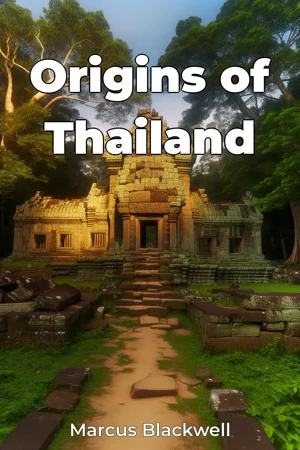
About This Book
How did the geographical crossroads of Southeast Asia give rise to the complex tapestry of Thailand? "Origins of Thailand" delves into the formative history of this nation, exploring the rise and fall of early kingdoms and the profound influence of Buddhism on its cultural and societal development. This book unravels the story of Thailand’s past, offering readers a comprehensive understanding of its unique identity. Understanding Thailand's history requires examining two critical areas: the early kingdoms that laid the foundation for later Thai states and the pervasive influence of Theravada Buddhism. These topics are essential because they provide a framework for understanding Thailand's political structures, social norms, and cultural expressions. Without grasping the significance of these elements, one cannot fully appreciate modern Thailand and its place in the world. This book begins by establishing the historical and geographical context of Southeast Asia, focusing on the migrations of peoples and the trade routes that crisscrossed the region. It examines the emergence of early kingdoms such as Dvaravati, Srivijaya, and the Khmer Empire, all of which exerted significant influence on the territory that would eventually become Thailand. We then examine how Theravada Buddhism became deeply rooted in the culture, shaping its art, literature, laws, and social hierarchies. "Origins of Thailand" argues that Thailand’s unique identity is a product of the interplay between indigenous developments, regional influences, and the transformative impact of Buddhism. This argument challenges earlier orientalist perspectives that viewed Thailand as merely a passive recipient of external influences, offering instead a nuanced understanding of its dynamic historical evolution. The book is structured to guide the reader through a chronological and thematic exploration of Thai history. It begins with an introduction to the pre-Thai kingdoms and the early migrations of peoples into the region. The following sections focus on the rise and fall of these kingdoms, analyzing their political structures, economic systems, and cultural achievements. A dedicated section is devoted to the spread and impact of Theravada Buddhism, examining its interaction with local beliefs and practices. The book culminates with an analysis of how these elements converged to shape the foundations of early Thai states. Evidence presented in "Origins of Thailand" draws upon a variety of sources, including archaeological findings, epigraphic inscriptions, historical chronicles, and religious texts. In addition, the book incorporates recent scholarship from the fields of history, archaeology, anthropology, and religious studies, providing a multi-faceted perspective on the subject. The book also intersects with other fields of study, particularly religious studies, anthropology, and art history. Its exploration of Buddhism connects it to broader discussions of religious diffusion and cultural adaptation. Its analysis of social structures and power dynamics relates to anthropological theories of state formation. Its examination of art and architecture provides insights into the cultural values and artistic expressions of early Thai societies. "Origins of Thailand" distinguishes itself by its holistic approach, integrating political, social, cultural, and religious factors into a cohesive narrative. It offers a fresh perspective on Thai history, moving beyond traditional narratives of kings and wars to explore the complex interplay of various factors that shaped the nation's origins. The writing style is accessible yet rigorous, aiming to engage both general readers and specialists. It balances scholarly analysis with clear explanations, avoiding jargon and assuming no prior knowledge of Thai history. The target audience for this book includes students, scholars, travelers, and anyone interested in Southeast Asian history, religion, or culture. It offers valuable insights into the origins of a country that continues to play a significant role in regional and global affairs. As a work of history, "Origins of Thailand" adheres to principles of historical accuracy, objectivity, and critical analysis. It presents a balanced account of the past, acknowledging different perspectives and interpretations. The scope of this book is limited to the period before the emergence of unified Thai kingdoms. While it lays the foundation for understanding later developments, it does not delve into the details of subsequent Thai history. Readers can apply the knowledge gained from this book to better understand contemporary Thai society, culture, and politics. It provides a framework for interpreting current events in light of historical trends and patterns. Some controversial issues in the field include debates about the origins of the Thai people and the precise nature of early interactions between different ethnic and cultural groups. "Origins of Thailand" addresses these debates by presenting a range of perspectives and offering nuanced interpretations of the available evidence.
How did the geographical crossroads of Southeast Asia give rise to the complex tapestry of Thailand? "Origins of Thailand" delves into the formative history of this nation, exploring the rise and fall of early kingdoms and the profound influence of Buddhism on its cultural and societal development. This book unravels the story of Thailand’s past, offering readers a comprehensive understanding of its unique identity. Understanding Thailand's history requires examining two critical areas: the early kingdoms that laid the foundation for later Thai states and the pervasive influence of Theravada Buddhism. These topics are essential because they provide a framework for understanding Thailand's political structures, social norms, and cultural expressions. Without grasping the significance of these elements, one cannot fully appreciate modern Thailand and its place in the world. This book begins by establishing the historical and geographical context of Southeast Asia, focusing on the migrations of peoples and the trade routes that crisscrossed the region. It examines the emergence of early kingdoms such as Dvaravati, Srivijaya, and the Khmer Empire, all of which exerted significant influence on the territory that would eventually become Thailand. We then examine how Theravada Buddhism became deeply rooted in the culture, shaping its art, literature, laws, and social hierarchies. "Origins of Thailand" argues that Thailand’s unique identity is a product of the interplay between indigenous developments, regional influences, and the transformative impact of Buddhism. This argument challenges earlier orientalist perspectives that viewed Thailand as merely a passive recipient of external influences, offering instead a nuanced understanding of its dynamic historical evolution. The book is structured to guide the reader through a chronological and thematic exploration of Thai history. It begins with an introduction to the pre-Thai kingdoms and the early migrations of peoples into the region. The following sections focus on the rise and fall of these kingdoms, analyzing their political structures, economic systems, and cultural achievements. A dedicated section is devoted to the spread and impact of Theravada Buddhism, examining its interaction with local beliefs and practices. The book culminates with an analysis of how these elements converged to shape the foundations of early Thai states. Evidence presented in "Origins of Thailand" draws upon a variety of sources, including archaeological findings, epigraphic inscriptions, historical chronicles, and religious texts. In addition, the book incorporates recent scholarship from the fields of history, archaeology, anthropology, and religious studies, providing a multi-faceted perspective on the subject. The book also intersects with other fields of study, particularly religious studies, anthropology, and art history. Its exploration of Buddhism connects it to broader discussions of religious diffusion and cultural adaptation. Its analysis of social structures and power dynamics relates to anthropological theories of state formation. Its examination of art and architecture provides insights into the cultural values and artistic expressions of early Thai societies. "Origins of Thailand" distinguishes itself by its holistic approach, integrating political, social, cultural, and religious factors into a cohesive narrative. It offers a fresh perspective on Thai history, moving beyond traditional narratives of kings and wars to explore the complex interplay of various factors that shaped the nation's origins. The writing style is accessible yet rigorous, aiming to engage both general readers and specialists. It balances scholarly analysis with clear explanations, avoiding jargon and assuming no prior knowledge of Thai history. The target audience for this book includes students, scholars, travelers, and anyone interested in Southeast Asian history, religion, or culture. It offers valuable insights into the origins of a country that continues to play a significant role in regional and global affairs. As a work of history, "Origins of Thailand" adheres to principles of historical accuracy, objectivity, and critical analysis. It presents a balanced account of the past, acknowledging different perspectives and interpretations. The scope of this book is limited to the period before the emergence of unified Thai kingdoms. While it lays the foundation for understanding later developments, it does not delve into the details of subsequent Thai history. Readers can apply the knowledge gained from this book to better understand contemporary Thai society, culture, and politics. It provides a framework for interpreting current events in light of historical trends and patterns. Some controversial issues in the field include debates about the origins of the Thai people and the precise nature of early interactions between different ethnic and cultural groups. "Origins of Thailand" addresses these debates by presenting a range of perspectives and offering nuanced interpretations of the available evidence.
"Origins of Thailand" explores the historical roots of modern Thailand by examining the pre-Thai kingdoms and the profound influence of Theravada Buddhism. This book delves into the early migrations and trade routes that shaped Southeast Asia, highlighting the rise and fall of kingdoms like Dvaravati, Srivijaya, and the Khmer Empire. These early states laid the groundwork for the political structures, social norms, and cultural expressions that define Thailand today. The book argues that Thailand's unique identity resulted from the interplay of indigenous developments, regional influences, and the transformative impact of Buddhism. A key insight is how Theravada Buddhism shaped Thai art, literature, laws, and social hierarchies, becoming deeply embedded in the nation's culture. The book challenges earlier orientalist views by presenting a nuanced understanding of Thailand's dynamic historical evolution. It uses archaeological findings, historical chronicles, and religious texts to support its analysis, offering a multi-faceted perspective. Each chapter builds upon the previous one, starting with the pre-Thai kingdoms and early migrations, then analyzing the rise and fall of these kingdoms, and culminating in an examination of how these elements shaped the foundations of early Thai states. This approach integrates political, social, cultural, and religious factors into a cohesive narrative, making it valuable for anyone interested in History World, Religion, and World History.
Book Details
ISBN
9788233983642
Publisher
Publifye AS
Your Licenses
You don't own any licenses for this book
Purchase a license below to unlock this book and download the EPUB.
Purchase License
Select a tier to unlock this book
Need bulk licensing?
Contact us for enterprise agreements.