
About This Book
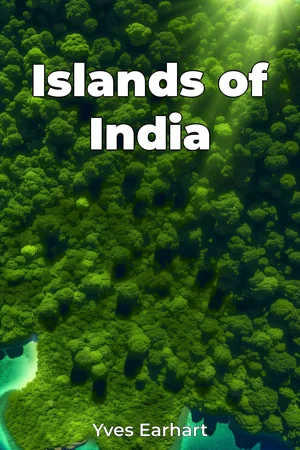
What secrets are hidden within India's island ecosystems, and what can they tell us about the delicate balance between nature and culture? Islands of India explores the diverse ecological and cultural landscapes of India's two major island groups: the Andaman and Nicobar Islands in the Bay of Bengal and Lakshadweep in the Arabian Sea. These islands, often overlooked in mainstream narratives of India, are vital repositories of biodiversity, unique cultural traditions, and strategic importance. This book delves into three major themes: the ecological significance of these islands as biodiversity hotspots; the cultural diversity of their indigenous populations and the impact of external influences; and the challenges of sustainable development in the face of increasing tourism and environmental pressures. These topics are significant because they illuminate the complex interplay between human activity and the natural world in fragile island ecosystems. To understand these islands, we will explore their geological origins, unique flora and fauna, and varied climates. The book also presents a social and historical context, tracing the history of indigenous communities, colonial influences, and post-independence development policies that have shaped the islands' present status. The central argument of this book is that the long-term well-being of these islands depends on a balanced approach that recognizes the intrinsic value of both their natural environment and cultural heritage. Development policies must prioritize ecological conservation and respect for indigenous rights to ensure a sustainable future. The book is structured in three parts. The first part introduces the geographical and ecological contexts, detailing the formation of the islands, their distinctive ecosystems (coral reefs, mangrove forests, rainforests), and endemic species. The second part focuses on the cultural landscape, examining the history, traditions, and socio-economic structures of the indigenous populations, and the impact of migration and modernization. The third part addresses contemporary challenges, including the impact of tourism, climate change, conservation efforts, and development initiatives. It culminates in a discussion of sustainable development strategies that can safeguard the islands' future. The arguments presented in the book are supported by scientific research, historical records, anthropological studies, and first-hand accounts. Data from governmental reports, research institutions, and conservation organizations will be analyzed. Furthermore, interviews with local communities and experts provide crucial insights into the issues and perspectives that are often missing from official narratives. Connections are made to several interdisciplinary fields. The book draws from ecology, anthropology, and political science to understand the complex interactions between environment, culture, and governance. The ecological analysis is important for understanding the biodiversity of the islands. The anthropological perspective illuminates the cultural adaptations and resilience of indigenous communities. Political science offers insights into development policies and governance structures. This book offers a comprehensive and integrated perspective on these islands. By combining scientific, historical, and anthropological perspectives, it offers a nuanced and balanced understanding of the challenges and opportunities facing these unique regions. The tone of the book is factual and analytical, presenting information in a clear and accessible manner. The target audience includes students and researchers, government officials and policymakers, conservationists, and general readers interested in India, environmental issues, and cultural diversity. It will be valuable to anyone seeking a deeper understanding of the environmental and cultural dynamics of these islands. As a work of non-fiction in the genres of travel and nature, the book will fulfill the genre expectations of being factually accurate, well-researched, and informative. It blends descriptive accounts of natural environments with scholarly analysis of social and environmental issues. The scope of the book covers the major islands of Andaman and Nicobar and Lakshadweep. While each island has its own unique characteristics, the book focuses on common themes and overarching issues that affect the entire region. The information can be used to inform conservation efforts, guide sustainable tourism development, and shape policies that promote both environmental protection and social equity. The book acknowledges ongoing debates in the field, such as the controversy between development and environmental protection, the rights of indigenous communities, and the impact of tourism on island ecosystems. It presents different viewpoints and promotes a balanced, informed discussion of these important issues.
What secrets are hidden within India's island ecosystems, and what can they tell us about the delicate balance between nature and culture? Islands of India explores the diverse ecological and cultural landscapes of India's two major island groups: the Andaman and Nicobar Islands in the Bay of Bengal and Lakshadweep in the Arabian Sea. These islands, often overlooked in mainstream narratives of India, are vital repositories of biodiversity, unique cultural traditions, and strategic importance. This book delves into three major themes: the ecological significance of these islands as biodiversity hotspots; the cultural diversity of their indigenous populations and the impact of external influences; and the challenges of sustainable development in the face of increasing tourism and environmental pressures. These topics are significant because they illuminate the complex interplay between human activity and the natural world in fragile island ecosystems. To understand these islands, we will explore their geological origins, unique flora and fauna, and varied climates. The book also presents a social and historical context, tracing the history of indigenous communities, colonial influences, and post-independence development policies that have shaped the islands' present status. The central argument of this book is that the long-term well-being of these islands depends on a balanced approach that recognizes the intrinsic value of both their natural environment and cultural heritage. Development policies must prioritize ecological conservation and respect for indigenous rights to ensure a sustainable future. The book is structured in three parts. The first part introduces the geographical and ecological contexts, detailing the formation of the islands, their distinctive ecosystems (coral reefs, mangrove forests, rainforests), and endemic species. The second part focuses on the cultural landscape, examining the history, traditions, and socio-economic structures of the indigenous populations, and the impact of migration and modernization. The third part addresses contemporary challenges, including the impact of tourism, climate change, conservation efforts, and development initiatives. It culminates in a discussion of sustainable development strategies that can safeguard the islands' future. The arguments presented in the book are supported by scientific research, historical records, anthropological studies, and first-hand accounts. Data from governmental reports, research institutions, and conservation organizations will be analyzed. Furthermore, interviews with local communities and experts provide crucial insights into the issues and perspectives that are often missing from official narratives. Connections are made to several interdisciplinary fields. The book draws from ecology, anthropology, and political science to understand the complex interactions between environment, culture, and governance. The ecological analysis is important for understanding the biodiversity of the islands. The anthropological perspective illuminates the cultural adaptations and resilience of indigenous communities. Political science offers insights into development policies and governance structures. This book offers a comprehensive and integrated perspective on these islands. By combining scientific, historical, and anthropological perspectives, it offers a nuanced and balanced understanding of the challenges and opportunities facing these unique regions. The tone of the book is factual and analytical, presenting information in a clear and accessible manner. The target audience includes students and researchers, government officials and policymakers, conservationists, and general readers interested in India, environmental issues, and cultural diversity. It will be valuable to anyone seeking a deeper understanding of the environmental and cultural dynamics of these islands. As a work of non-fiction in the genres of travel and nature, the book will fulfill the genre expectations of being factually accurate, well-researched, and informative. It blends descriptive accounts of natural environments with scholarly analysis of social and environmental issues. The scope of the book covers the major islands of Andaman and Nicobar and Lakshadweep. While each island has its own unique characteristics, the book focuses on common themes and overarching issues that affect the entire region. The information can be used to inform conservation efforts, guide sustainable tourism development, and shape policies that promote both environmental protection and social equity. The book acknowledges ongoing debates in the field, such as the controversy between development and environmental protection, the rights of indigenous communities, and the impact of tourism on island ecosystems. It presents different viewpoints and promotes a balanced, informed discussion of these important issues.
"Islands of India" explores the rich ecological and cultural diversity of India's island ecosystems, primarily focusing on the Andaman and Nicobar Islands and Lakshadweep. It examines these often-overlooked regions as vital biodiversity hotspots and unique cultural landscapes, highlighting their ecological significance and the challenges of sustainable development. One intriguing fact is that these islands are home to unique species found nowhere else on Earth, emphasizing their ecological importance. The book also delves into the cultural heritage of indigenous populations, exploring how external influences and modernization impact these communities. The book takes a comprehensive approach, beginning with the geological origins and distinct ecosystems of the islands, such as coral reefs and mangrove forests. It then transitions to the cultural landscape, examining the history and socio-economic structures of indigenous communities. Finally, it addresses contemporary challenges like tourism and climate change. Through scientific research, historical records, and first-hand accounts, "Islands of India" argues for a balanced approach to development that prioritizes ecological conservation and respects indigenous rights, ensuring a sustainable future for these fragile environments.
Book Details
ISBN
9788233983611
Publisher
Publifye AS
Your Licenses
You don't own any licenses for this book
Purchase a license below to unlock this book and download the EPUB.
Purchase License
Select a tier to unlock this book
Need bulk licensing?
Contact us for enterprise agreements.