
About This Book
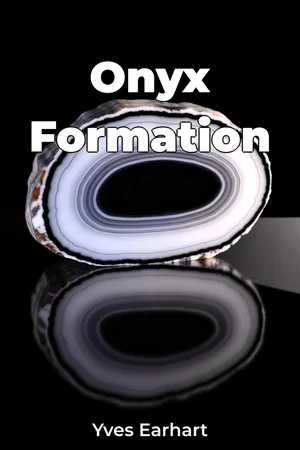
Have you ever wondered about the geological processes that give rise to the captivating black and white bands of onyx, a gemstone prized for its use in jewelry and ornamental carvings? This book, "Onyx Formation," delves into the fascinating world of layered chalcedony deposits, exploring the specific conditions and mechanisms that result in the formation of onyx. We will examine the creation of its distinct banded patterns, a topic of interest to both craft enthusiasts and earth science students. This book centers on three critical areas: the geological origins of chalcedony, the specific conditions that lead to layering and banding within these deposits, and the chemical processes responsible for the characteristic black and white coloration of onyx. These topics are significant because understanding onyx formation not only enriches our appreciation of the natural world, but also provides valuable insight into broader geological processes involving mineral deposition and alteration. To fully appreciate onyx formation, we will first consider the geological context of chalcedony, a microcrystalline form of silica. We will discuss the environments in which chalcedony typically forms, such as volcanic regions and sedimentary basins, and touch on the prerequisite knowledge of basic mineralogy and geological processes like hydrothermal activity and weathering. The central argument of "Onyx Formation" is that the gemstone's distinctive banding is the result of cyclical deposition and chemical alteration within silica-rich solutions, influenced by factors such as changes in pH, temperature, and the presence of trace elements. This argument is crucial as it challenges simplified explanations often presented in introductory texts, offering a more nuanced understanding of the complex interplay of geological factors. The book is structured to guide the reader from introductory concepts to advanced insights. First, we introduce the basic mineralogy of chalcedony and related silica minerals. Then, we explore the genesis of layered deposits, discussing the roles of diffusion, precipitation, and rhythmic crystallization. Following this, we devote extensive chapters to the unique chemical alterations, particularly the introduction of iron and carbonaceous materials, that create onyx's colors. Finally, the book culminates with a discussion of practical applications, including methods for identifying genuine onyx and understanding its geological origin in the context of gemology and jewelry making. The evidence presented in this book is drawn from a variety of sources, including geological surveys, laboratory analyses of onyx samples, and experimental studies simulating the conditions of onyx formation. We will incorporate data collected through advanced analytical techniques like scanning electron microscopy (SEM) and X-ray diffraction (XRD), providing readers with a solid scientific basis for understanding the gemstone's creation. "Onyx Formation" intersects with several other fields of study. It connects strongly with mineralogy and petrology, as it discusses the formation of a specific mineral under specific conditions. It also has connections to chemistry, as the coloration of onyx is determined by chemical processes. Finally, the book is relevant to archeology, as onyx artifacts offer insights into the gem's historical uses and societal values. This book takes a unique approach by integrating geological observations with chemical analyses and experimental results. It presents a comprehensive, multidisciplinary view of onyx formation, going beyond simple descriptive accounts to explore the underlying mechanisms responsible for its unique characteristics. The book is written in a clear, informative style, making complex concepts accessible to a broad audience. While maintaining scientific accuracy, the language is intended to be engaging and understandable for readers with varying levels of scientific background. The target audience for "Onyx Formation" includes hobbyists interested in gemology and mineral collecting, students studying earth sciences or geology, and craftspeople working with gemstones. The book is valuable because it provides a detailed, scientifically grounded understanding of onyx that goes beyond superficial descriptions. As a work in the Earth Sciences Geography and Crafts & Hobbies genres, this book will feature numerous photographs and illustrations of onyx samples, geological formations, and experimental setups. Furthermore, the book will adhere to the conventions of scientific writing, including proper citation of sources and rigorous presentation of evidence. The scope of this book is limited to the geological and chemical processes involved in the formation of natural onyx. We do not delve into the history of onyx mining or the cultural significance of onyx in different societies; these topics are beyond the scope of the current work. The information provided in this book can be directly applied by gemologists and jewelers to evaluate the authenticity and origin of onyx stones. It can also be used by earth science educators to illustrate concepts such as mineral deposition, chemical alteration, and banded structures in rocks. While the general mechanism of onyx formation is well-established, some details, such as the precise role of specific trace elements in coloration, remain a topic of ongoing research and discussion. This book acknowledges these debates and presents various perspectives.
Have you ever wondered about the geological processes that give rise to the captivating black and white bands of onyx, a gemstone prized for its use in jewelry and ornamental carvings? This book, "Onyx Formation," delves into the fascinating world of layered chalcedony deposits, exploring the specific conditions and mechanisms that result in the formation of onyx. We will examine the creation of its distinct banded patterns, a topic of interest to both craft enthusiasts and earth science students. This book centers on three critical areas: the geological origins of chalcedony, the specific conditions that lead to layering and banding within these deposits, and the chemical processes responsible for the characteristic black and white coloration of onyx. These topics are significant because understanding onyx formation not only enriches our appreciation of the natural world, but also provides valuable insight into broader geological processes involving mineral deposition and alteration. To fully appreciate onyx formation, we will first consider the geological context of chalcedony, a microcrystalline form of silica. We will discuss the environments in which chalcedony typically forms, such as volcanic regions and sedimentary basins, and touch on the prerequisite knowledge of basic mineralogy and geological processes like hydrothermal activity and weathering. The central argument of "Onyx Formation" is that the gemstone's distinctive banding is the result of cyclical deposition and chemical alteration within silica-rich solutions, influenced by factors such as changes in pH, temperature, and the presence of trace elements. This argument is crucial as it challenges simplified explanations often presented in introductory texts, offering a more nuanced understanding of the complex interplay of geological factors. The book is structured to guide the reader from introductory concepts to advanced insights. First, we introduce the basic mineralogy of chalcedony and related silica minerals. Then, we explore the genesis of layered deposits, discussing the roles of diffusion, precipitation, and rhythmic crystallization. Following this, we devote extensive chapters to the unique chemical alterations, particularly the introduction of iron and carbonaceous materials, that create onyx's colors. Finally, the book culminates with a discussion of practical applications, including methods for identifying genuine onyx and understanding its geological origin in the context of gemology and jewelry making. The evidence presented in this book is drawn from a variety of sources, including geological surveys, laboratory analyses of onyx samples, and experimental studies simulating the conditions of onyx formation. We will incorporate data collected through advanced analytical techniques like scanning electron microscopy (SEM) and X-ray diffraction (XRD), providing readers with a solid scientific basis for understanding the gemstone's creation. "Onyx Formation" intersects with several other fields of study. It connects strongly with mineralogy and petrology, as it discusses the formation of a specific mineral under specific conditions. It also has connections to chemistry, as the coloration of onyx is determined by chemical processes. Finally, the book is relevant to archeology, as onyx artifacts offer insights into the gem's historical uses and societal values. This book takes a unique approach by integrating geological observations with chemical analyses and experimental results. It presents a comprehensive, multidisciplinary view of onyx formation, going beyond simple descriptive accounts to explore the underlying mechanisms responsible for its unique characteristics. The book is written in a clear, informative style, making complex concepts accessible to a broad audience. While maintaining scientific accuracy, the language is intended to be engaging and understandable for readers with varying levels of scientific background. The target audience for "Onyx Formation" includes hobbyists interested in gemology and mineral collecting, students studying earth sciences or geology, and craftspeople working with gemstones. The book is valuable because it provides a detailed, scientifically grounded understanding of onyx that goes beyond superficial descriptions. As a work in the Earth Sciences Geography and Crafts & Hobbies genres, this book will feature numerous photographs and illustrations of onyx samples, geological formations, and experimental setups. Furthermore, the book will adhere to the conventions of scientific writing, including proper citation of sources and rigorous presentation of evidence. The scope of this book is limited to the geological and chemical processes involved in the formation of natural onyx. We do not delve into the history of onyx mining or the cultural significance of onyx in different societies; these topics are beyond the scope of the current work. The information provided in this book can be directly applied by gemologists and jewelers to evaluate the authenticity and origin of onyx stones. It can also be used by earth science educators to illustrate concepts such as mineral deposition, chemical alteration, and banded structures in rocks. While the general mechanism of onyx formation is well-established, some details, such as the precise role of specific trace elements in coloration, remain a topic of ongoing research and discussion. This book acknowledges these debates and presents various perspectives.
"Onyx Formation" explores the fascinating geological processes behind the creation of onyx, a prized gemstone known for its striking banded patterns. This book delves into the earth science behind chalcedony deposits, explaining how specific conditions like changes in pH and temperature lead to the layering and coloration characteristic of onyx. Readers will discover how the gemstone's unique look results from cyclical deposition and chemical alteration within silica-rich solutions, offering a deeper understanding of mineral deposition and alteration. The book begins with an introduction to the mineralogy of chalcedony and related silica minerals, progressing to the genesis of layered deposits through diffusion and rhythmic crystallization. Extensive chapters explore the chemical alterations, particularly the introduction of iron and carbonaceous materials, responsible for onyx's signature black and white colors. By integrating geological observations with chemical analyses and experimental results, "Onyx Formation" provides a comprehensive, multidisciplinary view, making it a valuable resource for craft enthusiasts, earth science students, and anyone interested in the science of gemology and jewelry making.
Book Details
ISBN
9788233983567
Publisher
Publifye AS
Your Licenses
You don't own any licenses for this book
Purchase a license below to unlock this book and download the EPUB.
Purchase License
Select a tier to unlock this book
Need bulk licensing?
Contact us for enterprise agreements.