
About This Book
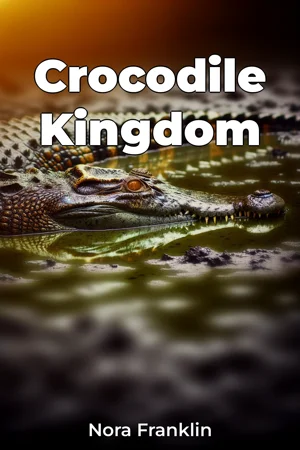
Have you ever wondered how a creature seemingly frozen in prehistoric time continues to thrive in our modern world? "Crocodile Kingdom" delves into the world of crocodiles and alligators, revealing their complex hunting skills, remarkable survival strategies, and crucial roles within diverse aquatic ecosystems. This book explores these apex predators through the lens of nature, biology, and life sciences, providing a comprehensive understanding of their evolutionary success and ecological importance. One of the central topics is the intricate hunting techniques employed by crocodilians. From ambush predation to cooperative hunting, these reptiles exhibit a range of behaviors finely tuned to their environments. Understanding these strategies sheds light on their adaptability and the ecological pressures that have shaped them. The book examines the biomechanics of their powerful jaws, the sensory adaptations that allow them to detect prey in murky waters, and the sophisticated cognitive abilities that underpin their hunting success. Another key area of focus is their resilience and survival mechanisms. Crocodiles and alligators have endured for millions of years, surviving major extinction events that wiped out countless other species. "Crocodile Kingdom" investigates the physiological and behavioral adaptations that have allowed them to thrive, including their efficient circulatory systems, their ability to regulate body temperature, and their parental care strategies. We examine the impact of habitat loss, human conflict, and climate change on their populations, and explore conservation efforts aimed at ensuring their survival. This book argues that crocodiles and alligators are not simply ancient relics but vital components of their ecosystems. Their presence influences the structure and function of aquatic habitats, affecting everything from fish populations to water quality. By controlling prey populations, they prevent imbalances that could disrupt entire food webs. Their nesting mounds create habitat for other species, and their feeding activities recycle nutrients. Understanding their ecological roles is crucial for effective conservation management. The book is structured to provide a clear progression of knowledge. It begins with an introduction to the evolutionary history of crocodilians, tracing their lineage back to the age of dinosaurs. The following sections delve into their anatomy, physiology, and behavior, with dedicated chapters on hunting, reproduction, and social interactions. We then explore their ecological roles in different habitats, from the swamps of the southeastern United States to the rivers of Africa and Australia. The concluding chapters examine the threats they face and the strategies being used to protect them. The information presented is based on a wide range of scientific research, including field studies, laboratory experiments, and analyses of fossil records. We draw on data from diverse sources, including peer-reviewed publications, government reports, and the findings of conservation organizations. The book incorporates detailed anatomical illustrations, behavioral ethograms, and ecological models to further illustrate the concepts discussed. "Crocodile Kingdom" connects to several interdisciplinary fields. Evolutionary biology is central to understanding the origins and diversification of crocodilians. Ecology provides the framework for analyzing their interactions with other species and their environment. Conservation biology informs the discussion of threats and management strategies. This interdisciplinary approach provides a holistic view of these fascinating creatures. This book offers a unique perspective by integrating cutting-edge research with accessible writing. It avoids jargon and technical language, making it suitable for a broad audience. The narrative is enriched with anecdotes from the field, bringing the science to life and highlighting the human dimension of crocodile conservation. The target audience includes students, researchers, conservationists, and anyone with an interest in wildlife and natural history. It would be a valuable resource for undergraduate courses in biology, ecology, and zoology. The book’s accessible style also makes it appealing to general readers who want to learn more about these remarkable reptiles. As a work of non-fiction, "Crocodile Kingdom" adheres to the principles of accuracy, objectivity, and evidence-based reporting. All claims are supported by credible sources, and different perspectives are presented fairly. The book aims to inform and educate, while also inspiring appreciation for the natural world. The scope of the book is global, covering all species of crocodiles and alligators, as well as their close relatives, the gharials and caimans. While we aim to be comprehensive, limitations in space prevent us from covering every aspect in exhaustive detail. However, we provide ample references for readers who wish to delve deeper into specific topics. The knowledge gained from this book has real-world applications to contribute to conservation efforts and promote responsible tourism. "Crocodile Kingdom" is particularly relevant in regions where human-crocodile conflict is a significant issue, providing insights into mitigating risks and fostering coexistence. The book also touches upon controversies surrounding crocodile management and conservation. We examine the debates over hunting regulations, captive breeding programs, and habitat protection, presenting different viewpoints and encouraging critical thinking. "Crocodile Kingdom" provides evidence-based insights for anyone interested in understanding and appreciating these ancient and ecologically vital predators.
Have you ever wondered how a creature seemingly frozen in prehistoric time continues to thrive in our modern world? "Crocodile Kingdom" delves into the world of crocodiles and alligators, revealing their complex hunting skills, remarkable survival strategies, and crucial roles within diverse aquatic ecosystems. This book explores these apex predators through the lens of nature, biology, and life sciences, providing a comprehensive understanding of their evolutionary success and ecological importance. One of the central topics is the intricate hunting techniques employed by crocodilians. From ambush predation to cooperative hunting, these reptiles exhibit a range of behaviors finely tuned to their environments. Understanding these strategies sheds light on their adaptability and the ecological pressures that have shaped them. The book examines the biomechanics of their powerful jaws, the sensory adaptations that allow them to detect prey in murky waters, and the sophisticated cognitive abilities that underpin their hunting success. Another key area of focus is their resilience and survival mechanisms. Crocodiles and alligators have endured for millions of years, surviving major extinction events that wiped out countless other species. "Crocodile Kingdom" investigates the physiological and behavioral adaptations that have allowed them to thrive, including their efficient circulatory systems, their ability to regulate body temperature, and their parental care strategies. We examine the impact of habitat loss, human conflict, and climate change on their populations, and explore conservation efforts aimed at ensuring their survival. This book argues that crocodiles and alligators are not simply ancient relics but vital components of their ecosystems. Their presence influences the structure and function of aquatic habitats, affecting everything from fish populations to water quality. By controlling prey populations, they prevent imbalances that could disrupt entire food webs. Their nesting mounds create habitat for other species, and their feeding activities recycle nutrients. Understanding their ecological roles is crucial for effective conservation management. The book is structured to provide a clear progression of knowledge. It begins with an introduction to the evolutionary history of crocodilians, tracing their lineage back to the age of dinosaurs. The following sections delve into their anatomy, physiology, and behavior, with dedicated chapters on hunting, reproduction, and social interactions. We then explore their ecological roles in different habitats, from the swamps of the southeastern United States to the rivers of Africa and Australia. The concluding chapters examine the threats they face and the strategies being used to protect them. The information presented is based on a wide range of scientific research, including field studies, laboratory experiments, and analyses of fossil records. We draw on data from diverse sources, including peer-reviewed publications, government reports, and the findings of conservation organizations. The book incorporates detailed anatomical illustrations, behavioral ethograms, and ecological models to further illustrate the concepts discussed. "Crocodile Kingdom" connects to several interdisciplinary fields. Evolutionary biology is central to understanding the origins and diversification of crocodilians. Ecology provides the framework for analyzing their interactions with other species and their environment. Conservation biology informs the discussion of threats and management strategies. This interdisciplinary approach provides a holistic view of these fascinating creatures. This book offers a unique perspective by integrating cutting-edge research with accessible writing. It avoids jargon and technical language, making it suitable for a broad audience. The narrative is enriched with anecdotes from the field, bringing the science to life and highlighting the human dimension of crocodile conservation. The target audience includes students, researchers, conservationists, and anyone with an interest in wildlife and natural history. It would be a valuable resource for undergraduate courses in biology, ecology, and zoology. The book’s accessible style also makes it appealing to general readers who want to learn more about these remarkable reptiles. As a work of non-fiction, "Crocodile Kingdom" adheres to the principles of accuracy, objectivity, and evidence-based reporting. All claims are supported by credible sources, and different perspectives are presented fairly. The book aims to inform and educate, while also inspiring appreciation for the natural world. The scope of the book is global, covering all species of crocodiles and alligators, as well as their close relatives, the gharials and caimans. While we aim to be comprehensive, limitations in space prevent us from covering every aspect in exhaustive detail. However, we provide ample references for readers who wish to delve deeper into specific topics. The knowledge gained from this book has real-world applications to contribute to conservation efforts and promote responsible tourism. "Crocodile Kingdom" is particularly relevant in regions where human-crocodile conflict is a significant issue, providing insights into mitigating risks and fostering coexistence. The book also touches upon controversies surrounding crocodile management and conservation. We examine the debates over hunting regulations, captive breeding programs, and habitat protection, presenting different viewpoints and encouraging critical thinking. "Crocodile Kingdom" provides evidence-based insights for anyone interested in understanding and appreciating these ancient and ecologically vital predators.
"Crocodile Kingdom" explores the fascinating world of crocodiles and alligators, highlighting their remarkable evolutionary journey, sophisticated hunting techniques, and vital roles within aquatic ecosystems. These apex predators showcase a diverse array of hunting strategies, from patient ambush tactics to cooperative hunting, revealing their adaptability and the ecological pressures that have shaped them. What's particularly intriguing is their proven resilience; crocodilians have survived major extinction events, demonstrating unique physiological and behavioral adaptations that enable them to thrive in diverse environments. This book examines not only the biology of these reptiles but also their integral role in maintaining ecological balance. Their presence influences everything from fish populations to water quality, preventing imbalances that could disrupt entire food webs. Structured to provide a comprehensive understanding, the book begins with the evolutionary history of crocodilians and progresses through their anatomy, behavior, and ecological roles, concluding with an examination of current threats and conservation efforts.
Book Details
ISBN
9788233983550
Publisher
Publifye AS
Your Licenses
You don't own any licenses for this book
Purchase a license below to unlock this book and download the EPUB.
Purchase License
Select a tier to unlock this book
Need bulk licensing?
Contact us for enterprise agreements.