
About This Book
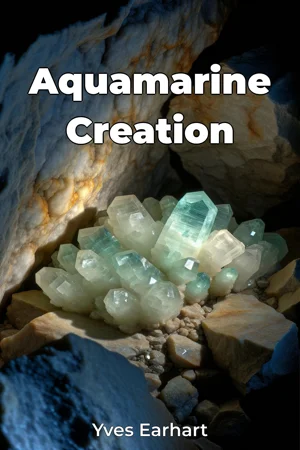
Have you ever wondered how a gemstone, reminiscent of serene ocean hues, comes into existence deep within the Earth? "Aquamarine Creation" embarks on a scientific exploration into the fascinating genesis of aquamarine, a captivating variety of the mineral beryl. This book delves into the geological processes, chemical conditions, and environmental factors that converge to create this beloved gemstone. We examine the following key topics of significance: the mineralogical composition of beryl, the role of trace elements in producing aquamarine's distinctive color, and the geological environments conducive to its formation. Understanding these aspects allows us to appreciate not only the beauty of aquamarine, but also the complex Earth systems that give rise to such natural wonders. A foundational understanding of basic mineralogy and geological processes is helpful, but not essential, as the book provides clear explanations and definitions of key terms. We will explore the Earth's crust and mantle, hydrothermal vents, and pegmatite formations without assuming prior knowledge of these concepts. The central argument of "Aquamarine Creation" posits that aquamarine formation is a delicate interplay of specific geochemical conditions within particular geological settings. The presence of beryllium, aluminum, silicon, oxygen, and crucial trace elements like iron, combined with appropriate temperature and pressure, dictates whether common beryl transforms into the sought-after aquamarine. This argument underscores the interconnectedness of Earth's systems and highlights how seemingly minor variations in chemical composition can result in dramatic differences in mineral properties and aesthetic value. The book unfolds in a structured manner. First, we introduce beryl and its diverse varieties, focusing on aquamarine. Next, we analyze the chemical composition required, specifically the role of iron in creating the blue to blue-green hues. We then explore the geological environments where aquamarine is typically found, notably granitic pegmatites and hydrothermal veins. Following this, we discuss the timeline of aquamarine formation, from the initial crystallization of beryl to the subsequent incorporation of trace elements. Finally, we examine the practical implications of understanding aquamarine genesis, from gemstone exploration to the application of geochemical fingerprints in gemology. Evidence is drawn from extensive geological surveys, mineralogical analyses, and geochemical studies. X-ray diffraction, electron microprobe analysis, and mass spectrometry data are presented to support the claims regarding chemical composition and formation conditions. Data from various aquamarine-producing regions worldwide, including Brazil, Nigeria, and Pakistan, will be synthesized. "Aquamarine Creation" also draws connections to other fields, including chemistry (understanding the role of trace elements), physics (examining the interaction of light with the crystal structure), and environmental science (assessing the impact of mining on aquamarine-bearing regions). These interdisciplinary connections strengthen the book's overall argument by providing a broader context for understanding aquamarine formation and its implications. What sets this book apart is its holistic approach, integrating geological, chemical, and physical perspectives to provide a comprehensive understanding of aquamarine's creation. It moves beyond simple descriptions to offer a process-oriented explanation, revealing the intricate dance of elements and forces that results in this gemstone. The book employs a fact-based, scientific tone, ensuring accuracy and clarity. It is intended for a broad audience, including geology enthusiasts, mineral collectors, gemologists, and anyone curious about the natural world. It provides accessible explanations that cater to both readers with some scientific background and those with a general interest in gemstones. As a work of science and earth sciences geography, “Aquamarine Creation” adheres to the conventions of academic rigor and empirical evidence, delivering information in a clear and structured way. The book focuses specifically on the geological and chemical processes involved in aquamarine formation, deliberately excluding aspects such as the history of aquamarine use in jewelry or its metaphysical properties. It does not delve into the social or economic aspects of gem mining beyond the core science of its geological origins. Understanding aquamarine formation has practical applications in gemstone exploration, helping geologists identify promising regions for new discoveries. It also aids gemologists in authenticating aquamarine and distinguishing natural stones from synthetic ones, by understanding the subtle variations in chemical composition. While the fundamental principles are widely accepted, some debate exists regarding the precise timing and specific fluid compositions involved in aquamarine formation in different geological settings. The book acknowledges these ongoing discussions and presents different perspectives within the scientific community.
Have you ever wondered how a gemstone, reminiscent of serene ocean hues, comes into existence deep within the Earth? "Aquamarine Creation" embarks on a scientific exploration into the fascinating genesis of aquamarine, a captivating variety of the mineral beryl. This book delves into the geological processes, chemical conditions, and environmental factors that converge to create this beloved gemstone. We examine the following key topics of significance: the mineralogical composition of beryl, the role of trace elements in producing aquamarine's distinctive color, and the geological environments conducive to its formation. Understanding these aspects allows us to appreciate not only the beauty of aquamarine, but also the complex Earth systems that give rise to such natural wonders. A foundational understanding of basic mineralogy and geological processes is helpful, but not essential, as the book provides clear explanations and definitions of key terms. We will explore the Earth's crust and mantle, hydrothermal vents, and pegmatite formations without assuming prior knowledge of these concepts. The central argument of "Aquamarine Creation" posits that aquamarine formation is a delicate interplay of specific geochemical conditions within particular geological settings. The presence of beryllium, aluminum, silicon, oxygen, and crucial trace elements like iron, combined with appropriate temperature and pressure, dictates whether common beryl transforms into the sought-after aquamarine. This argument underscores the interconnectedness of Earth's systems and highlights how seemingly minor variations in chemical composition can result in dramatic differences in mineral properties and aesthetic value. The book unfolds in a structured manner. First, we introduce beryl and its diverse varieties, focusing on aquamarine. Next, we analyze the chemical composition required, specifically the role of iron in creating the blue to blue-green hues. We then explore the geological environments where aquamarine is typically found, notably granitic pegmatites and hydrothermal veins. Following this, we discuss the timeline of aquamarine formation, from the initial crystallization of beryl to the subsequent incorporation of trace elements. Finally, we examine the practical implications of understanding aquamarine genesis, from gemstone exploration to the application of geochemical fingerprints in gemology. Evidence is drawn from extensive geological surveys, mineralogical analyses, and geochemical studies. X-ray diffraction, electron microprobe analysis, and mass spectrometry data are presented to support the claims regarding chemical composition and formation conditions. Data from various aquamarine-producing regions worldwide, including Brazil, Nigeria, and Pakistan, will be synthesized. "Aquamarine Creation" also draws connections to other fields, including chemistry (understanding the role of trace elements), physics (examining the interaction of light with the crystal structure), and environmental science (assessing the impact of mining on aquamarine-bearing regions). These interdisciplinary connections strengthen the book's overall argument by providing a broader context for understanding aquamarine formation and its implications. What sets this book apart is its holistic approach, integrating geological, chemical, and physical perspectives to provide a comprehensive understanding of aquamarine's creation. It moves beyond simple descriptions to offer a process-oriented explanation, revealing the intricate dance of elements and forces that results in this gemstone. The book employs a fact-based, scientific tone, ensuring accuracy and clarity. It is intended for a broad audience, including geology enthusiasts, mineral collectors, gemologists, and anyone curious about the natural world. It provides accessible explanations that cater to both readers with some scientific background and those with a general interest in gemstones. As a work of science and earth sciences geography, “Aquamarine Creation” adheres to the conventions of academic rigor and empirical evidence, delivering information in a clear and structured way. The book focuses specifically on the geological and chemical processes involved in aquamarine formation, deliberately excluding aspects such as the history of aquamarine use in jewelry or its metaphysical properties. It does not delve into the social or economic aspects of gem mining beyond the core science of its geological origins. Understanding aquamarine formation has practical applications in gemstone exploration, helping geologists identify promising regions for new discoveries. It also aids gemologists in authenticating aquamarine and distinguishing natural stones from synthetic ones, by understanding the subtle variations in chemical composition. While the fundamental principles are widely accepted, some debate exists regarding the precise timing and specific fluid compositions involved in aquamarine formation in different geological settings. The book acknowledges these ongoing discussions and presents different perspectives within the scientific community.
"Aquamarine Creation" explores the fascinating geological genesis of aquamarine, a captivating blue-green gemstone, by examining the Earth systems that contribute to its formation. It delves into the mineralogical composition of beryl, highlighting how trace elements, particularly iron, are crucial for aquamarine's distinctive color. The book emphasizes that aquamarine formation is a delicate interplay of specific geochemical conditions within particular geological settings, requiring the presence of beryllium, aluminum, silicon, oxygen, and those vital trace elements, all under precise temperature and pressure conditions. The book presents a comprehensive, process-oriented explanation of aquamarine's creation, integrating geological, chemical, and physical perspectives. It begins by introducing beryl and its varieties, then analyzes the chemical composition required for aquamarine, and explores typical geological environments such as granitic pegmatites and hydrothermal veins. By drawing on geological surveys, mineralogical analyses, and geochemical studies from aquamarine-producing regions worldwide, "Aquamarine Creation" provides a valuable resource for mineral collectors, gemologists, and anyone interested in Earth science and the origins of gemstones.
Book Details
ISBN
9788233983543
Publisher
Publifye AS
Your Licenses
You don't own any licenses for this book
Purchase a license below to unlock this book and download the EPUB.
Purchase License
Select a tier to unlock this book
Need bulk licensing?
Contact us for enterprise agreements.