
About This Book
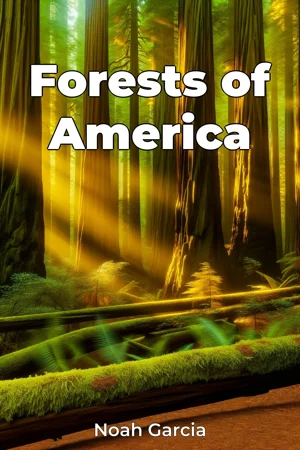
Have you ever considered the silent giants that shape our nation’s landscape and influence the very air we breathe? "Forests of America" invites you on an immersive journey into the heart of these vital ecosystems, exploring their ecological significance, the diverse wildlife they harbor, and the critical conservation efforts underway to safeguard them for future generations. This book delves into the intricate relationship between America’s forests, their inhabitants, and the ever-present challenges of deforestation and climate change. This exploration is critical because forests are not merely collections of trees; they are complex communities that regulate water cycles, support countless species, and act as significant carbon sinks, mitigating the impacts of climate change. Understanding their role and the threats they face is paramount to ensuring a sustainable future. "Forests of America" provides a comprehensive overview of these ecosystems, beginning with a foundational understanding of forest ecology and biogeography specific to the North American continent. We trace the historical impact of human activity on these forests, from indigenous land management practices to the rapid deforestation of the industrial era. This historical context sets the stage for examining the current state of our forests and the challenges they face, including habitat loss, invasive species, and the escalating impacts of climate change, such as wildfires and pest outbreaks. The central argument of this book is that the long-term health and resilience of America's forests are inextricably linked to proactive and informed conservation strategies. These strategies must integrate scientific research, sustainable forestry practices, and community engagement to effectively address the multifaceted threats facing these vital ecosystems. The book unfolds in three major sections. First, we introduce the ecological foundations of American forests, examining the unique characteristics of different forest types – from the towering redwoods of the Pacific Northwest to the hardwood forests of the Appalachian Mountains. Second, we explore the diverse wildlife that call these forests home, highlighting keystone species and the intricate food webs that connect them. Finally, we dedicate a significant portion of the book to analyzing current conservation efforts, including reforestation projects, protected area management, and sustainable forestry initiatives. We assess the effectiveness of these strategies and propose pathways for future action. The arguments presented are supported by a wealth of scientific data, including forest inventory analyses, species distribution models, and climate change projections. We draw upon research from leading forestry institutions, government agencies, and academic publications. We incorporate case studies of successful conservation initiatives, showcasing the tangible benefits of proactive forest management. "Forests of America" also connects to other fields, such as environmental policy, economics, and social sciences. We examine the economic value of forests, the social impacts of deforestation on local communities, and the role of policy in shaping forest management practices. These interdisciplinary connections illuminate the complexity of forest conservation and the need for integrated solutions. A unique aspect of this book is its focus on community-based conservation. We highlight examples of collaborative partnerships between local communities, government agencies, and private landowners, demonstrating the power of collective action in protecting our forests. The book is written in an accessible and engaging style, making complex scientific concepts understandable to a broad audience. We avoid jargon and strive to present information in a clear and concise manner. "Forests of America" is targeted towards anyone with an interest in nature, conservation, and environmental issues. This book offers valuable insights for students, educators, policymakers, and concerned citizens who seek to understand and protect these vital ecosystems. As a work of non-fiction within the genres of nature and conservation, "Forests of America" strives to adhere to principles of factual accuracy, objectivity, and transparency. We present a balanced perspective on complex issues, acknowledging different viewpoints and providing evidence to support our claims. The scope of this book is limited to forests within the United States. While we acknowledge the global importance of forests, we focus specifically on the unique challenges and opportunities facing American forests. The information presented in the book can be applied in a variety of real-world settings. Readers can use this knowledge to inform their own conservation efforts, advocate for sustainable policies, and make informed decisions about their impact on the environment. Forest management is not without its controversies, and this book addresses ongoing debates surrounding logging practices, prescribed burns, and the role of government regulation. We present different perspectives on these issues, encouraging readers to critically evaluate the evidence and form their own informed opinions.
Have you ever considered the silent giants that shape our nation’s landscape and influence the very air we breathe? "Forests of America" invites you on an immersive journey into the heart of these vital ecosystems, exploring their ecological significance, the diverse wildlife they harbor, and the critical conservation efforts underway to safeguard them for future generations. This book delves into the intricate relationship between America’s forests, their inhabitants, and the ever-present challenges of deforestation and climate change. This exploration is critical because forests are not merely collections of trees; they are complex communities that regulate water cycles, support countless species, and act as significant carbon sinks, mitigating the impacts of climate change. Understanding their role and the threats they face is paramount to ensuring a sustainable future. "Forests of America" provides a comprehensive overview of these ecosystems, beginning with a foundational understanding of forest ecology and biogeography specific to the North American continent. We trace the historical impact of human activity on these forests, from indigenous land management practices to the rapid deforestation of the industrial era. This historical context sets the stage for examining the current state of our forests and the challenges they face, including habitat loss, invasive species, and the escalating impacts of climate change, such as wildfires and pest outbreaks. The central argument of this book is that the long-term health and resilience of America's forests are inextricably linked to proactive and informed conservation strategies. These strategies must integrate scientific research, sustainable forestry practices, and community engagement to effectively address the multifaceted threats facing these vital ecosystems. The book unfolds in three major sections. First, we introduce the ecological foundations of American forests, examining the unique characteristics of different forest types – from the towering redwoods of the Pacific Northwest to the hardwood forests of the Appalachian Mountains. Second, we explore the diverse wildlife that call these forests home, highlighting keystone species and the intricate food webs that connect them. Finally, we dedicate a significant portion of the book to analyzing current conservation efforts, including reforestation projects, protected area management, and sustainable forestry initiatives. We assess the effectiveness of these strategies and propose pathways for future action. The arguments presented are supported by a wealth of scientific data, including forest inventory analyses, species distribution models, and climate change projections. We draw upon research from leading forestry institutions, government agencies, and academic publications. We incorporate case studies of successful conservation initiatives, showcasing the tangible benefits of proactive forest management. "Forests of America" also connects to other fields, such as environmental policy, economics, and social sciences. We examine the economic value of forests, the social impacts of deforestation on local communities, and the role of policy in shaping forest management practices. These interdisciplinary connections illuminate the complexity of forest conservation and the need for integrated solutions. A unique aspect of this book is its focus on community-based conservation. We highlight examples of collaborative partnerships between local communities, government agencies, and private landowners, demonstrating the power of collective action in protecting our forests. The book is written in an accessible and engaging style, making complex scientific concepts understandable to a broad audience. We avoid jargon and strive to present information in a clear and concise manner. "Forests of America" is targeted towards anyone with an interest in nature, conservation, and environmental issues. This book offers valuable insights for students, educators, policymakers, and concerned citizens who seek to understand and protect these vital ecosystems. As a work of non-fiction within the genres of nature and conservation, "Forests of America" strives to adhere to principles of factual accuracy, objectivity, and transparency. We present a balanced perspective on complex issues, acknowledging different viewpoints and providing evidence to support our claims. The scope of this book is limited to forests within the United States. While we acknowledge the global importance of forests, we focus specifically on the unique challenges and opportunities facing American forests. The information presented in the book can be applied in a variety of real-world settings. Readers can use this knowledge to inform their own conservation efforts, advocate for sustainable policies, and make informed decisions about their impact on the environment. Forest management is not without its controversies, and this book addresses ongoing debates surrounding logging practices, prescribed burns, and the role of government regulation. We present different perspectives on these issues, encouraging readers to critically evaluate the evidence and form their own informed opinions.
"Forests of America" explores the vital role of American forests as complex ecosystems, significant in regulating water cycles and acting as critical carbon sinks. It highlights the intricate relationships between forests, diverse wildlife, and the pressing challenges of deforestation and climate change. The book emphasizes the necessity of proactive conservation strategies that integrate scientific research, sustainable forestry, and community engagement to protect these invaluable resources for future generations. The book journeys from the towering redwoods of the Pacific Northwest to the hardwood forests of the Appalachian Mountains, examining the unique characteristics of each forest type. It also delves into the historical impact of human activity, from indigenous land management to the rapid deforestation during the industrial era. A key insight involves how forests support countless species, forming intricate food webs, and the book showcases successful conservation initiatives that demonstrate the benefits of proactive forest management. Organized into three sections, the book begins with the ecological foundations of American forests, progresses to exploring wildlife habitats, and concludes with an analysis of current conservation efforts. The approach is accessible, avoiding jargon and presenting information clearly, making it valuable for students, educators, policymakers, and anyone interested in nature and conservation.
Book Details
ISBN
9788233983505
Publisher
Publifye AS
Your Licenses
You don't own any licenses for this book
Purchase a license below to unlock this book and download the EPUB.
Purchase License
Select a tier to unlock this book
Need bulk licensing?
Contact us for enterprise agreements.